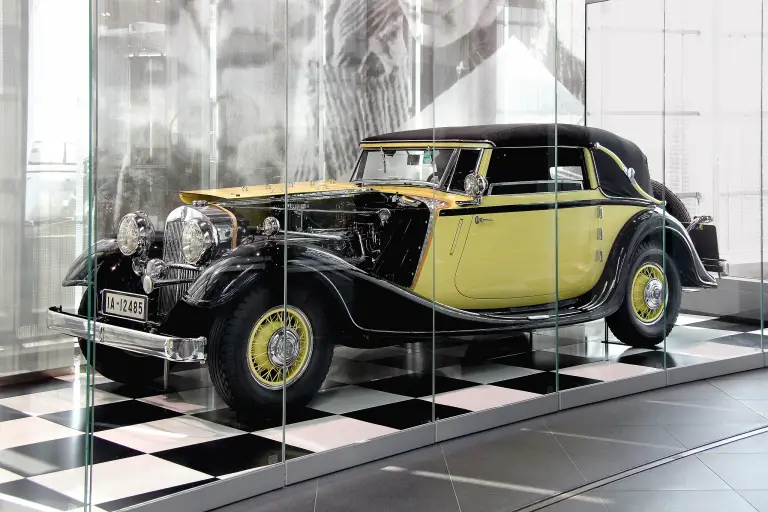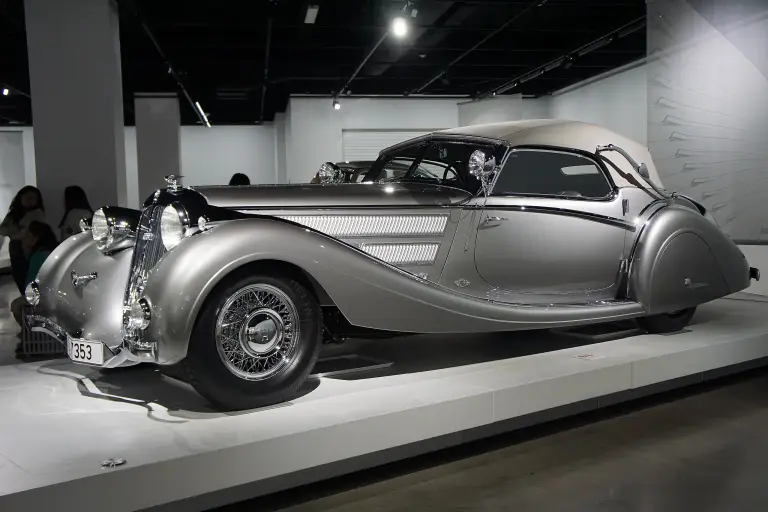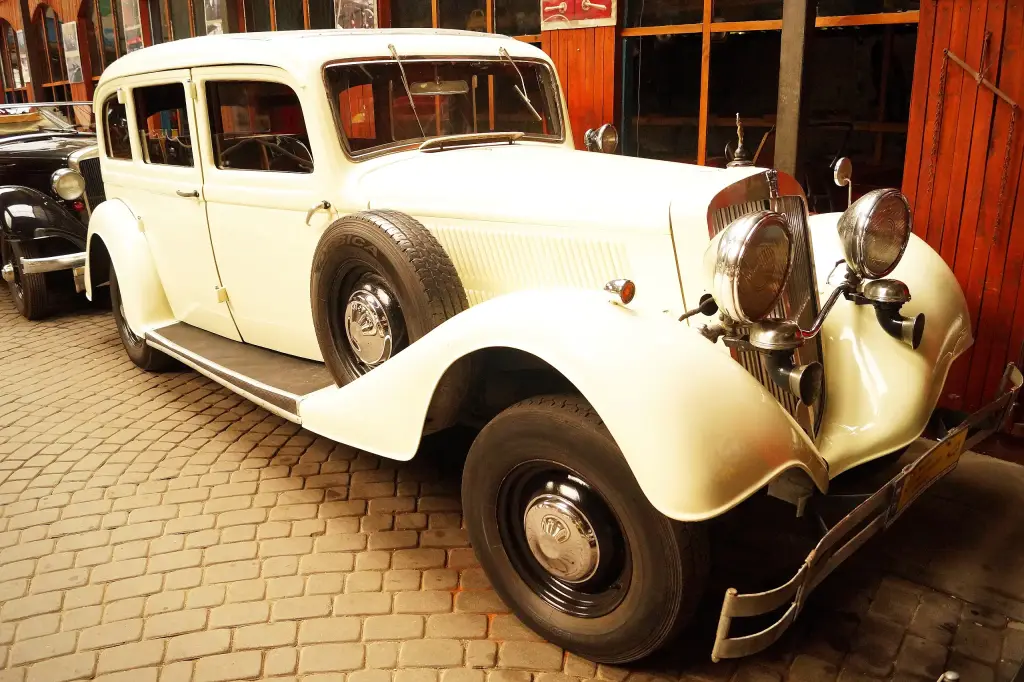
The Horch 830 was an eight-cylinder luxury car built by Horch in Zwickau from 1933 to 1940. Introduced at the Berlin motor show as the successor to the Horch 8, it was the first Horch with a V8 and the first with transverse leaf spring front suspension. At least 11,000 were built before the Second World War stopped production.
Horch 830 at a glance
| Maker | Horch, Zwickau (Auto Union) |
|---|---|
| Production | 1933–1940 |
| Engine | 3.0–3.8 litre V8, flathead |
| First version | 3.0 litres, 70 PS (51 kW) |
| Last version | 3.8 litres, 92 PS (68 kW) |
| Transmission | four-speed, fully synchronised |
| Drive | rear-wheel drive |
| Bodies | limousine, cabriolet, roadster, Pullman |
| Chassis | ladder frame, 3.2 m wheelbase |
| Weight | 1,650 kg (first 830) |
| Notable | first Horch with transverse leaf spring front suspension |
| Built | at least 11,000 civilian cars |
History of the Horch 830
Berlin 1933
The 830 was first shown in 1933 at the International Motor Show in Berlin and was meant to succeed the V12-powered Horch 8. It was developed under Auto Union, which had merged Horch with Audi, DKW and Wanderer in 1932. The first cars were delivered in the autumn of 1933. The car was the second German production car with a V8 engine, after the NAG V8 of 1931.
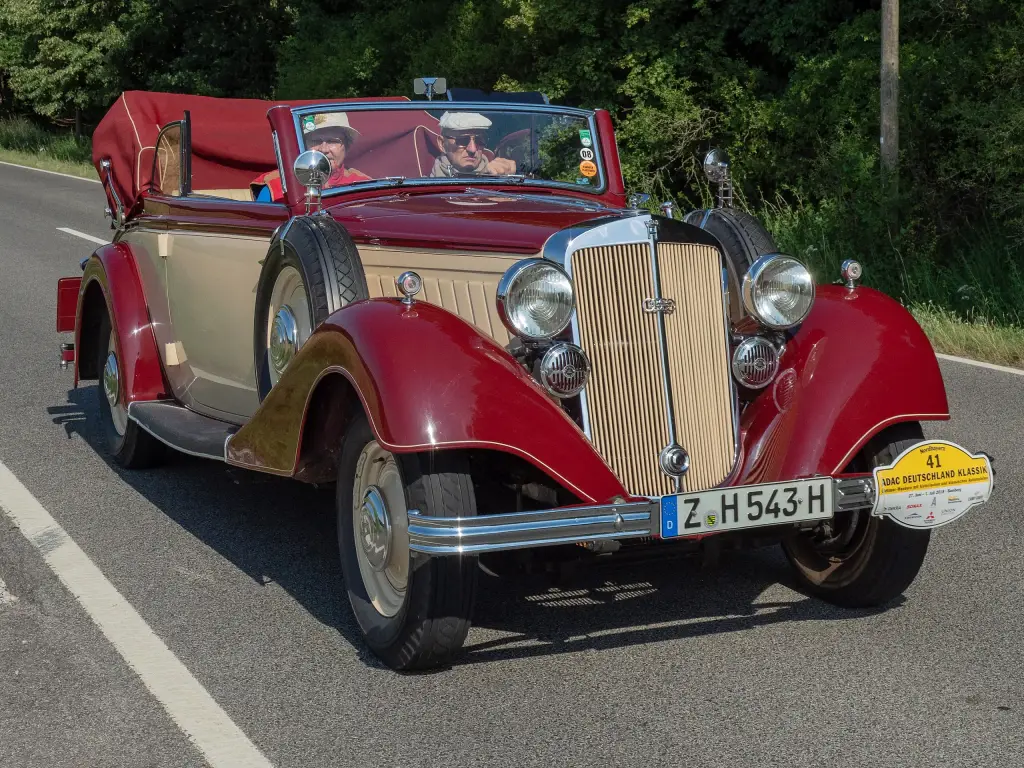
The V8
Horch’s chief engineer Fritz Fiedler began work on an eight-cylinder V engine based on the V12 of the 670 and 600. After Fiedler left for BMW in 1932, Werner K. Strobel brought the V8 to production. Like the Horch V12 it has a 66-degree bank angle, and its central camshaft is driven by a triple roller chain. The flathead valves are simpler than the hydraulic lifters of the twelve-cylinder engine. The engine was cheaper to make and shorter than the previous inline-eight, which needed a ten-bearing crankshaft.
Model updates
In 1934 came the 830 B with a 3.25-litre engine, still with 70 PS, hydraulic drum brakes and independent front suspension on all bodies. A year later the engine grew to 3.5 litres and 75 PS, and the model was renamed 830 Bk (kurz) to distinguish it from the long-wheelbase 830 BL with 3.35 m. In 1937 twin carburettors and a 6.3:1 compression ratio raised the 3.5-litre engine to 82 PS; the shortened 930 V replaced the Bk. Both the 830 BL and the 930 V received a 3.8-litre engine of 92 PS, a fully synchronised gearbox and overdrive in 1938. The planned successors, the 930 L and 930 S, never arrived because of the war; four 930 S cars were built in Zwickau in 1948.
Design and features
- Compact V8: a 66-degree flathead engine with a single central camshaft, 80 kg lighter than the inline-eight it replaced.
- Front suspension: the first Horch with transverse leaf springs, later with double wishbones on the limousine and cabriolet.
- Body choice: limousine, cabriolet and roadster were offered with two and four doors, in classic or streamlined form.
- Military version: the 830 R of 1934–1937 had rigid axles front and rear and off-road tyres for the Wehrmacht.
- Famous owner: Charles de Gaulle drove a captured 830 cabriolet after the war; it is now in the Military History Museum in Dresden.
Horch 830 versions
- 830 (1933): 3.0-litre V8, 70 PS, 3.2 m wheelbase.
- 830 B (1934): 3.25 litres, hydraulic brakes, independent front suspension across the range.
- 830 Bk and 830 BL (1935): 3.5 litres, 75 PS; the BL is 15 cm longer and has a De Dion rear axle.
- 930 V (1937): shortened 3.1 m chassis, 82 PS, more aerodynamic bodywork.
- 830 BL and 930 V (1938): 3.8-litre engine, 92 PS, overdrive as standard.
- 830 R (1934–1937): military Kübelwagen, 4,536 built for the Reichswehr and Wehrmacht.
The 830 was the V8 companion to the V12 Horch 670 and the smaller brother of the eight-cylinder Horch 850. More cars are in the Horch collection.
Video: Horch 830
Video on YouTube.
Sources
- Horch 830, English Wikipedia: history, bodies, military use
- Horch 830, German Wikipedia: engine, production totals, model updates
- Horch, Italian Wikipedia: place of the 830 in the range