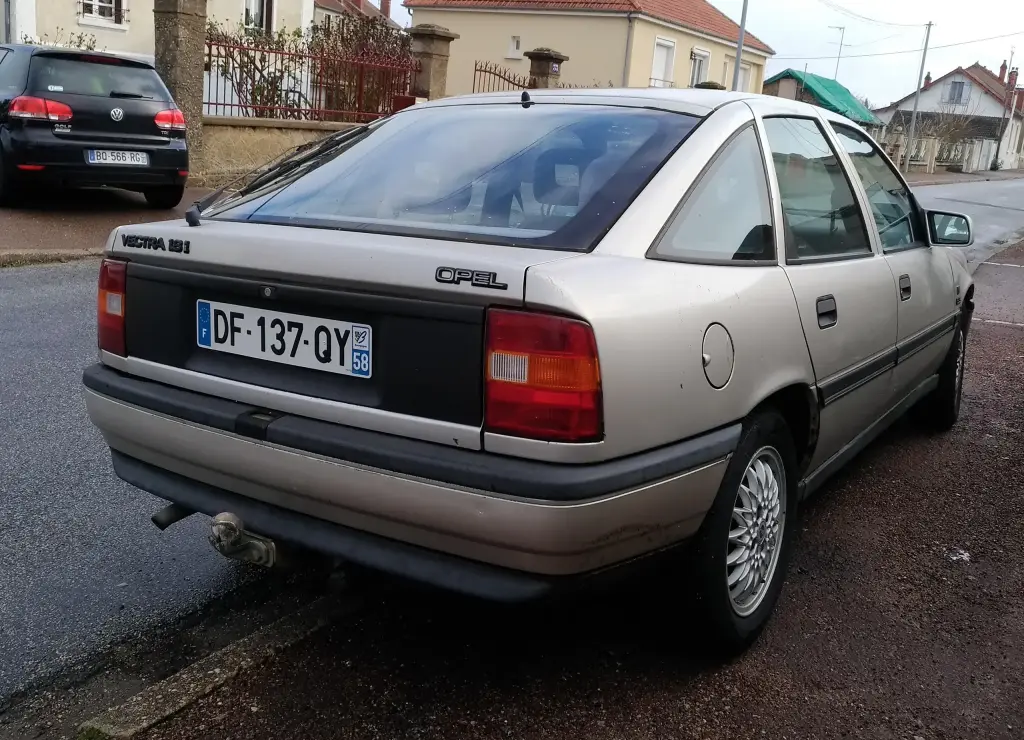
The Holden Vectra was Holden’s version of the Opel Vectra, a mid-size car engineered and produced by Opel in Germany from 1988 to 2008. In New Zealand it wore Holden badges from 1994, and in Australia it replaced the Holden Apollo from 1997.
Holden Vectra at a glance
| Maker | Opel, Germany |
|---|---|
| Opel production | 1988–2008 |
| Bodies | saloon and hatchback; estate from 1997 |
| Opel replacement | Opel Insignia, October 2008 |
| Designers | Wayne Cherry; name by Manfred Gotta |
| New Zealand | Holden badges from 1994 to 1996, then the Vectra B |
| Australia | replaced the Holden Apollo in 1997 |
| Vectra A launch | October 1988 for the 1989 model year |
| Vectra A engines | 1.4-litre 75 PS to 2.0-litre 130 PS |
| Top model | Vectra 2000 16V, 150 PS, from September 1989 |
| Turbo | 204 PS limited edition, September 1992 |
| Late engine | 2.5-litre V6, 170 PS |
History of the Holden Vectra
One car, many badges
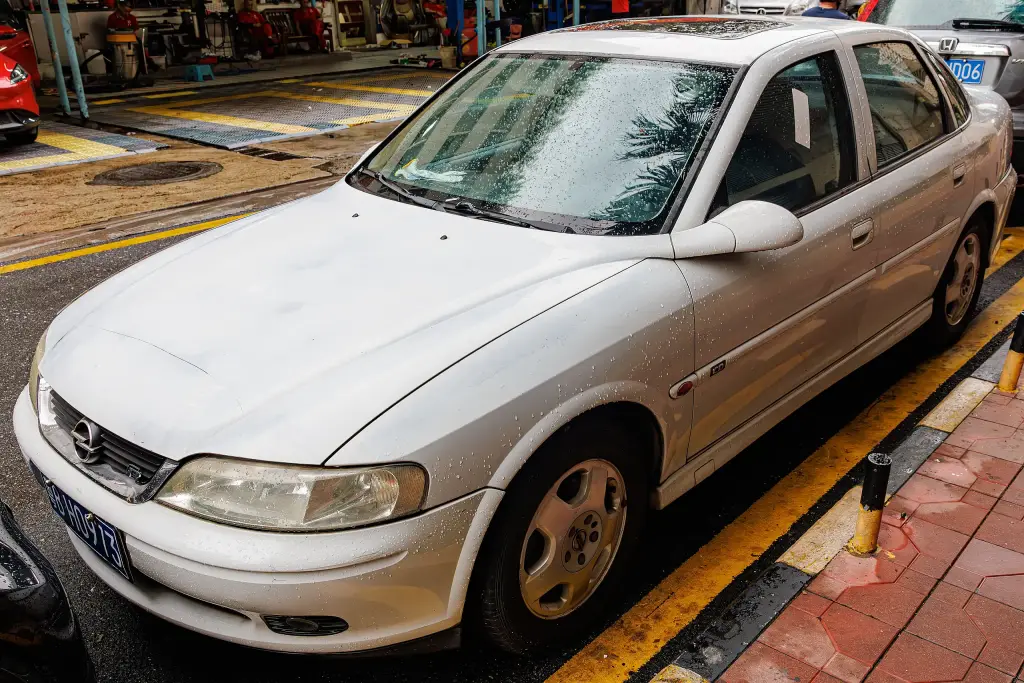
The Opel Vectra was introduced in October 1988 as a replacement for the Opel Ascona, and it was sold by Vauxhall in the United Kingdom, by Chevrolet in Latin America and by Holden in Australia. It existed in saloon, hatchback and, from the 1997 model year, estate body styles, and the nameplate spanned three generations and almost twenty-one years before the Opel Insignia replaced it in October 2008.
The first generation
The Vectra A arrived in October 1988 as a four-door notchback saloon, with a five-door hatchback following in March 1989 and a coupé called the Calibra at the end of that year. Both cars were designed by Wayne Cherry, Opel’s design chief at the time, and the name was coined by Manfred Gotta. In Britain Vauxhall kept the Cavalier name, making the Vectra A effectively a third-generation Cavalier until the Vectra B arrived in October 1995.
The 1989 car came in Base, LS, GL, GLS, CD and GT models with engines from a 75 PS 1.4-litre to a 130 PS 2.0-litre. The top Vectra 2000 16V of September 1989 used a sixteen-valve 2.0-litre with 150 PS, available only as a saloon and with four-wheel drive optional. Two four-wheel drive versions joined in January 1989, and in September 1992 a limited edition turbocharged model appeared with 204 PS; in 1994 a 4×4 turbo Vectra served as the Formula One safety car at the San Marino Grand Prix. A 2.5-litre V6 of 170 PS came later in the car’s life, turning it into a relaxed motorway cruiser rather than a sports saloon. Diesels were an Isuzu 1.7-litre unit and an Opel-designed 1.7-litre turbodiesel.
Chassis and the 1992 facelift
The front suspension was fully independent with MacPherson struts, pressed steel lower control arms and an anti-roll bar, mounted with the engine and transmission on a front subframe. Front-wheel drive cars had a semi-independent rear end with a torsion beam and trailing arms, while the four-wheel drive GSi, 4×4 and Turbo models used a subframe-mounted fully independent rear suspension with semi-trailing arms. Steering was rack and pinion, mounted on the bulkhead with a telescopically deformable column. A September 1992 refresh brought new front grilles, a black plastic strip above the rear lamps and a stronger structure for crashworthiness, and airbags became available from 1993.
Holden and New Zealand
In New Zealand the Vectra A was offered as an Opel from 1989 to 1994 but wore Holden badges from 1994 to 1996, until the Vectra B arrived. It was not sold in Australia, where Holden instead offered the rebadged Toyota Camry called Apollo until 1997; when that car went, the Holden Vectra took its place in the range.
Design and features
- Opel engineering: designed and built in Germany, badged by Holden for Australasia.
- Wayne Cherry design: the Vectra and the Calibra coupé shared his styling.
- Four-wheel drive: available on the 2.0-litre and turbo models.
- V6 cruiser: a 2.5-litre engine of 170 PS arrived late in the model’s life.
- Safety car: a 4×4 turbo served as the F1 safety car at San Marino in 1994.
Holden Vectra versions
- Vectra A (1988–1995): saloon and hatchback, Base to CD and GT trim.
- Vectra 2000 16V (1989): 150 PS, saloon only.
- Turbo 4×4 (1992): 204 PS limited edition.
- Vectra B (from 1995): the generation that replaced the Cavalier name in Britain.
- Vectra C (to 2008): the last generation before the Insignia.
The Vectra replaced the Holden Apollo and sat below the Holden Commodore. More cars are in the Holden collection.
Video: Holden Vectra 1997 Australian TV ad – “Everyone’s a Winner”
Video by CheesyTV on YouTube.
Sources
- Opel Vectra, English Wikipedia: design, engines, chassis, Holden and New Zealand