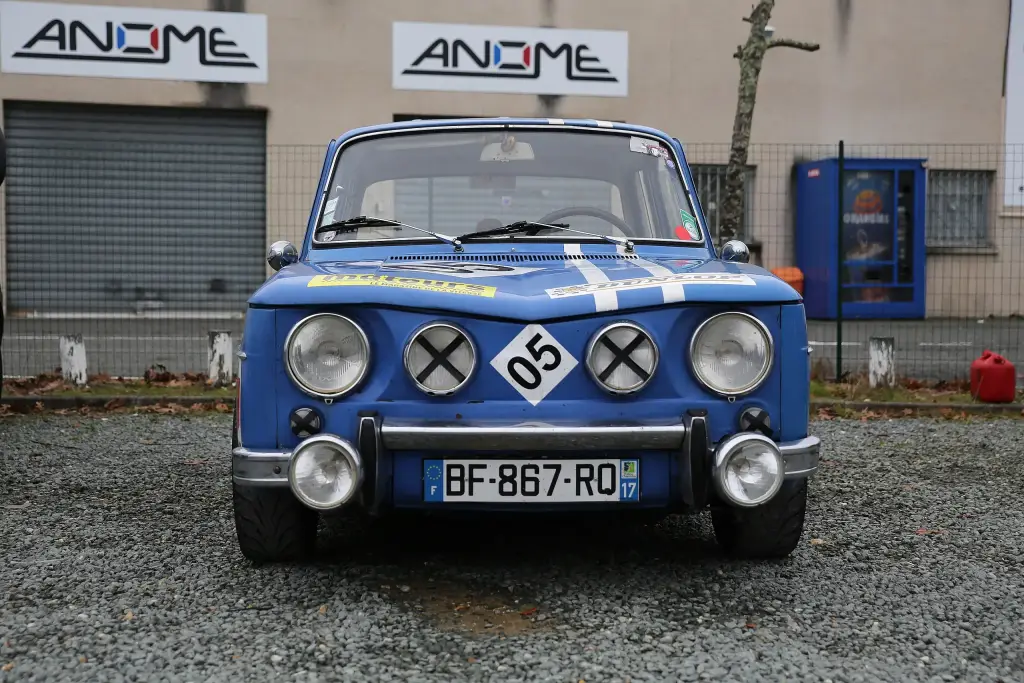
Gordini is a division of Renault Sport Technologies that began as an independent sports car manufacturer and tuning house, founded in 1946 by Amédée Gordini, nicknamed ‘Le Sorcier’. Renault bought a majority stake in 1968, and since 1976 Gordini has been part of Renault Sport.
Gordini at a glance
| Founded | 1946, by Amédée Gordini |
|---|---|
| Founder’s nickname | Le Sorcier (the Sorcerer) |
| First cars | Fiat-engined single-seaters |
| Formula One | 1950–1956, briefly again in 1957 |
| Le Mans | Renault-Gordini cars, 1962–1969 |
| Renault stake | 70 per cent bought at the end of 1968; name wholly owned from 1977 |
| Part of Renault Sport | since 1 January 1976 |
| Revived | 2009, as a hot-hatch trim line |
Based on one source, the English Wikipedia article on Gordini.
History of the Gordini
The Sorcerer
Amédée Gordini had tuned cars and raced since the 1930s, and his results led Simca to hire him for its motorsport programme and road-car development. In 1946 he introduced the first cars bearing his name, Fiat-engined single-seaters raced by himself and José Scaron, and in the late 1940s the company opened a workshop on the Boulevard Victor in Paris, entering sports car and Grand Prix racing. Gordini and Simca separated in 1951 after political conflicts.
Formula One and Renault
Gordini competed in Formula One from 1950 to 1956, with a brief return in 1957 with an eight-cylinder engine, although its biggest success in that period came in Formula Two. After the Formula One programme ended, Gordini worked with Renault as an engine tuner, entering Renault-Gordini cars at the 24 Hours of Le Mans between 1962 and 1969, and tuned engines for Alpine as well. In 1957 Gordini and Renault built the Dauphine Gordini, a modified Dauphine that was a sales success, and Gordini-tuned Renaults won rallies through the 1950s and 1960s.
Into Renault Sport
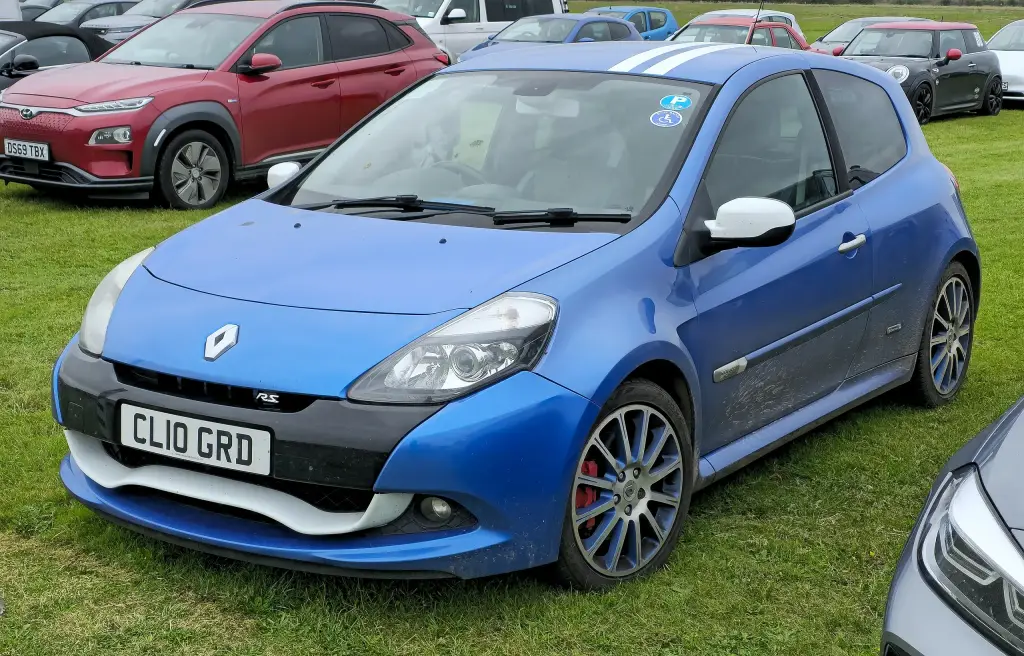
At the end of 1968 Amédée Gordini retired and sold a 70 per cent stake to Renault. Renault-Gordini moved to Viry-Châtillon in 1969 and became the company’s sport division, before merging with Alpine to form Renault Sport on 1 January 1976 under René Vuaillat; Renault wholly owned the Gordini name from 1977. In November 2009 Renault announced it would revive Gordini as an exclusive line of hot hatches, in the manner of Fiat’s Abarth, and the name has since appeared on the Twingo, Clio and Wind, as well as the Clio Gordini RS.
The colour
From the earliest Renault models the characteristic Gordini scheme has been bleu de France, the French motor racing colour, with white stripes, although other combinations have been used over the years.
Design and features
- Tuning house origins: independent single-seaters and Grand Prix cars from 1946.
- Renault connection: Le Mans engines from 1962 and the Dauphine Gordini of 1957.
- Bleu de France: the French racing blue with white stripes that marks every Gordini.
- Modern revival: Gordini-badged Clio, Twingo and Wind hot hatches from 2009.
Gordini versions
- Dauphine Gordini (1957–1967): the first tuned Renault road car.
- Renault 8 Gordini (1964–1970): the most famous Gordini, a rally winner.
- Renault 12 Gordini (1970–1974) and 17 Gordini (1974–1978): later tuned versions.
- Renault 5 Gordini (1979–1985): British name for the Renault 5 Alpine.
- Clio and Twingo Gordini (2010): the revived trim line.
The best known Gordini models are versions of the Renault 8 and the Renault 15 and 17. The modern racing arm is described in Renault Sport, and more cars are in the Renault collection.
Video: Renault R8 Gordini: a racing beast on the circuit
Video by Cars with Character on YouTube.
Sources
- Gordini, English Wikipedia: history, models, colours, Renault ownership