The General Motors Firebird comprises a quartet of prototype cars that General Motors engineered for the 1953, 1956 and 1959 Motorama auto shows and for the 1964 New York World’s Fair. Their designers, headed by Harley Earl, took inspiration from fighter aircraft, and GM never intended the cars for production; they existed to show the extremes of technology and design the company could achieve.
General Motors Firebird at a glance
| Maker | General Motors |
|---|---|
| Design | Harley Earl’s styling team |
| Shows | Motorama 1953, 1956 and 1959; 1964 New York World’s Fair |
| Cars | Firebird I (XP-21), II (XP-43), III (XP-73), IV (XP-790) |
| Firebird I | single-seat, fibreglass, 2,500 lb, 370 hp |
| Firebird II | four seats, titanium body, 200 hp |
| Firebird III | two seats, seven wings, 225 hp |
| Firebird IV | non-functional show car, later Buick Century Cruiser |
| Claimed top speed | 200 mph for all four |
| Kept at | GM Heritage Center, Sterling Heights, Michigan |
| Trophy | a miniature Firebird I crowns the Harley J. Earl Trophy |
Based on one source, the English Wikipedia article on the General Motors Firebird. These are the 1950s turbine concepts, not the Pontiac Firebird pony car.
History of the General Motors Firebird
Gas turbines for cars
General Motors researched the feasibility of gas turbine engines in cars as early as the 1940s, but it was not until the early 1950s that the company began building an actual engine, under Charles L. McCuen, general manager of General Motors Research Laboratories, with Emmett Conklin leading the project. The fanciful top speed claimed for all four concept cars was 200 mph. As the cars were not tied to any one division of GM, the Firebird I, II and III wore the logo of the General Motors Air Transport Section.
Firebird I
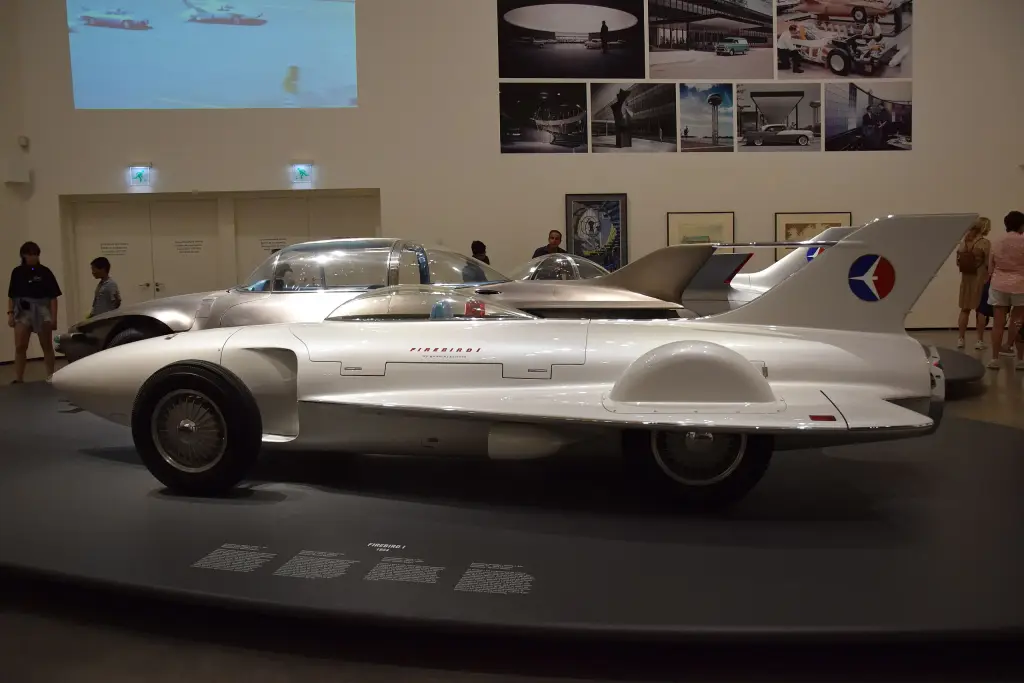
By 1953 the research team had developed the Firebird XP-21, later called Firebird I, essentially a jet aeroplane on wheels and the first gas-turbine car tested in the United States. It had a bubble canopy over a single-seat cockpit, a bullet-shaped fibreglass fuselage, short wings and a vertical tail fin. Its 370 hp Whirlfire Turbo Power gas turbine had two speeds and expelled jet exhaust at about 1,250 F. The car weighed 2,500 lb on a 100-inch wheelbase. Conklin was at first the only person qualified to drive it and tested it up to 100 mph, but on shifting into second gear the tyres lost traction under the engine torque. The racing driver Mauri Rose later tested the car at Indianapolis. Its brakes had drums outside the wheels for cooling, and the wings carried aircraft-style flaps. A miniature Firebird I crowns the Harley J. Earl Trophy given to the Daytona 500 winner.
Firebird II
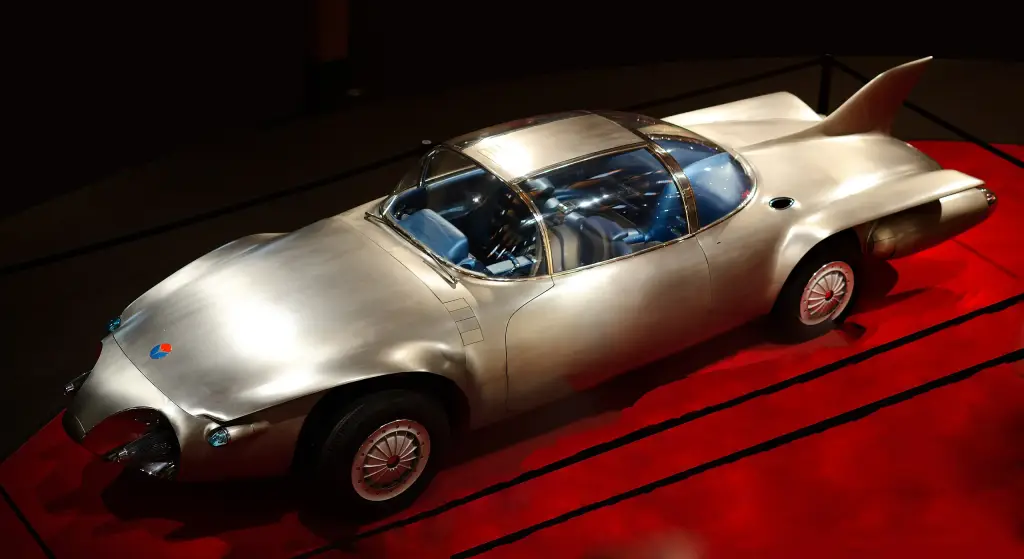
The Firebird II of 1956 was designed as a four-seat family car, low and wide with two large front air intakes, a high bubble canopy and a vertical tail fin. Its bodywork was made entirely of titanium and its engine produced 200 hp. To solve the exhaust heat problem, the car fed the exhaust through a regenerative system that let the engine run nearly 1,000 F cooler and also powered the accessories; it could use several fuels, most commonly kerosene. It was the first General Motors car with disc brakes on all four wheels and fully independent suspension, and it had a non-operational guidance system for the highway of the future, in which an electrical wire embedded in the road would send signals to the car. It appeared in the GM-sponsored film Design for Dreaming.
Firebird III
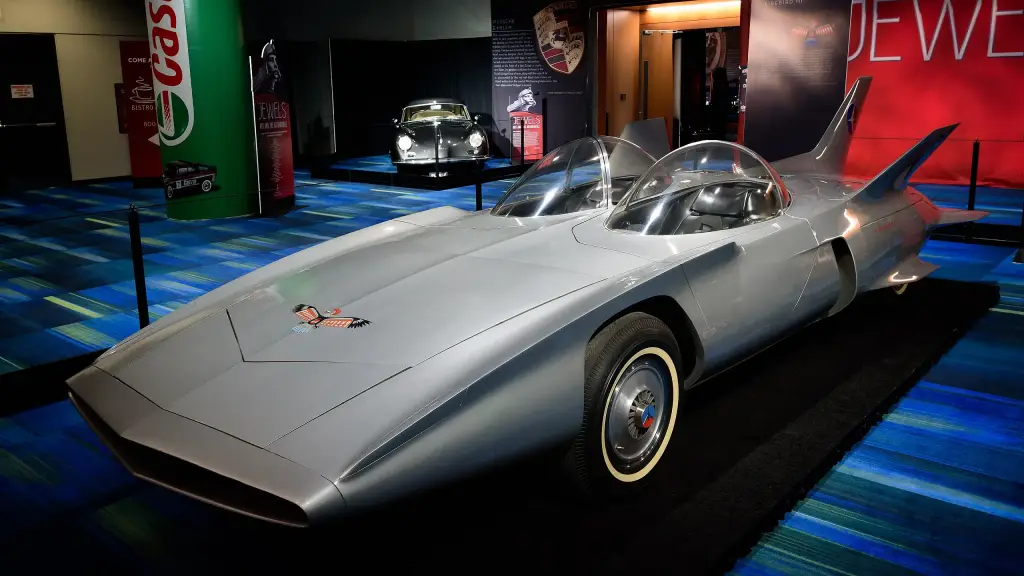
The Firebird III debuted at Motorama in 1959 with a fibreglass body, seven short wings and tail fins, and a double-bubble canopy. It was a two-seater powered by a 225 hp Whirlfire GT-305 gas turbine, with a two-cylinder 10 hp petrol engine running the accessories. It had cruise control, anti-lock brakes, air conditioning, air drag brakes that emerged from flat panels in the bodywork, an ultrasonic key that opened the doors, an automated guidance system and no-hold steering operated by a joystick between the seats.
Firebird IV
The Firebird IV debuted at the 1964 New York World’s Fair in the General Motors Futurama exhibit, another aircraft-inspired design coded XP-790 and intended for a future of automatic guidance at more than twice expressway speeds. Although billed as turbine-powered, it was non-functional. GM repackaged it for the 1969 show circuit as the Buick Century Cruiser, and the show car was reportedly crushed in the 1980s. The prototype cars were preserved at the GM Heritage Center, and models are in the collection of the Henry Ford Museum.
Design and features
- Whirlfire turbines: gas-turbine engines instead of pistons, from 370 hp in the Firebird I to 225 hp in the III.
- Aircraft styling: bubble canopies, tail fins and wings drawn from contemporary fighter design.
- Firebird II technology: titanium body, four-wheel disc brakes, independent suspension and a guidance system.
- Firebird III gadgets: cruise control, anti-lock brakes, air conditioning, ultrasonic door key and joystick steering.
- Show-car purpose: none of the cars was intended for production.
General Motors Firebird versions
- Firebird I / XP-21 (1953): single-seat fibreglass test car with a 370 hp turbine.
- Firebird II / XP-43 (1956): four-seat titanium family car with a 200 hp turbine.
- Firebird III / XP-73 (1959): two-seat car with seven wings and a 225 hp turbine.
- Firebird IV / XP-790 (1964): non-running show car, later the Buick Century Cruiser.
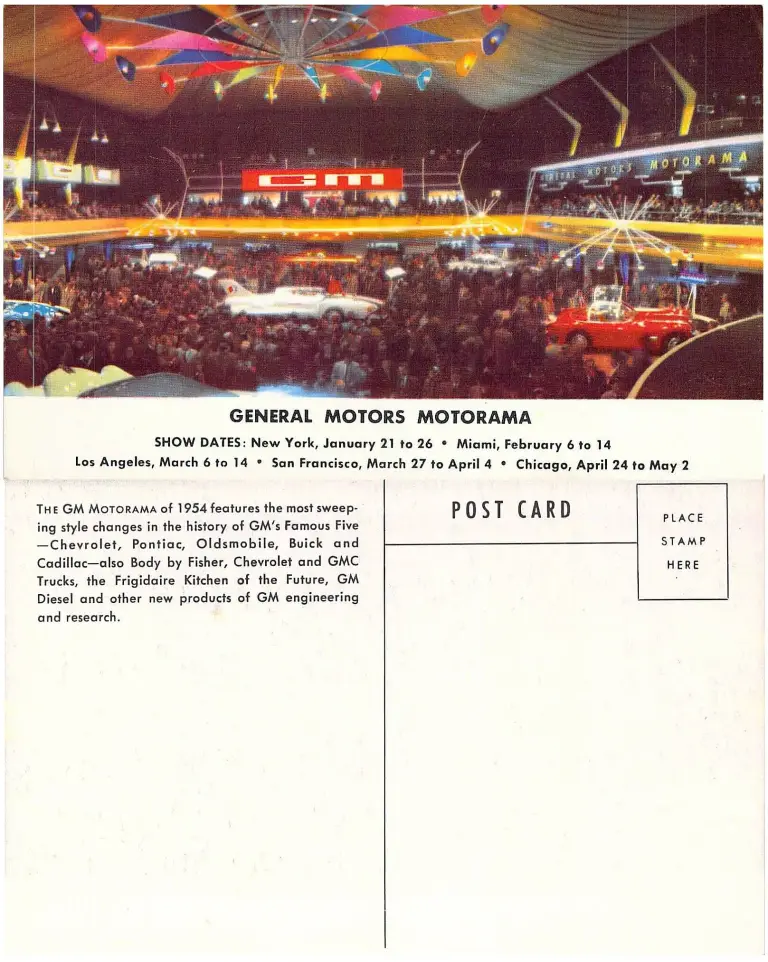
The Firebirds were stars of the General Motors Motorama, and the company returned to turbine power with the EcoJet concept. More are in the General Motors collection.
Sources
- General Motors Firebird, English Wikipedia: the four cars, engines, design, show history, preservation