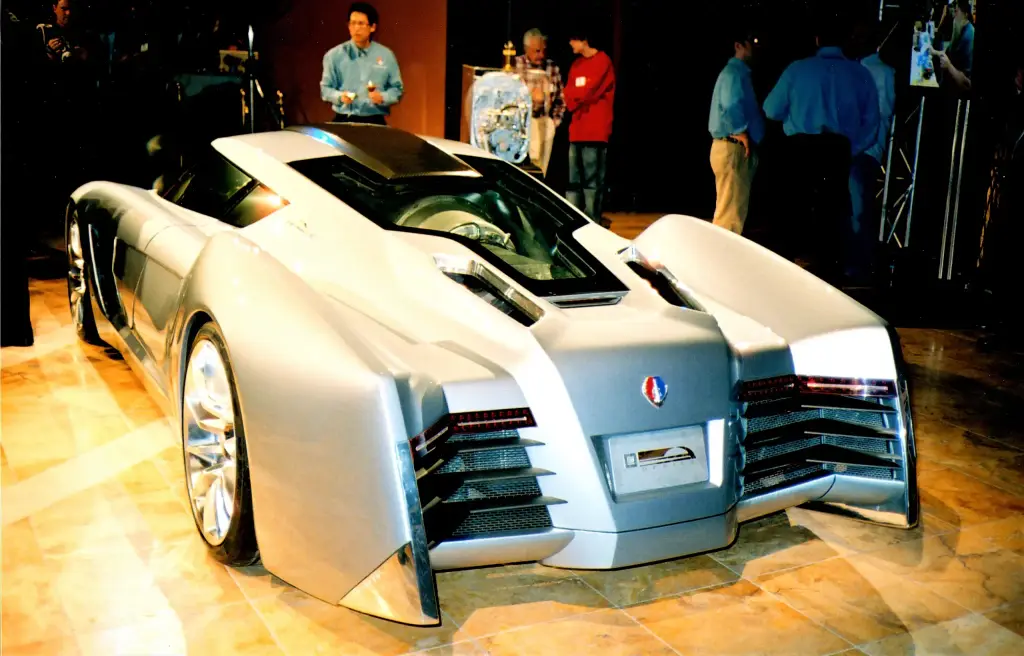
The EcoJet is a concept car designed to run on biodiesel fuel, using a Honeywell LTS101-based gas turbine instead of a reciprocating engine. It was the result of a collaboration between Jay Leno and General Motors, Honeywell, Alcoa and BASF, and unlike most show cars it was meant to be driven on the road.
EcoJet at a glance
| Built by | Jay Leno with General Motors, Honeywell, Alcoa and BASF |
|---|---|
| Shown | 2006 SEMA show |
| Type | two-seat coupé concept |
| Engine | Honeywell LTS101-based gas turbine, 650 hp and 583 ft-lb |
| Fuel | biodiesel (soybean oil), started on Jet A kerosene |
| Transmission | four-speed automatic transaxle from the C5 Corvette |
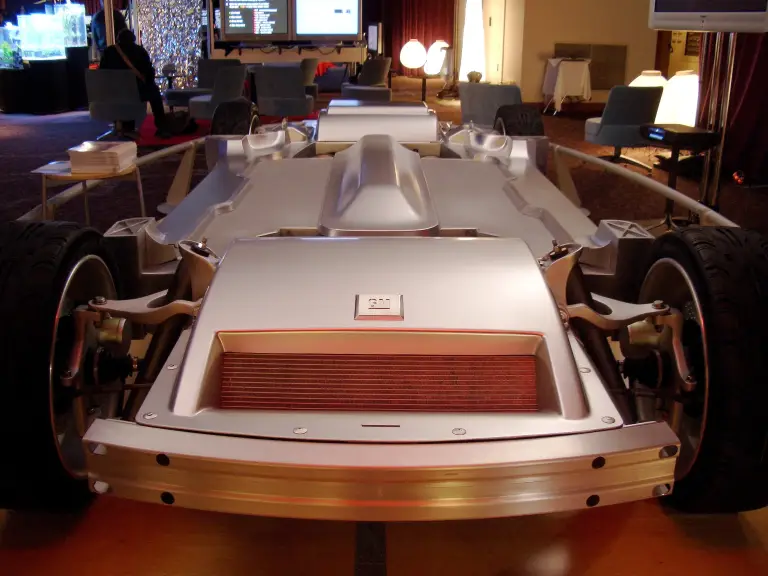
| Chassis | hydroformed aluminium |
| Body | carbon-fibre-reinforced polymer |
| Exhaust | two upward ports in the rear deck |
| Exhaust temperature | 1,000 F normal, 1,800 F at full power |
| Dashboard | Azentek computer, two LCD screens, cameras instead of mirrors |
| Seats | two |
Based on one source, the English Wikipedia article on the EcoJet concept car.
History of the EcoJet
A turbine in a road car
The EcoJet was designed to run on biodiesel with a Honeywell LTS101-based gas turbine instead of a reciprocating engine. The engine, normally used in helicopters, produced 650 horsepower and 583 ft-lb of torque and drove the rear wheels through a four-speed automatic transaxle adapted from the C5 Corvette. An automatic transmission had to be used because the turbine requires a constant load, and operating a clutch with a manual gearbox would cause the turbine to overspeed.
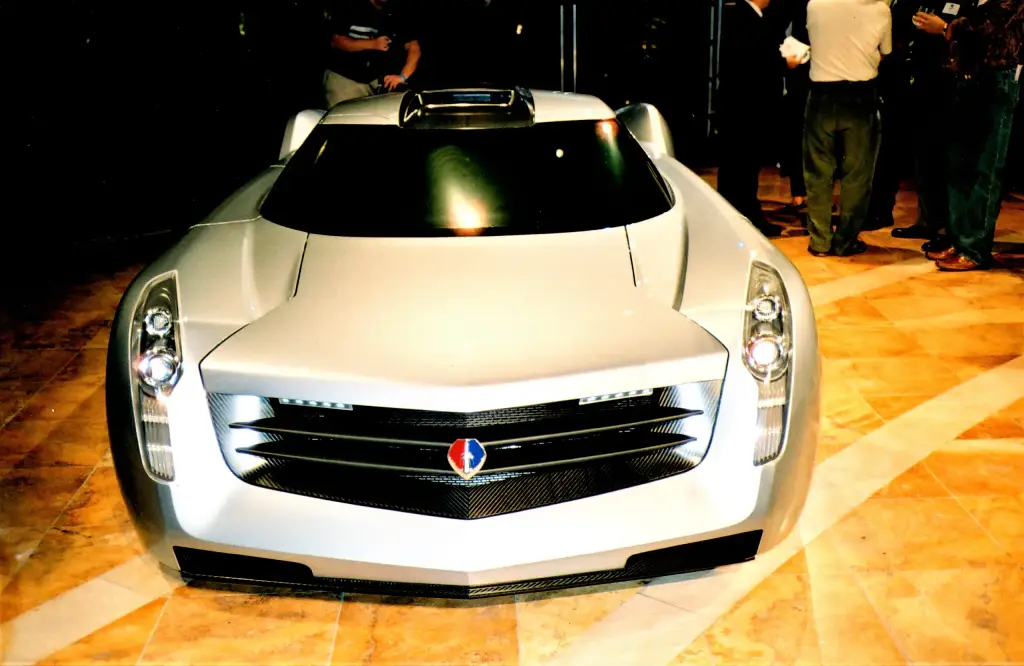
Two fuels
The car carried two separate fuel tanks: one held the main biodiesel fuel, soybean oil, and the other conventional Jet A kerosene. Kerosene started the turbine easily at the beginning of a trip and was also used to run the engine at the end of a trip to clean it, because biodiesel tends to gum up the fuel system if it is not cleared. Exhaust gas temperature was 1,000 degrees Fahrenheit in normal operation and 1,800 at full power, and the exhaust left through two ports on the rear deck. In effect the car ran on refined cooking oil and produced the same kind of smell as frying French fries.
Built to be driven
Unlike other concept cars, the EcoJet was meant to be driven in a regular fashion as well as shown. It was a two-seater of coupé design with a hydroformed aluminium chassis and carbon-fibre-reinforced polymer bodywork, created by Jay Leno with General Motors, Honeywell, Alcoa and BASF. The dashboard used an Azentek in-dash car computer running Microsoft Windows Vista, with one LCD screen for aircraft-style digital gauges and another for multimedia and navigation, plus standard PC functions such as word processing and web access through a WiMAX system. Two smaller screens gave rear views because the car had no mirrors and used cameras instead, with functions controlled by touchscreen or speech recognition software through an array of microphones. The car was assembled by the Big Dog crew, the mechanics employed by Leno to maintain his collection.
Design and features
- Helicopter turbine: a Honeywell LTS101-based engine giving 650 hp and 583 ft-lb.
- Two fuel tanks: soybean-oil biodiesel for running and Jet A kerosene for starting and cleaning.
- Corvette transaxle: a four-speed automatic adapted from the C5, needed to keep a constant load on the turbine.
- Screen-based cockpit: an Azentek Windows computer, digital gauges, navigation and camera rear views.
- Road use: a concept meant to be driven regularly, not only displayed.
EcoJet versions
- EcoJet (2006): the single turbine-powered coupé, shown at SEMA.
- Biodiesel mode: normal running on soybean oil.
- Kerosene mode: starting and end-of-trip cleaning on Jet A.
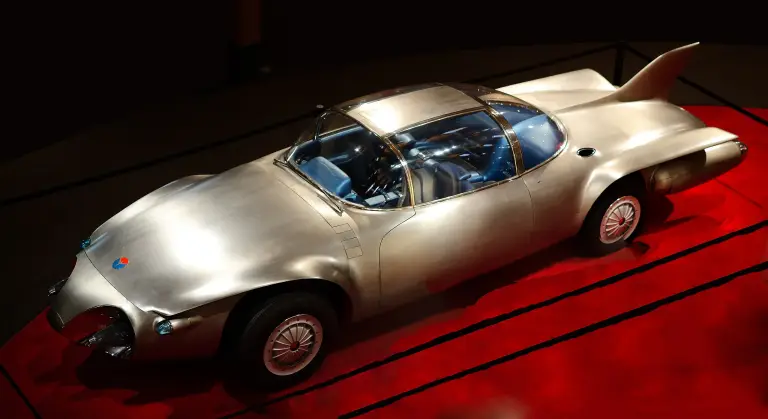
The EcoJet’s turbine theme echoes the General Motors Firebird concepts of the 1950s, and its experimental approach sits alongside the Ultralite. More are in the General Motors collection.
Sources
- EcoJet concept car, English Wikipedia: turbine, transmission, fuels, chassis, body, cockpit