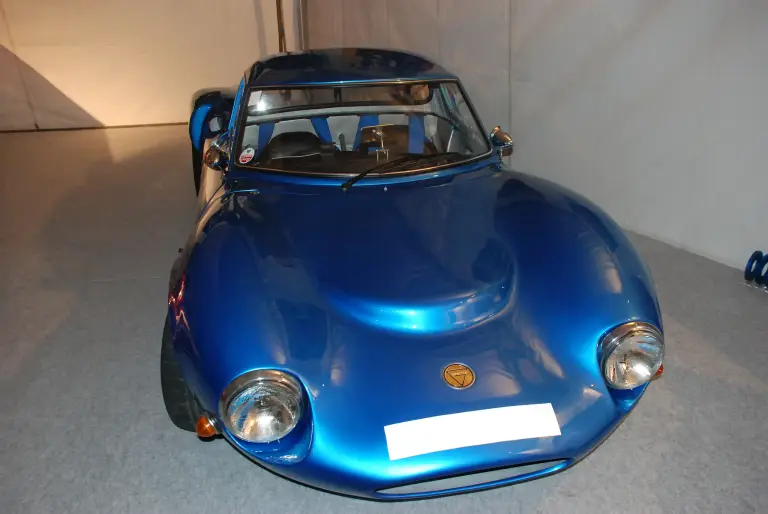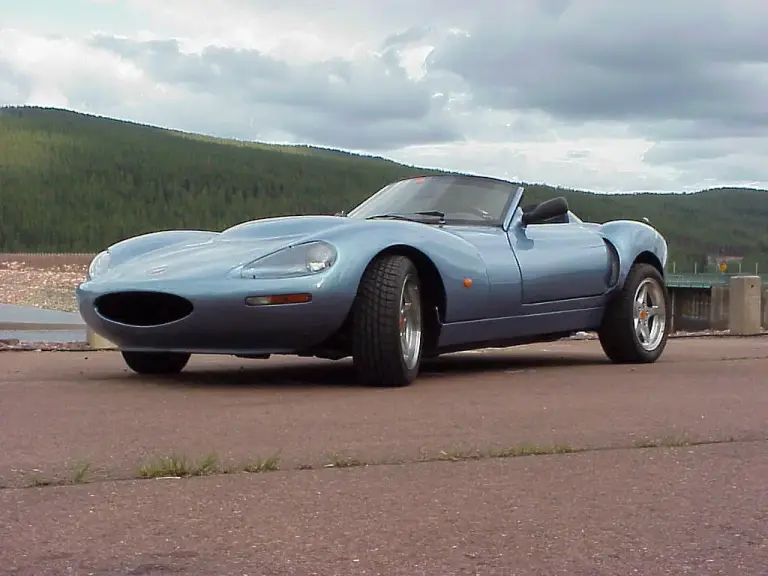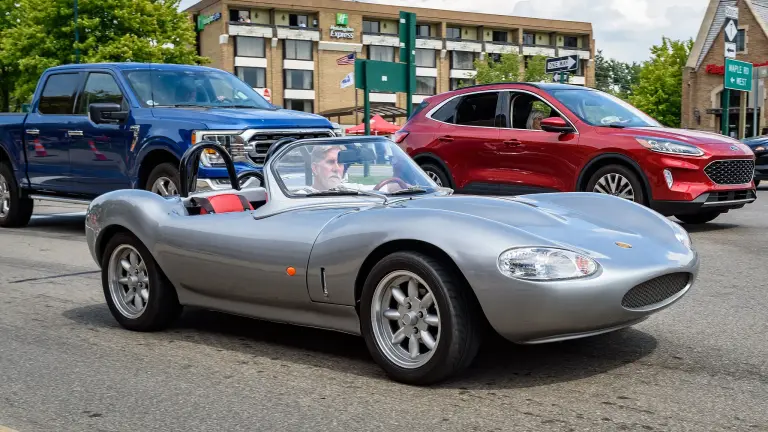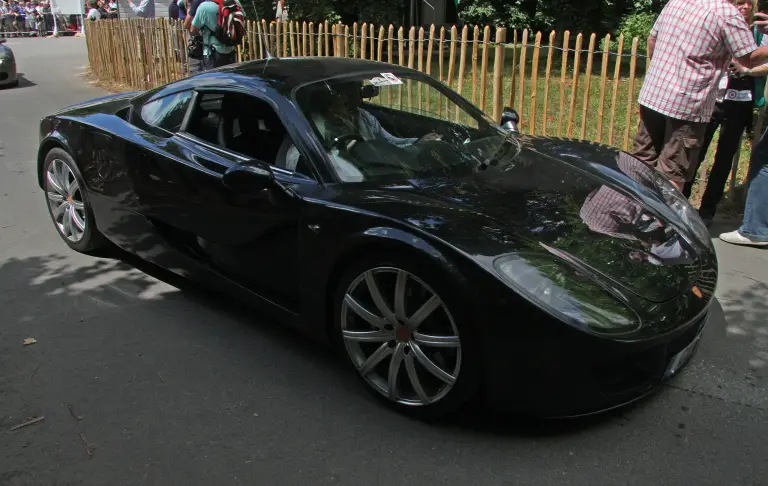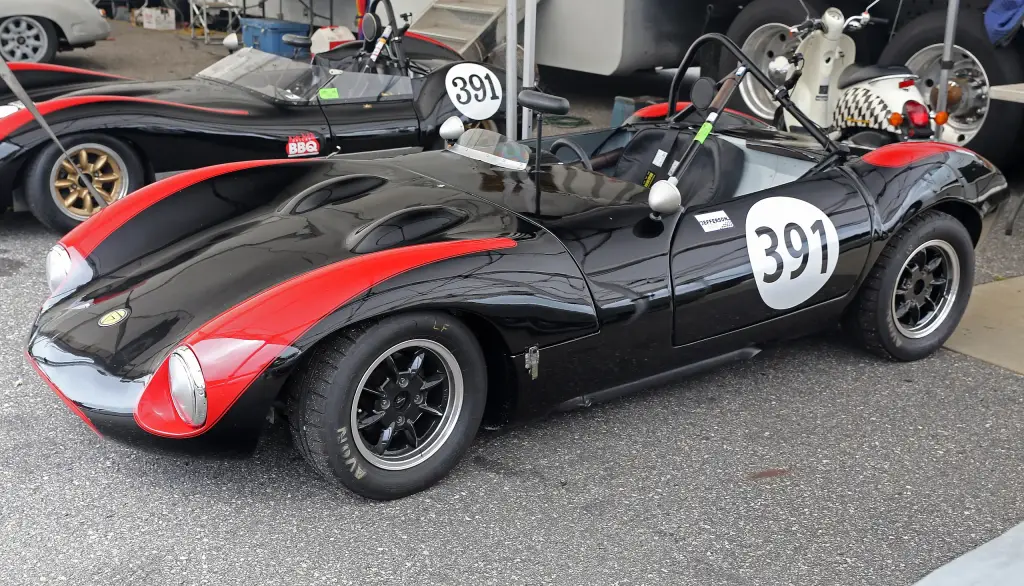
The Ginetta G3 and G4 were a series of British sports cars designed, developed and built by Ginetta between 1959 and 1968 and again between 1981 and 1984. The G3 arrived in 1959 with a glass-fibre body, followed in 1961 by the very similar G4, which used the new Ford 105E engine. More than 500 were built up to 1969, and the model was revived in 1981 and again by DARE in the 1990s.
Ginetta G3 and G4 at a glance
| Maker | Ginetta Cars |
|---|---|
| G3 introduced | 1959 |
| G4 introduced | 1961 |
| Production | 1959–1968/69, again 1981–1984 |
| Bodies | coupé, convertible and competition barchetta |
| Chassis | tubular; square-tube space frame from 1966 |
| Front suspension | coil springs; Triumph Herald parts from 1966 |
| Rear axle | Ford live axle; BMC axle from 1963 |
| Brakes | discs front, drums rear |
| Engines | Ford Kent units from 997 cc to 1.5 litres |
| 1,340 cc output | 91 hp (68 kW) |
| Performance | 193 km/h (120 mph), 0–100 km/h in 8.5 s |
| Built | over 500 to 1969; about 35 Series IV; two Series V |
History of the Ginetta G3 and G4
G3 and G4
The G3 was introduced with a glass-fibre body in 1959, followed by the very similar G4 in 1961. The G4 used the new Ford 105E engine and had a glass-fibre GT-style body, with the suspension updated to coil springs at the front and a Ford live axle at the rear. Whereas the earlier G2 and G3 had been designed for racing, the G4 was usable as an everyday car but still very competitive in motorsport.
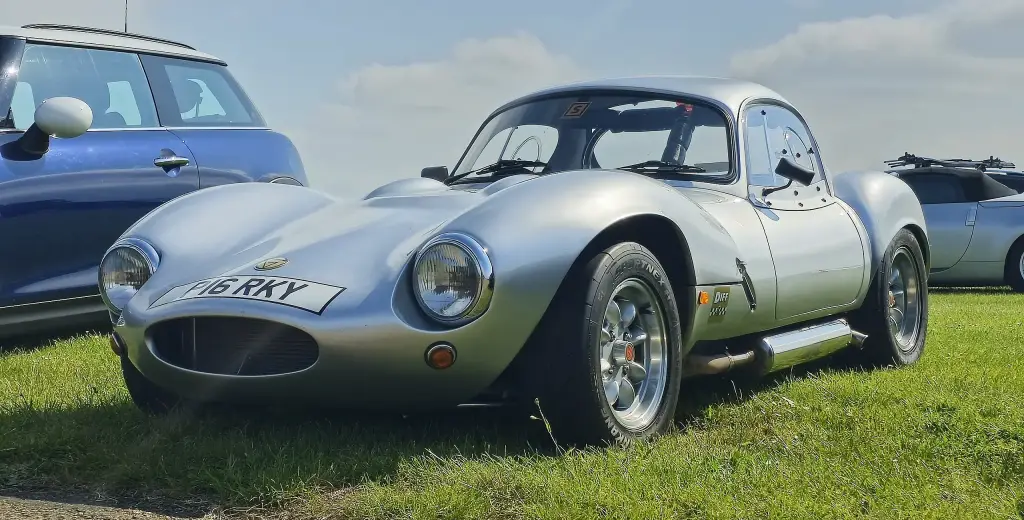
Series II and III
The car was available with three bodies: a two-door coupé, a two-door convertible and a two-door barchetta reserved for competition. Front brakes were discs and rear brakes drums, and the turning circle was 9.1 m. In 1963 a coupé variant was introduced alongside the open car and a BMC axle replaced the Ford unit at the rear; road tests recorded 190 km/h (120 mph) with a 1,500 cc engine. The Series II of 1963 was redesigned with a longer tail in place of the original truncated design and a revised front suspension. In 1966 the chassis was replaced by a new, stronger square-tubed space frame with Triumph Herald front suspension, a more steeply raked windscreen and a revised front bumper; the Series III of that year added lay-down headlights to meet new requirements.
1981 revival and DARE
Production stopped in 1969 after more than 500 cars had been built with a variety of Ford engines, but it was revived in 1981 with the Series IV, which was 51 mm wider and 76 mm longer than the III and powered by a 1,599 cc Ford four-cylinder engine; about 35 were built to 1984. The final Series V replaced the live axle with trailing-arm independent rear suspension, and only two were built, one a modified Series IV. The G4 was so successful in kit-car racing that it was banned in the mid-1980s, prompting Ginetta to develop the very similar G27. After selling Ginetta, brothers Trevor and Ivor Walklett formed Design and Research Engineering (DARE) and resumed manufacture of the G4 in the 1990s, mainly to meet demand in Japan.
Design and features
- Glass-fibre body: light and easy to repair, well suited to kit-car construction.
- Ford engines: the range ran from the 997 cc 105E unit to the 1.5-litre Cortina engine, with 91 hp from 1,340 cc.
- Three body styles: a coupé, a convertible and a competition barchetta.
- Racing success: the G4 was so effective in kit-car racing that it was banned in the mid-1980s.
- Everyday usability: unlike the earlier G2 and G3, the G4 could be used as a normal road car.
Ginetta G3 and G4 versions
- G3 (1959): the original glass-fibre car, aimed at racing.
- G4 (1961): the Ford 105E-engined development with a GT-style body.
- G4 Series II (1963): longer tail, revised front suspension and a BMC rear axle.
- G4 Series III (1966): square-tube space frame, Triumph Herald front suspension and lay-down headlights.
- G4 Series IV and V (1981–1984): the revived car, about 35 Series IV built and two Series V with independent rear suspension.
- DARE G4 (1990s): cars built from the original designs by the Walklett brothers’ new company.
The G4 was developed into the G12 racer and was later joined by the rear-engined G15. More cars are in the Ginetta collection.
Sources
- Ginetta G4, English Wikipedia: G3 and G4 design, series, engines, production, DARE
- Ginetta Cars, English Wikipedia: production dates and Series IV details