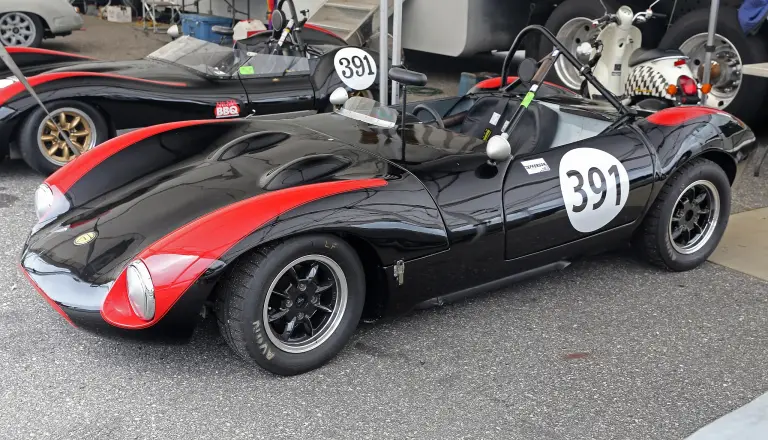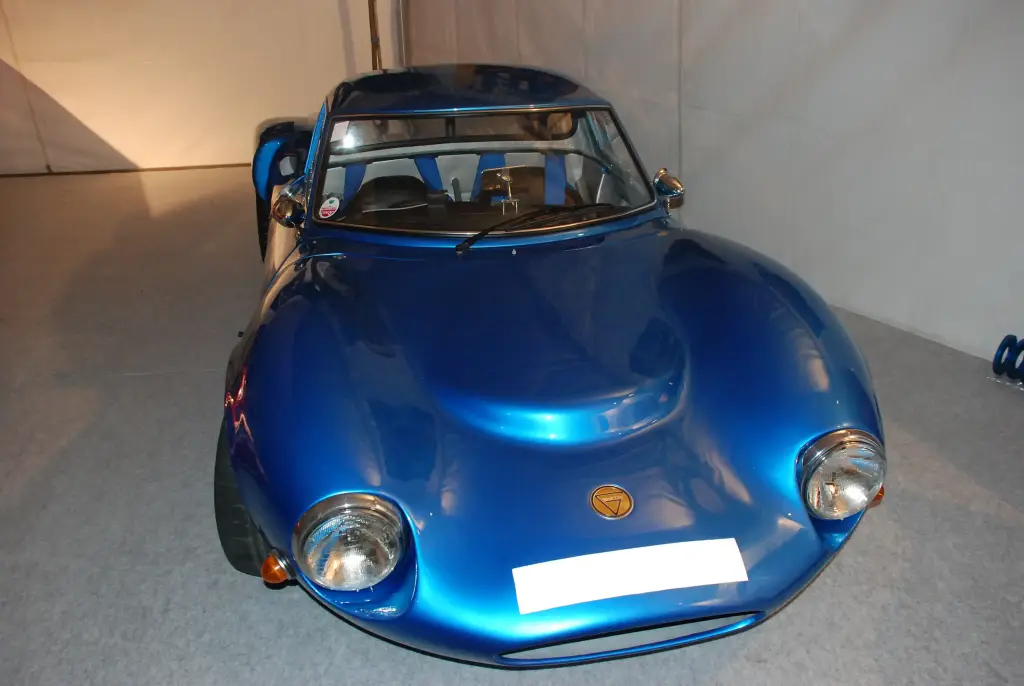
The Ginetta G12 was a competition sports car unveiled in 1966 as an evolution of the G4. It replaced the older car’s chassis with a tubular steel space frame, brought Triumph-derived suspension and disc brakes, and used a 1.0-litre Cosworth SCA engine. About 28 were built and the model was later revived by DARE.
Ginetta G12 at a glance
| Maker | Ginetta Cars, Witham, Essex |
|---|---|
| Unveiled | 1966 |
| Based on | Ginetta G4 |
| Chassis | tubular steel space frame |
| Body | removable glass-fibre panels |
| Front suspension | Triumph-derived uprights, double wishbones, coil springs |
| Rear suspension | single upper links, reversed lower wishbones, radius arms |
| Brakes | Girling discs front and rear |
| Engine | 1.0-litre Cosworth SCA inline-four |
| Later engines | larger units, including an Aston Martin V8 |
| Successor | Ginetta G16 |
| Built | about 28 |
The G12 is described in a section of the English Wikipedia article on Ginetta Cars; this page uses that section, plus the G4 article for the DARE revival.
History of the Ginetta G12
An evolution of the G4
Unveiled in 1966, the G12 was an evolution of the G4 with many new features that set it apart. It had a new tubular steel space-frame chassis, with the cockpit section mounted to it for extra strength, while removable bodywork allowed easy repair. At the front were Triumph-derived uprights and double wishbones, with camber adjustment by rose-joints on the upper items, and coil springs. The rear used single upper transverse links with lower reversed wishbones, again with rose-joints, plus radius arms and coil springs. Anti-roll bars were fitted, and Triumph-sourced Girling disc brakes at the front and rear improved stopping power.
Engines and racing record
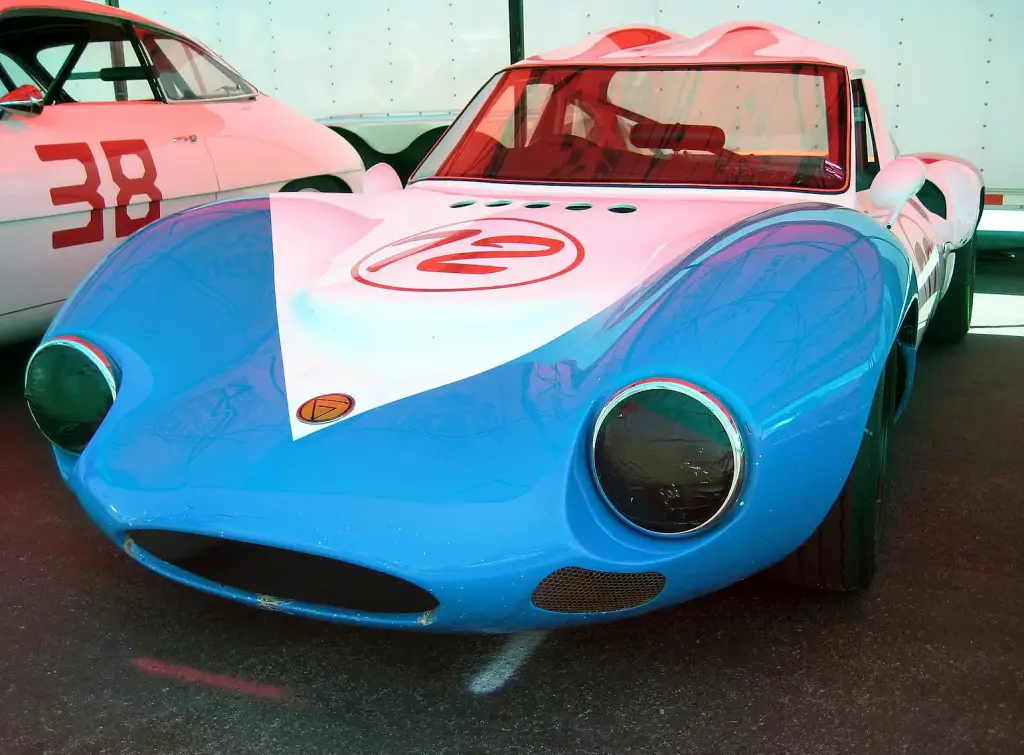
Power came from a 1.0-litre Cosworth SCA inline-four, although larger engines were fitted later, including an Aston Martin V8, with less success. The G12 dominated its class, outclassing Lotus Elan 26Rs and Coventry Climaxes and winning the 1,150 cc MN series; it also took successes at hill-climb events before being replaced by the G16. Approximately 28 were built, and at least one was converted into the Jerboa SP.
The DARE years
After selling Ginetta, brothers Trevor and Ivor Walklett formed Design and Research Engineering (DARE) to build Ginetta’s old designs, for which there was considerable demand, particularly in Japan. DARE resumed manufacture of the G4 and some other models, including the G12, in the 1990s.
Design and features
- Space-frame chassis: a tubular steel frame with the cockpit section mounted to it for stiffness.
- Removable bodywork: glass-fibre panels that could be taken off for easy repair.
- Triumph-derived suspension: double wishbones at the front with camber adjustment by rose-joints.
- Four-wheel disc brakes: Girling discs at both ends, unusual for a small British sports car of the time.
- Cosworth power: the 1.0-litre SCA four gave the G12 its class-winning performance.
Ginetta G12 versions
- G12 (1966): the works racer with the 1.0-litre Cosworth SCA engine.
- Larger-engined G12s: cars fitted later with bigger engines, including an Aston Martin V8, with less success.
- Jerboa SP: at least one G12 converted into this car.
- DARE G12: cars built from the original designs by DARE in the 1990s.
The G12 grew out of the G3 and G4 and was replaced in Ginetta’s racing programme by the G16. The road-going G15 was shown beside the G12 at the 1967 London motor show. More cars are in the Ginetta collection.
Video: DARE Ginetta G12
Video on YouTube.
Sources
- Ginetta Cars, English Wikipedia: G12 design, engine, racing record, production
- Ginetta G4, English Wikipedia: DARE revival of the G12