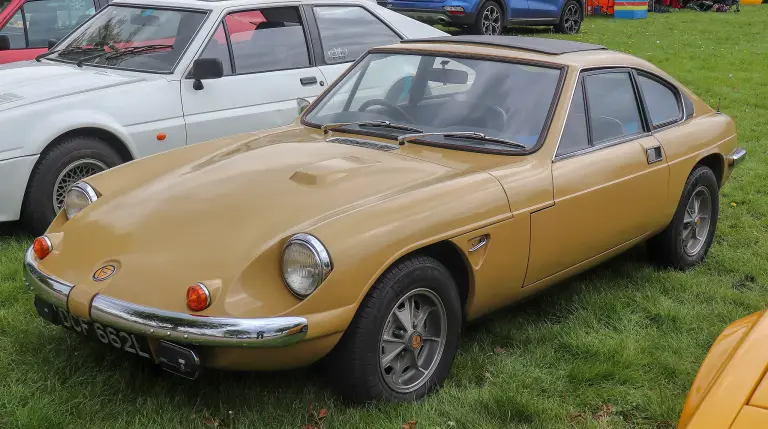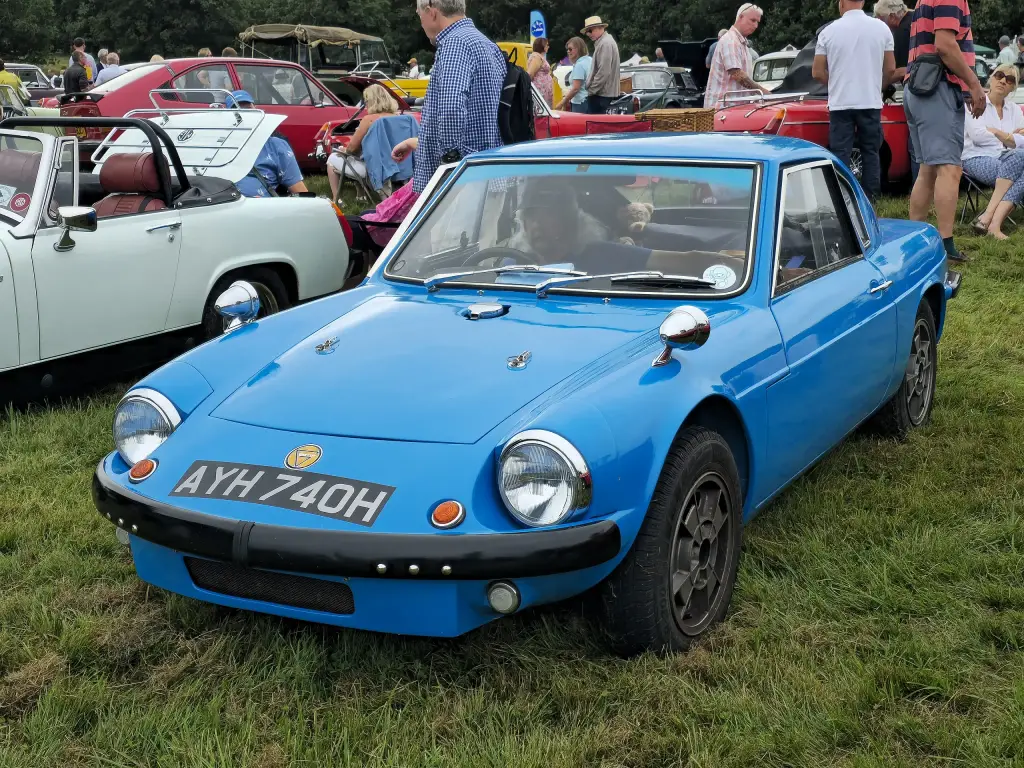
The Ginetta G15 was a two-seater, rear-engined sports car designed by Ivor Walklett and built by Ginetta Cars in Witham, Essex, between 1967 and 1974. It used the 875 cc aluminium Rootes Imp engine and a four-speed transaxle, and its glass-fibre coupé body was bolted to a tubular steel chassis. About 800 were built, and the G15 was fully type approved, so for the first time Ginetta could sell complete cars.
Ginetta G15 at a glance
| Maker | Ginetta Cars, Witham, Essex |
|---|---|
| Designer | Ivor Walklett |
| Production | 1967–1974, about 800 built |
| Layout | rear-engined, rear-wheel drive |
| Engine | 875 cc Rootes aluminium inline-four, about 55 bhp |
| Optional engine | 998 cc Rallye Imp, 65 bhp, in the G15S |
| Gearbox | four-speed manual transaxle |
| Body | glass-fibre coupé on a tubular steel chassis |
| Suspension | independent, coil springs and dampers front and rear |
| Brakes | 9 in (230 mm) discs front, drums rear |
| Wheels | 5.2 × 13 in |
| Weight | about 560 kg |
History of the Ginetta G15
Design
Ginetta entered into an arrangement with the Rootes Group in Coventry to supply the lightweight aluminium 875 cc inline-four, a design inspired by the Coventry Climax FWMA, and four-speed manual transaxles. The slanted angle of the Imp engine and its low weight suited the low body lines Ivor Walklett envisaged. The coupé body was made of glass fibre from a single mould and formed part of the structure when mounted to the tubular steel chassis. Suspension was independent with coil springs and dampers front and rear. The front used modified upper and lower wishbones from various Triumph cars — the TR4, TR6, Spitfire and Herald — with an anti-roll bar, 9-inch disc brakes and 4×100 mm hubs; the rear used trailing swingarms and drum brakes. A rear engine cover swings up to give full access to the engine. The wheels were 5.2 by 13 inches, and a flip-up filler in the centre of the nose fed either an 18-litre steel tank or a 26-litre fibreglass one. The radiator sat in the front with the spare wheel behind it, and the battery was mounted on the passenger side ahead of the front wheel.
Mk II and Mk III
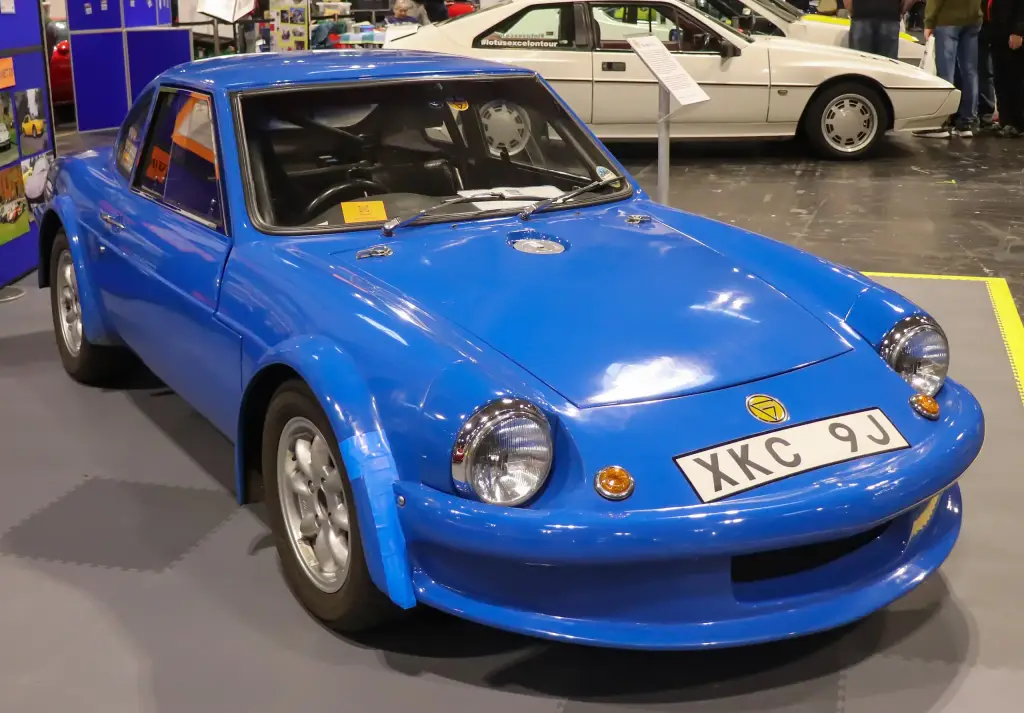
The first prototype, painted ‘moonstone white’, was exhibited at the 1967 International Motor Show at Earls Court next to Ginetta’s G12 racing car. Because the rear-mounted Sunbeam Imp radiator of the first cars sometimes overheated, the Mk II of 1969 had a front-mounted radiator with an electric fan. It also gained a revised dashboard with Smiths and AC gauges and improved steel-tube frame and fibreglass-form seats; a heater and windscreen washer were optional. The Mk III of 1970 had larger rear quarter-light windows. Engine options grew: the 875 cc unit was standard, and a 998 cc 65 bhp version of the Rootes Rallye Imp engine was later offered for an extra £100 in the G15S. The original wheels with aluminium trim were replaced by Cosmic or Minilite alloys.
Production and the Super S
Approximately 800 G15s were produced from 1967 to 1974, and full type approval allowed complete Ginetta cars to be sold for the first time. Eight G15s were built with Volkswagen engines and called the ‘Super S’.
Design and features
- Imp engine: the light 875 cc Rootes aluminium four was mounted behind the driver, slanted to keep the body low.
- Glass-fibre monocoque body: a single-mould coupé shell bolted to a tubular steel chassis, forming part of the structure.
- Mixed suspension: Triumph-derived front wishbones and Imp-based rear trailing arms, independent at both ends.
- Practical details: a rear engine cover that swings up, a flip-up nose filler and a spare wheel ahead of the radiator.
- Type approval: the G15 was the first Ginetta that could be sold as a complete car.
Ginetta G15 versions
- G15 (1967): the original 875 cc car, launched in prototype form at Earls Court.
- G15 Mk II (1969): front-mounted radiator with electric fan, revised dashboard and seats.
- G15 Mk III (1970): larger rear quarter-light windows.
- G15S: the 998 cc Rallye Imp engine with 65 bhp for an extra £100.
- Super S: eight cars built with Volkswagen engines.
The G15 was joined in 1970 by the larger G21, and its rear-engined layout set it apart from the front-engined G3 and G4. More cars are in the Ginetta collection.
Video: Ginetta G15 Hayabusa
Video on YouTube.
Sources
- Ginetta G15, English Wikipedia: design, suspension, engines, Mk II and Mk III
- Ginetta Cars, English Wikipedia: production total, type approval, Super S