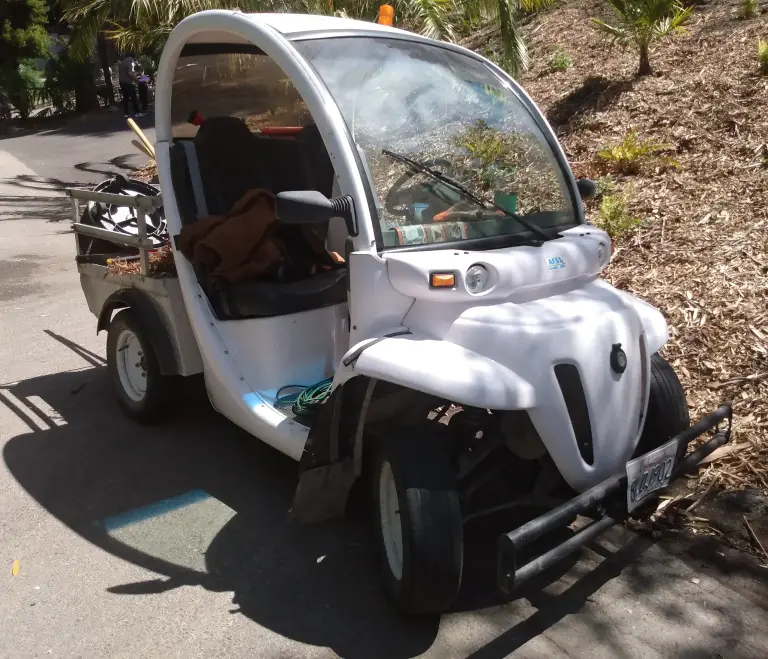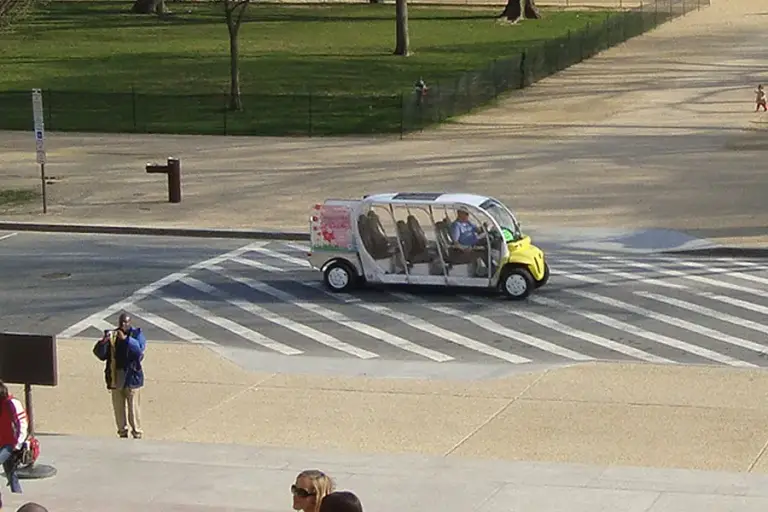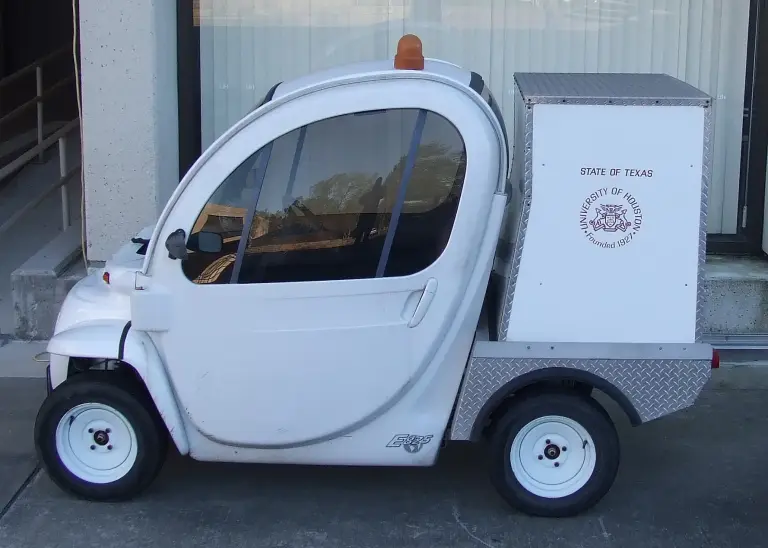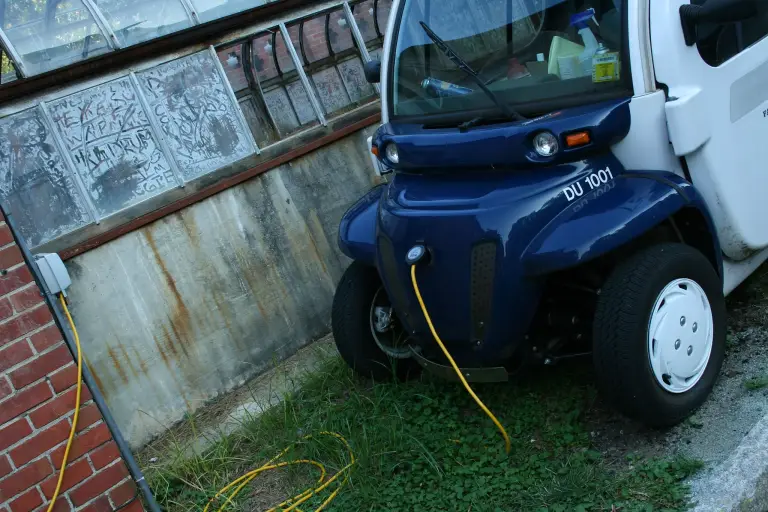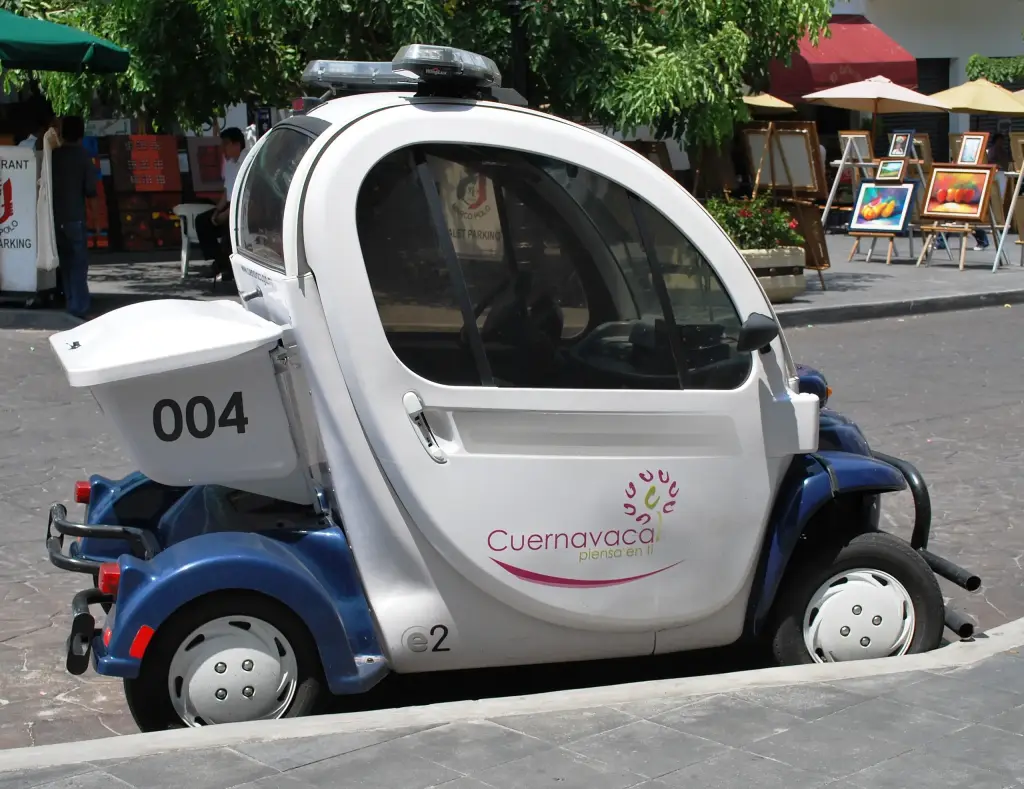
The GEM mini is the small end of the Global Electric Motorcars range: the two-seat, short-range car that the company has built since its first vehicle of April 1998. Today that idea is carried by the two-passenger e2, a compact low-speed vehicle sold with ordinary lead-acid or, after the 2016 redesign, lithium-ion batteries.
GEM mini at a glance
| Maker | Global Electric Motorcars (GEM), Fargo, North Dakota |
|---|---|
| Class | low-speed vehicle / neighbourhood electric vehicle |
| Seats | two |
| Drive | battery-electric |
| Battery system | 48 volts in 1998, 72 volts in later cars |
| Batteries | six 12-volt lead-acid or lead-gel units in the 72-volt range |
| Top speed | 20 mph (32 km/h) in 1998, 25 mph (40 km/h) later |
| Range | 30–100 miles (50–160 km) depending on battery technology |
| Recharging | 6–8 hours from a standard 120-volt outlet |
| Compact version | the e2 Mini, used as a police vehicle in Cuernavaca, Mexico |
Based on one source: the English and German Wikipedia pages on Global Electric Motorcars. GEM publishes no model called simply Mini, so this page covers the compact two-seat end of the range — the first car of 1998, the e2 and the e2 Mini — using the brand’s own data.
History of the GEM mini
The first small GEM
Global Electric Motorcars was set up in 1992 by former General Motors engineers, then bought by North Dakota investors and moved to Fargo. Its first vehicle, completed in April 1998, was as small as the idea allowed: two seats, a 48-volt battery and a top speed of 20 mph (32 km/h). Shortly afterwards the National Highway Traffic Safety Administration created the low-speed vehicle class, and small cars like this one became legal on public roads in the United States.
From the first car to the e2
The two-seat body has stayed in the range ever since. GEM’s model list now names it the e2, the smallest of three passenger bodies beside the four-seat e4 and the six-seat e6, and the German page groups it with the utility eS, eL and eL XD as the compact end of the company’s output. The e2 was one of the four models fully redesigned in October 2016, when GEM, by then owned by Polaris, added lithium-ion battery options.
Where small GEMs work
Cars of this size are bought for short trips on low-speed sites. GEM lists local, state and national government agencies, resorts, master-planned communities, universities, medical and corporate campuses, sports teams and taxi-shuttle services among its customers, and a compact model suits security patrols and small errands: the e2 Mini, for instance, has been used as a police car in Cuernavaca, Mexico. On the road the same rules apply as to the larger models: 25 mph, a 72-volt pack of six 12-volt accumulators, six to eight hours of charging from a standard socket, and the safety equipment — belts, headlamps, wipers, safety glass — that keeps a low-speed vehicle legal.
Design and features
- Two seats: the smallest body GEM builds.
- Smallest battery of the range: 48 volts in the first car, 72 volts from the later models.
- Patrol and errand work: a size suited to security rounds, deliveries and short hops.
- Low-speed legality: street legal in nearly all 50 states on roads limited to 35 mph.
GEM mini versions
- First GEM car (1998): the 48-volt two-seater that started the line.
- e2: the current two-passenger model.
- e2 Mini: the compact version used by police in Cuernavaca.
- Utility relatives: the eS, eL and eL XD with cargo beds.
The two-seat model is described in GEM e2, and the larger cars in GEM e4 and GEM e6. The company’s history is in GEM car; more electric vehicles are in the GEM collection.
Sources
- Global Electric Motorcars, English Wikipedia: first car, models, technology
- Global Electric Motorcars, German Wikipedia: battery layout, charging, model list