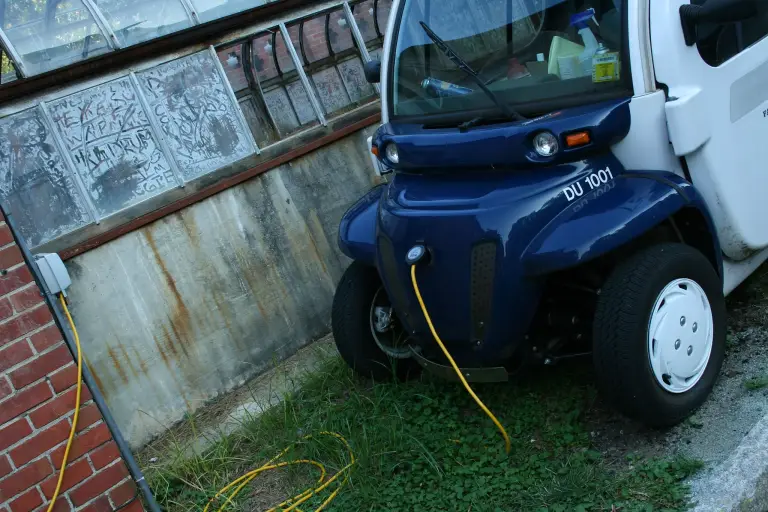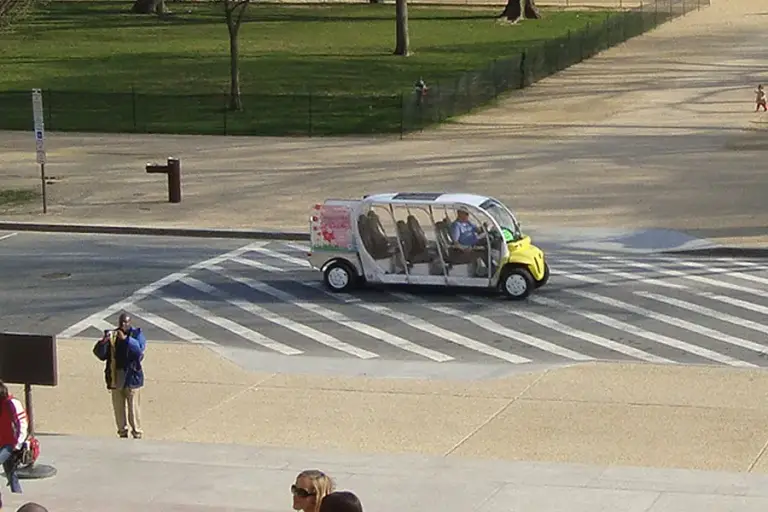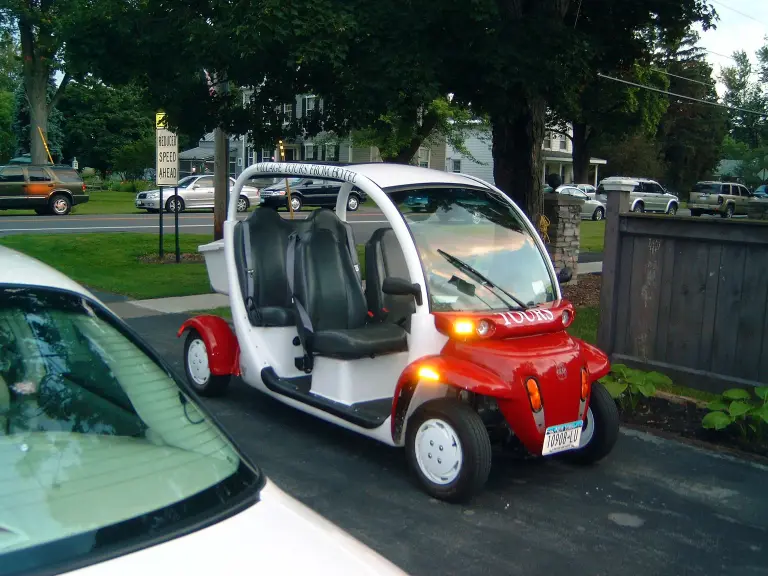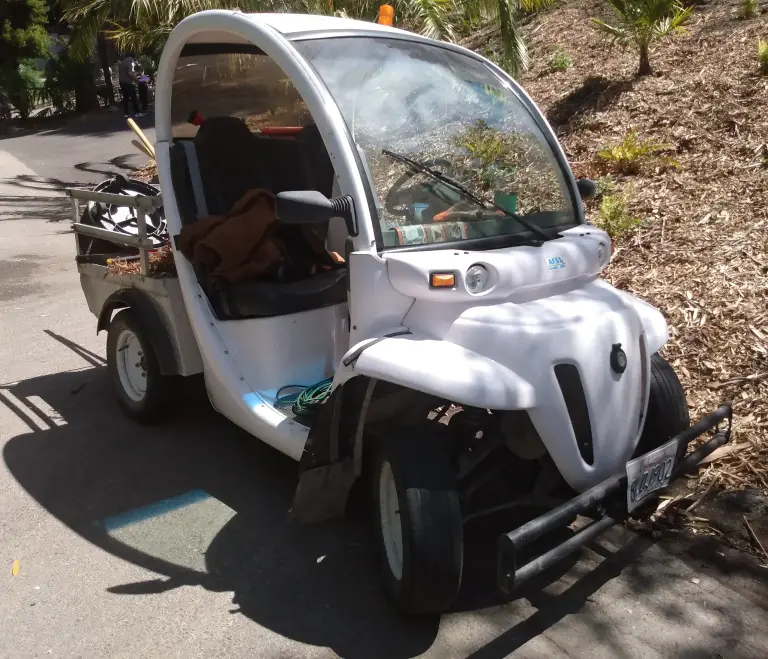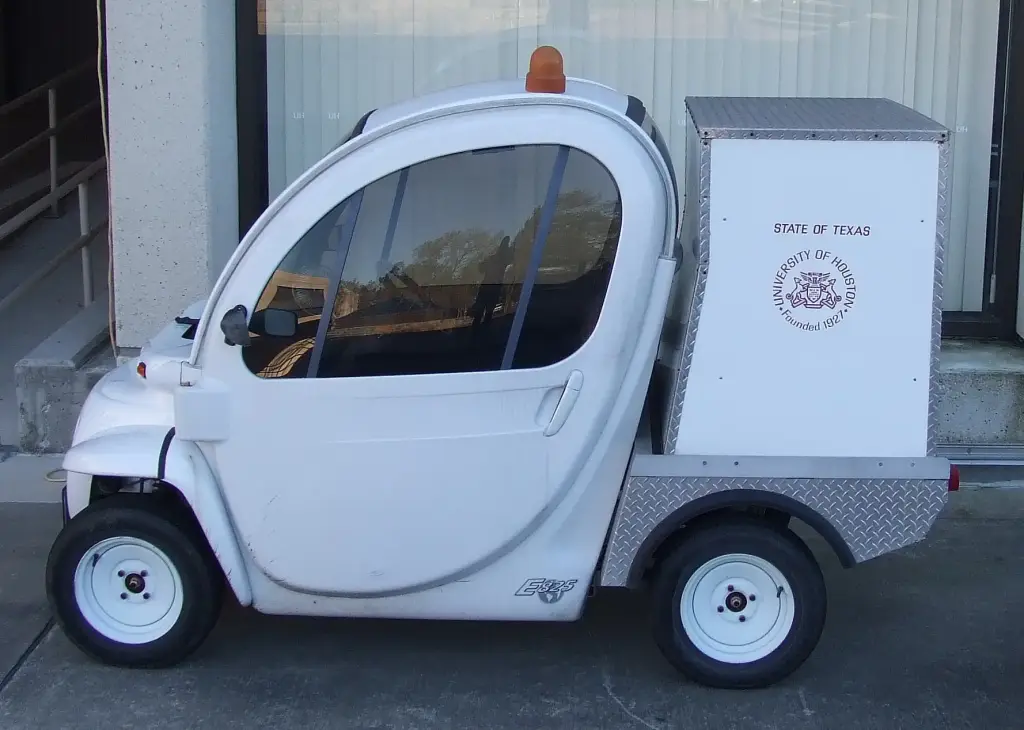
The GEM e825 is one of the early models of Global Electric Motorcars, the American maker of neighbourhood electric vehicles based in Fargo, North Dakota. Like the rest of the range it is a low-speed vehicle on a 72-volt battery, limited to 25 mph (40 km/h) and recharged from an ordinary household socket.
GEM e825 at a glance
| Maker | Global Electric Motorcars (GEM), Fargo, North Dakota |
|---|---|
| Class | low-speed vehicle / neighbourhood electric vehicle |
| Era | early 2000s |
| Drive | battery-electric |
| Battery system | 72 volts |
| Batteries | six 12-volt lead-acid or lead-gel units |
| Top speed | 25 mph (40 km/h) |
| Range | 30–100 miles (50–160 km) depending on battery technology |
| Recharging | 6–8 hours from a standard 120-volt outlet |
| Road use | legal in nearly all 50 US states on roads limited to 35 mph |
Based on one source: the English and German Wikipedia pages on Global Electric Motorcars. The brand page does not describe the e825 separately, so the technical data here are those of GEM’s 72-volt low-speed vehicles of the model’s period.
History of the GEM e825
Naming in the early range
GEM numbers its passenger cars by the number of seats — e2, e4 and e6 — and its utility models with letters: eS, eL and eL XD. The e825 comes from the earlier period of the company, when the range was still being formed after the first car of April 1998 and the four-seat and utility models of December that year. The model was in use at the start of the 2000s, in the years when GEM was a DaimlerChrysler subsidiary: DaimlerChrysler acquired the company in December 2000 and held it until the sale to Polaris in July 2011.
What the technology was
Cars of this generation share one layout. Power comes from a 72-volt battery pack, described on the German page as six 12-volt lead-acid or lead-gel accumulators, which is charged from a standard American 110- or 120-volt outlet and takes six to eight hours to fill. Top speed is 25 mph (40 km/h); range varies with the battery fitted, from about 30 miles to as much as 100 miles on a single charge.
Why such a car exists
The whole GEM range is built around the American low-speed vehicle class, created by the National Highway Traffic Safety Administration shortly after the first GEM appeared. Cars of the class may use public roads if they carry safety belts, headlamps, windscreen wipers and safety glass. GEM vehicles are street legal in nearly all 50 states on roads with limits of 35 mph (56 km/h) or less, and they are sold largely to resorts, campuses, municipalities and shuttle services rather than to private buyers.
Design and features
- 72-volt layout: the same pack used across the GEM passenger and utility range.
- Household charging: six to eight hours on a standard American socket.
- 25 mph limit: the low-speed vehicle cap that decides where the car may legally go.
- Fleet purpose: built for short trips on closed or low-speed sites.
GEM e825 versions
- e825: the early model shown in period film as a passenger car.
- Lead-acid or lead-gel batteries: the two pack chemistries described for GEM vehicles.
- Utility relatives: the eS, eL and eL XD of the same era.
The two-seat model that followed the earliest cars is the GEM e2, and the four-seat one the GEM e4. The company’s first car is described in GEM car, and more electric vehicles are in the GEM collection.
Video: 2002 GEM e825 walk around
Video on YouTube.
Sources
- Global Electric Motorcars, English Wikipedia: history, model naming, technology
- Global Electric Motorcars, German Wikipedia: battery layout, charging, model list