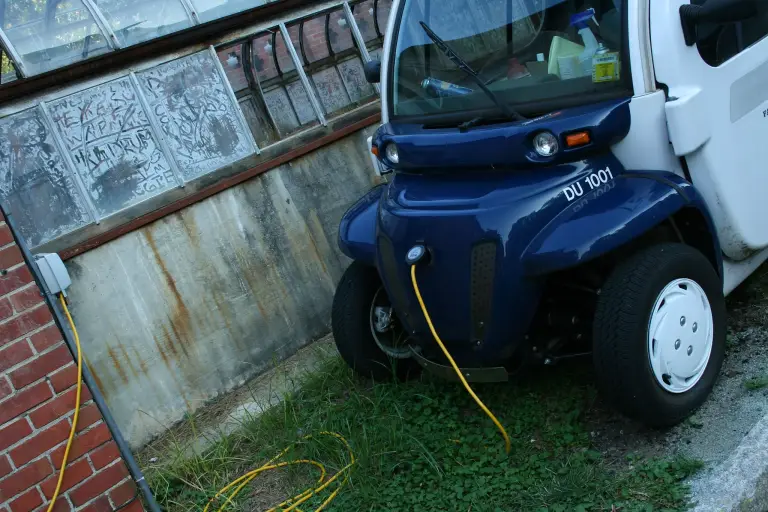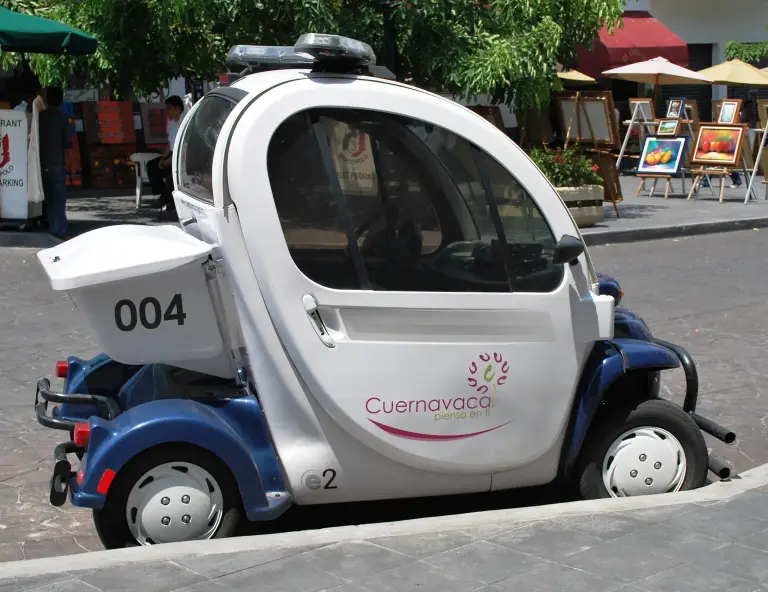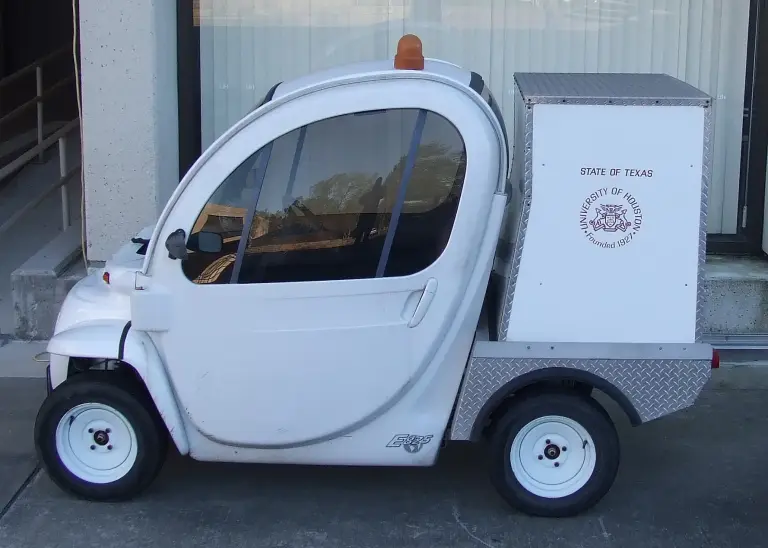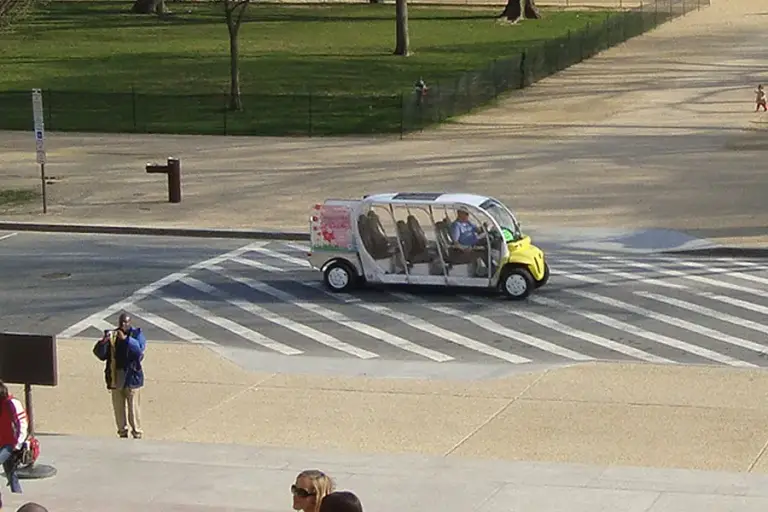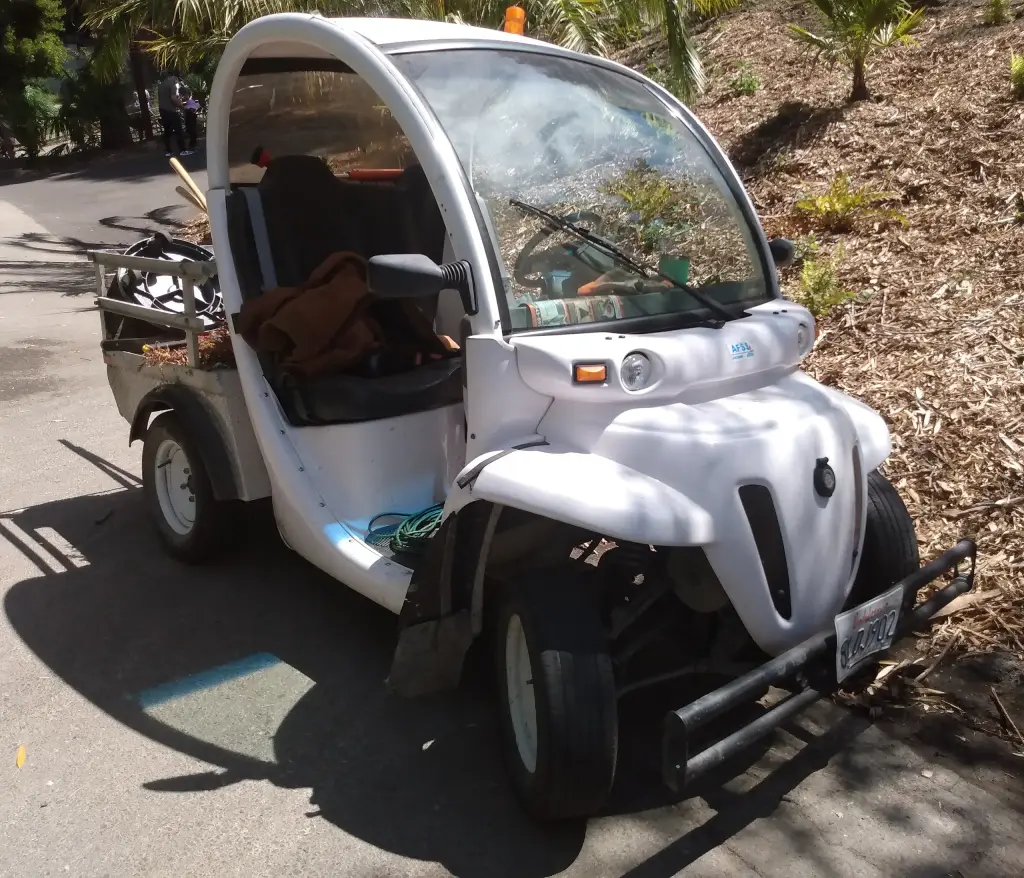
The GEM e2 is the smallest of the passenger cars made by Global Electric Motorcars, a two-seater sold as a low-speed vehicle and intended for roads with limits of 35 mph or less. It continues the idea of the very first GEM car of April 1998, which was also a two-seat machine on a 48-volt battery and limited to 20 mph.
GEM e2 at a glance
| Maker | Global Electric Motorcars (GEM), Fargo, North Dakota |
|---|---|
| Class | low-speed vehicle / neighbourhood electric vehicle |
| Seats | two |
| Drive | battery-electric |
| Battery system | 72 volts |
| Batteries | six 12-volt lead-acid or lead-gel units |
| Top speed | 25 mph (40 km/h) |
| Range | 30–100 miles (50–160 km) depending on battery technology |
| Recharging | 6–8 hours from a standard 120-volt outlet |
| Redesign | October 2016, with lithium-ion battery options |
| Road use | legal in nearly all 50 US states on roads limited to 35 mph |
Based on one source: the English and German Wikipedia pages on Global Electric Motorcars, which describe the brand rather than the e2 individually.
History of the GEM e2
The two-seat idea
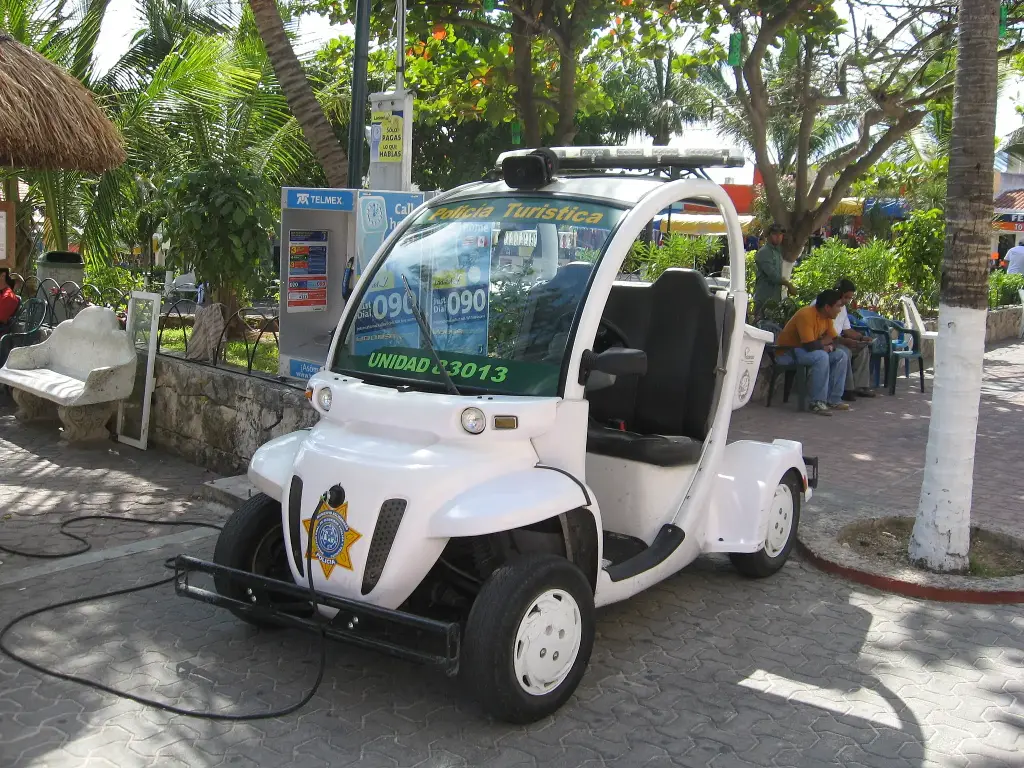
GEM built its first car in April 1998 as a two-passenger vehicle, and the two-seater has stayed in the range ever since. The e2 is the modern name for that car: the smallest passenger model, meant for short trips inside resorts, campuses and planned communities where a full-size car is simply too much vehicle.
The low-speed vehicle class
What makes the e2 usable on public roads is a legal category rather than a technical one. Soon after the first GEM appeared, the National Highway Traffic Safety Administration created the low-speed vehicle class, also called the neighbourhood electric vehicle. It permits cars of this kind on public roads provided they carry safety belts, headlamps, windscreen wipers and safety glass. GEM cars are now street legal in nearly all 50 American states on roads with speed limits of 35 mph (56 km/h) or less.
Battery and recharging
The passenger GEMs run on a 72-volt system. In the German description the pack is made up of six 12-volt lead-acid or lead-gel accumulators, charged from an ordinary American 110-volt household socket; the English page gives a standard 120-volt outlet and a charging time of six to eight hours for a full charge. Range varies with the battery fitted, from about 30 miles to as much as 100 miles on a single charge. The e2 was part of the full redesign GEM carried out in October 2016 under Polaris, which brought lithium-ion battery options to the e2, e4, e6 and eL XD.
Design and features
- Two seats only: the model for buyers who need a short-range car for one or two people, not a family vehicle.
- Household charging: plugs into a normal 120-volt socket and is full in six to eight hours.
- 25 mph limit: the speed cap that keeps it inside the low-speed vehicle class.
- Still in production in 2016: the e2 survived the Polaris takeover and gained lithium-ion options in the 2016 redesign.
GEM e2 versions
- e2 LSV: the standard two-passenger low-speed vehicle.
- e2 with lead-acid or lead-gel batteries: the classic six-by-12-volt pack.
- e2 with lithium-ion: offered from the October 2016 redesign.
- e2 Mini: a compact version used, among others, as a police vehicle in Cuernavaca, Mexico.
The e2 is the base of the four-seat GEM e4, and it shares its battery technology with the GEM e6. The whole range is described in GEM car, and more electric vehicles are in the GEM collection.
Video: 2006 GEM E2
Video on YouTube.
Sources
- Global Electric Motorcars, English Wikipedia: models, technology, 2016 redesign
- Global Electric Motorcars, German Wikipedia: battery layout, charging, model list