The GAZ-21 Volga is a Soviet passenger car built by the Gorky Automobile Plant (GAZ) from 1956 to 1970. It was the first car to carry the Volga name, developed in the early 1950s, and it succeeded the Pobeda. This page covers the key facts, the history, the variants and the questions people ask most often.
GAZ-21 Volga at a glance
| Manufacturer | Gorky Automobile Plant (GAZ) |
|---|---|
| Production years | 1956–1970 |
| Name | The first car to carry the Volga name |
| Development | Early 1950s |
| Predecessor | GAZ-M20 Pobeda |
| Successor | GAZ-24 Volga (1970–1986) |
The Russian source calls the GAZ-21 the fourth generation of GAZ passenger cars, and a successor to the M-20 Pobeda.
History
The GAZ-21 was developed in the early 1950s as the next passenger car of the Gorky plant. It was built from 1956 to 1970 and was the first to use the Volga name. Its successor, the GAZ-24, was introduced in 1970.
The car is sometimes shown as the GAZ-M21, the designation used in the English article. The Russian article calls it the GAZ-M-21 “Volga”, and places it as the fourth generation of GAZ passenger cars.
Design and features
- A passenger car from GAZ that succeeded the Pobeda.
- The first car of the Volga name, which the plant used for later generations.
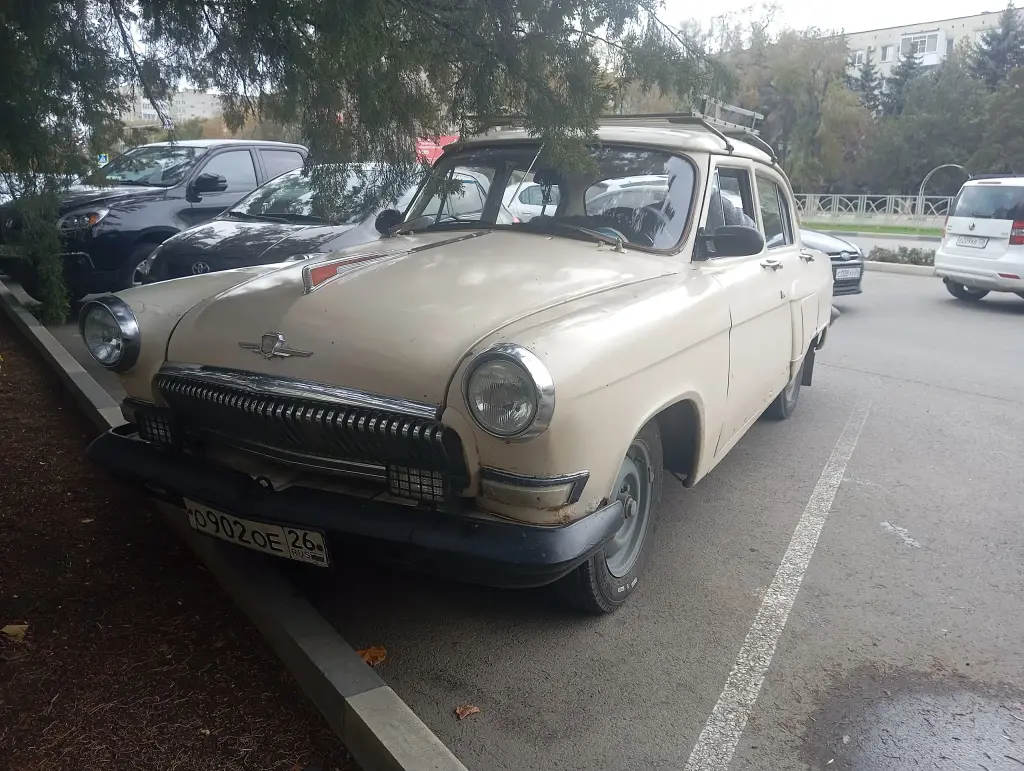
- The photo shows a GAZ-21 in Nevinnomyssk, Russia.
Variants
- GAZ-21 Volga: the car described here, 1956–1970.
- GAZ-M20 Pobeda: the predecessor, built from 1946 to 1958.
- GAZ-24 Volga: the successor, built from 1970.
See also: the GAZ collection, the GAZ M20 Pobeda, the GAZ 24 Volga and the GAZ M-1 Emka.
GAZ-21 Volga questions and answers
When was the GAZ-21 Volga built?
From 1956 to 1970.
What did the GAZ-21 replace?
The GAZ-M20 Pobeda.
What followed the GAZ-21?
The GAZ-24 Volga, introduced in 1970.
Video: 1966 Volga GAZ-21
Video by Jay Leno’s Garage on YouTube.
Sources
- GAZ M21 Volga, English Wikipedia: production 1956–1970, first Volga, development in the early 1950s
- ГАЗ-М-21 «Волга», Russian Wikipedia: production 1956–1970, fourth generation, successor to the M-20
- GAZ 21 Volga in Nevinnomyssk, Wikimedia Commons: photo and licence