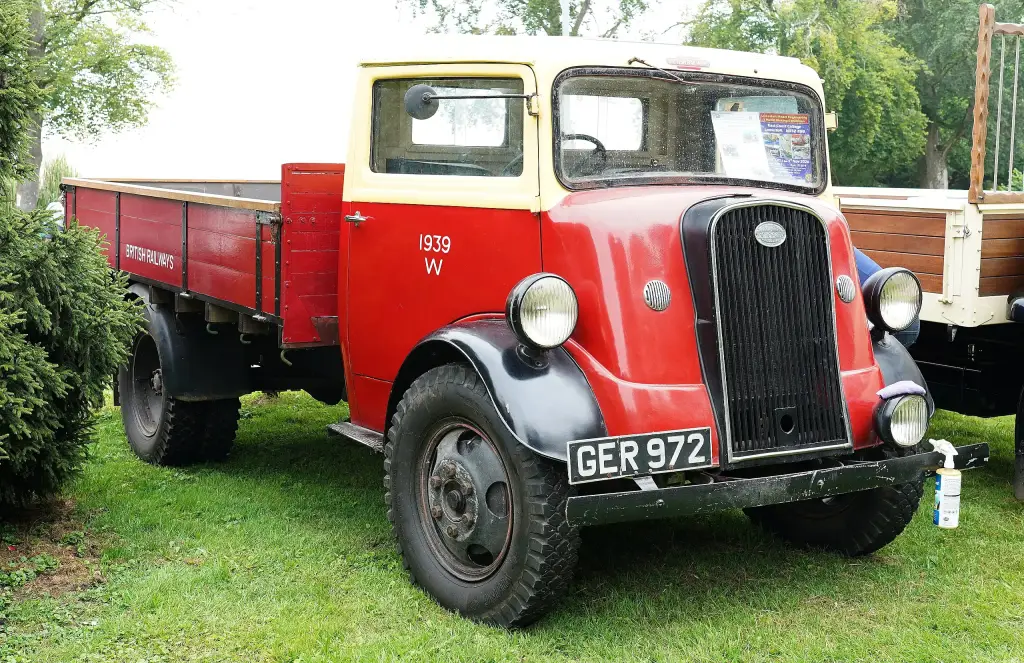
Fordson was not only a tractor name. From a single 2-ton prototype in 1926 the brand grew into a full range of British trucks, built at Dagenham and powered by Ford’s flathead V8 until the Fordson name was removed from trucks in 1957.
Fordson trucks at a glance
| First truck | 2-ton prototype, 1926 |
|---|---|
| Truck brand | Fordson, from 1932 |
| Base | Ford Model B engine and Model BB chassis |
| 2-ton production | from 1934 |
| Engine | 85 bhp flathead V8 |
| Drive layouts | 4×2, 6×2 and 6×4 |
| 1937 range | 2-ton and 3-ton models, 134 in or 157 in wheelbase |
| From 1939 | sold as Fordson Thames |
| Name removed from trucks | 1957 |
| Dagenham production | until 1957 |
| Also built in Romania | Fordson 157 chassis and assembly in Bucharest |
| Key models | Model 79, 7V, WOT |
Fordson trucks are covered in the Trucks section of the Fordson article and in the Thames article; there is no separate article for the truck range.
History of the Fordson trucks
The first heavy-duty 2-ton truck built by Fordson appeared in 1926. It shared front-end gears and suspension ideas with the Model T, but its rear suspension used two cantilever springs with feather-edge axles, and the engine sat under the cab and far back in the chassis, giving the truck a snub-nose look. Only one 1926 Fordson truck was ever delivered to a customer; it was offered for sale at auction in 2019.
Fordson trucks became a brand in 1932, after the arrival of the Ford Model B engine and the Model BB chassis, although most vehicles continued to be identified simply as Fords. Production of a 2-ton truck began in 1934. It was powered by an 85 bhp V8 and could be ordered as a 4×2 or with factory 6×2 and 6×4 conversions. In 1937 Ford announced a new 2-ton and 3-ton design on 134-inch or 157-inch wheelbases, with a divided, slightly pointed windscreen and improvements to the engine, electrical system and brakes.
Fordson Thames
In 1939 the Fordson Thames name replaced the previous Fordson brand on commercials, giving the range a more British identity. Production of the Fordson truck range, which included models such as the Fordson Model 79, the 7V and the WOT, continued at Dagenham until 1957, when the Fordson name was removed from the truck brand. A second production line existed in Romania, where the Fordson 157 chassis was built at the Hagelstein factory in Bucharest and assembled at the Ford Româna works in Floreasca.
The 7V
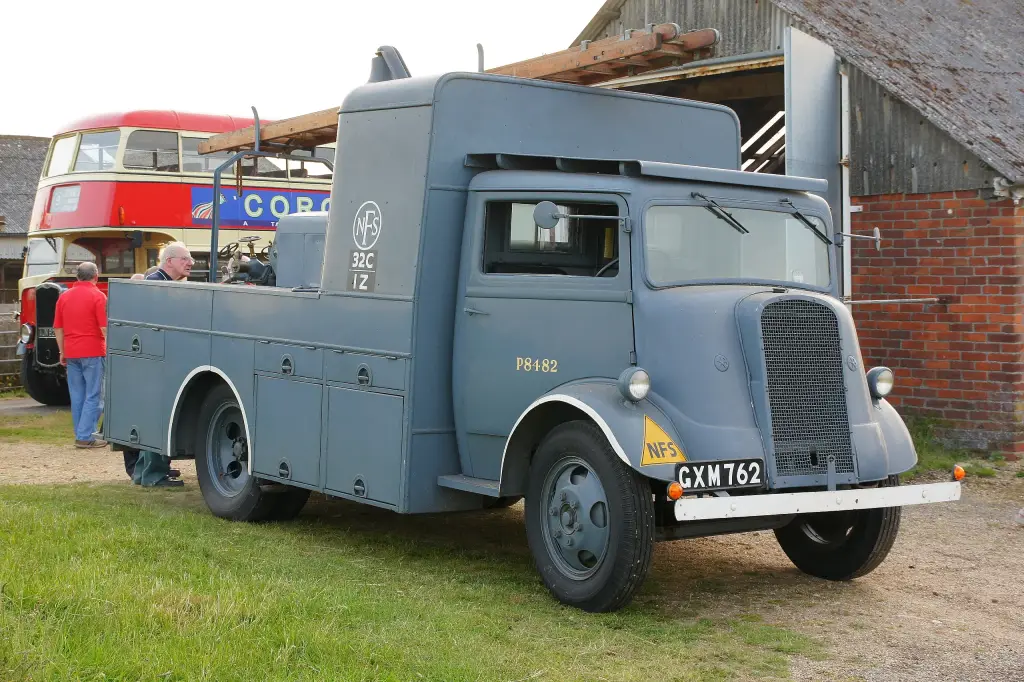
The Fordson 7V, also sold as the Fordson Thames 7V depending on the dealer network, was introduced in 1937 as the successor to the Ford Model BB, although it used the same chassis and mechanical layout. It was a cab-over-engine medium/heavy truck with a payload of up to 5 tonnes, two wheelbases and a chassis that could carry many different bodies. Powered by the 85 hp flathead V8 through a three-speed gearbox (four-speed optional), it had a one-piece windscreen that could be opened for ventilation and a sunroof above the passenger seat. Early 1937 and 1938 trucks had a curved grille; from 1939 the grille was flat and smaller because of wartime material shortages. The 7V was the most widely used fire truck in the Second World War, an armoured version was built, and civilian production resumed in 1945. A 4.7-litre Perkins six-cylinder diesel of 45 hp became optional in 1948, and the 7V was replaced by the Fordson Thames ET in mid-1949.
Design and features
- Flathead V8: an 85 bhp engine used across the 2-ton, 3-ton and 7V ranges.
- Cab-over layout: the 7V put the cab over the engine for manoeuvrability in towns.
- Many bodies: chassis were supplied for dropside, fire, ambulance and specialist bodies.
- Wartime role: the 7V was the most widely used fire truck of the Second World War.
- Diesel option: a 45 hp Perkins six-cylinder diesel from 1948.
Fordson trucks versions
- 1926 prototype: the first Fordson 2-ton truck, of which one was delivered.
- 1934 2-ton V8: 85 bhp, available as 4×2, 6×2 and 6×4.
- 1937 2-ton and 3-ton: new cab and chassis on 134 in or 157 in wheelbases.
- Fordson 7V: cab-over truck of 1937–1949, up to 5 tonnes and widely used as a fire truck.
- Fordson WOT: the military range built during the war.
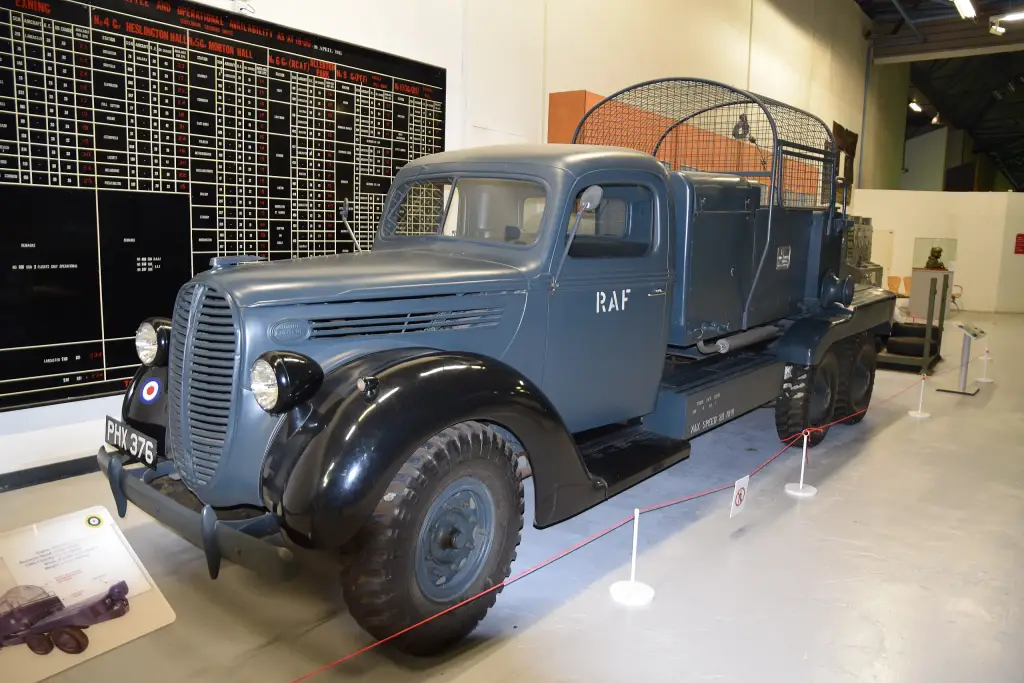
- Fordson Sussex: a barrage balloon tender built on a Fordson truck chassis.
The military side of the range is covered in Fordson WOT, and the later commercials in Fordson Thames. The light van is the Fordson E83W. More Fordsons are in the Fordson collection.
Sources
- Fordson, English Wikipedia: Trucks section, 1926 prototype, 1932 brand, Dagenham and Romania
- Thames (commercial vehicles), English Wikipedia: Fordson 7V details, fire service, Perkins diesel