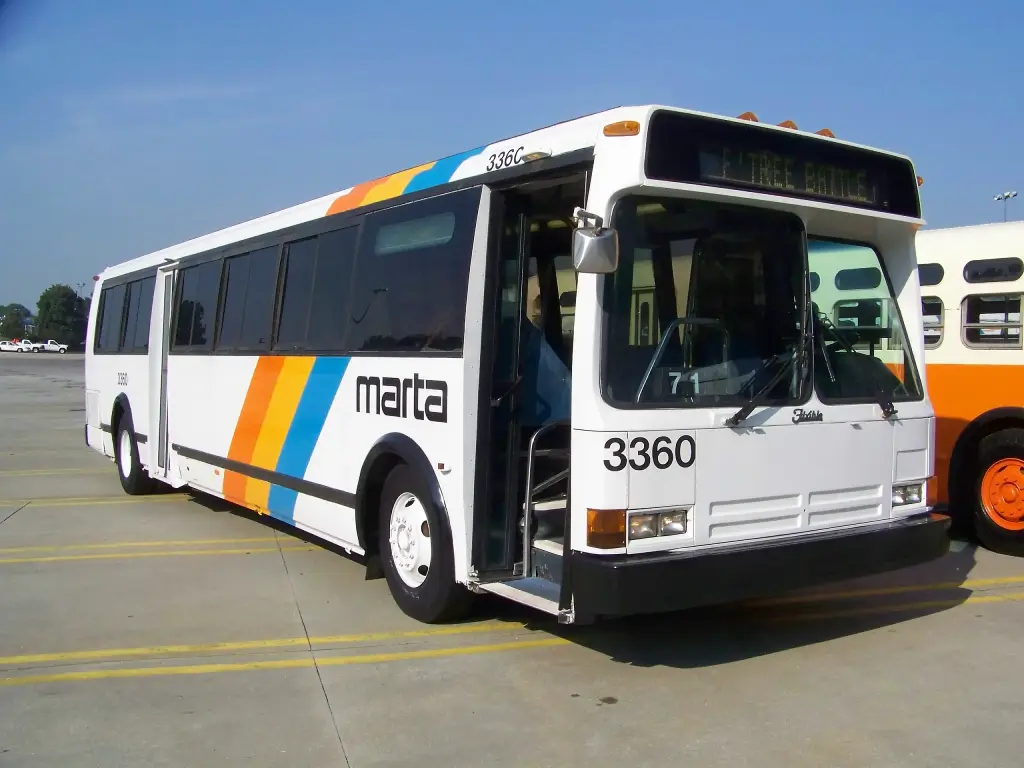
The Flxible Metro is a transit bus built by Flxible from 1983 until 1995. It succeeded the Grumman 870, the Advanced Design Bus that Flxible had developed under Rohr Industries and that Grumman put into production after buying the company in 1978; the Metro corrected the 870’s structural problems.
Flxible Metro at a glance
| Maker | Flxible (Grumman Flxible, 1978–1983) |
|---|---|
| Production | 1983–1995 |
| Predecessor | Grumman 870, 1978 to early 1983 |
| Type | transit bus |
| Built in total | 14,456 — 4,642 model 870 and 9,814 Metros |
| Assembly | Delaware, Ohio |
| Programme | UMTA Advanced Design Bus (Transbus) |
| Rival | General Motors Rapid Transit Series (RTS II) |
| Last deliveries | November 1995 |
| Second-hand | some 870s sold to Kirov, Russia, used until 2004 |
Based on one source, the English Wikipedia article on the Metro.
History of the Flxible Metro
Development under Rohr
Flxible had been owned by Rohr Industries since 1970, and while the Flxible New Look was still in production Rohr began work on what became the Grumman 870 Advanced Design Bus. It was one of two advanced-design buses that the Urban Mass Transit Administration accepted as compromises in its search for a “Transbus” that would be attractive, roomy and comfortable and easier for elderly and disabled passengers to board; the other was General Motors’ Rapid Transit Series. At the time the federal government would subsidise the purchase of only the 870 or the RTS II.
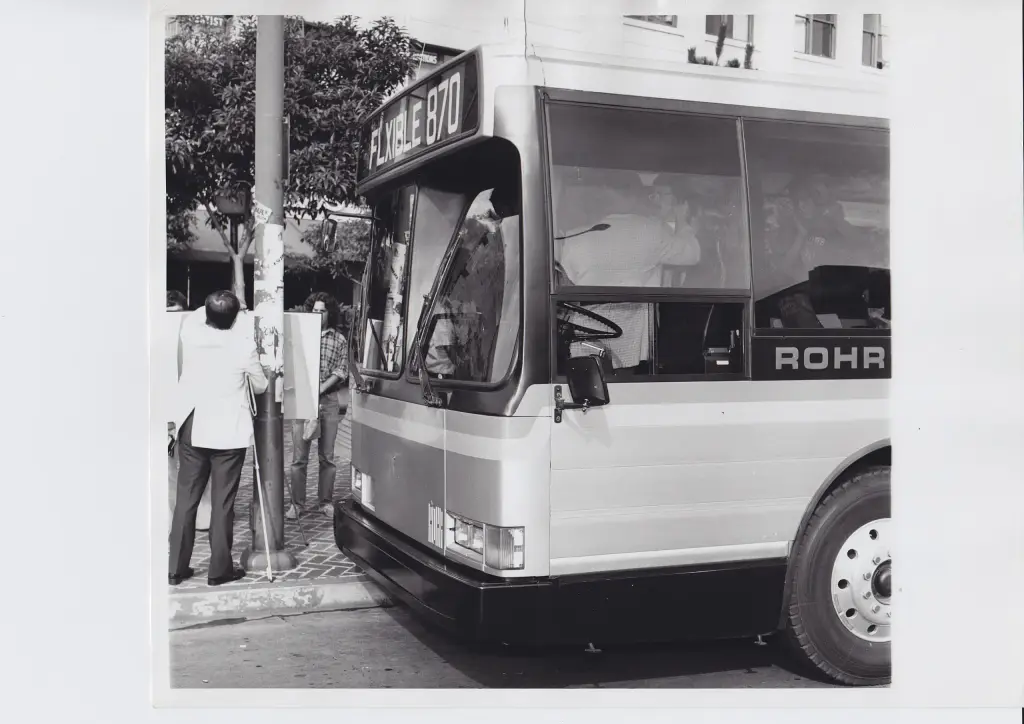
The Grumman 870
In 1978 Rohr sold Flxible to Grumman for US$55 million, and the sale included two prototypes of the 870. The second prototype had failed testing with a cracked A-frame and no endurance test had been run, but Grumman put the bus into production and discontinued the New Look almost as soon as the purchase closed. The first 870 left the line in spring 1978. The New York City Transit Authority order built in 1980 exposed the flaw: the A-frame could not withstand cities with potholes, and from that December all 870s built to then were taken out of service while repairs costing Grumman $7 million were made. In all 2,656 buses, including examples in Atlanta, Chicago, Connecticut, Houston, Los Angeles and Orange County, needed fixing. In early 1982 Grumman announced that the 870 would be renamed the Grumman Metro.
Flxible Metro
Grumman sold the line to General Automotive Corporation in 1983 for $41 million, a loss of 25 percent, and under the new owner the Flxible nameplate returned to the buses. The Metro, which had addressed the 870’s shortcomings in 1982, stayed in production until late 1995, when financial problems forced Flxible to suspend production and lay off most of the workforce at the Delaware, Ohio, factory. The layoffs became permanent, Flxible entered Chapter 11 bankruptcy in 1996 and was liquidated, and General Automotive met the same fate the following year.
End of the line
The last Metros were delivered in November 1995 to Monterey-Salinas Transit in California and the Baltimore Metropolitan Transit Authority. Neither order included the highest-numbered Metro, serial 106591, which had gone to Columbus, Ohio, the month before. Company records give 9,820 Metros, but evidence suggests that the last six of Baltimore’s 25-bus order were never built, which makes 9,814 more likely. In 1995 some used 870s were bought from the Central Ohio Transit Authority by Kirov in Russia, where they were used until 2004.
Lawsuits
The A-frame problems produced years of litigation. The New York MTA, whose Ulmer Park depot saw the first crack in December 1980, withdrew its fleet and sued Grumman; the settlement covered repairs to all 2,656 buses built to then and ended the contract early, with the final 200 buses of the order transferred to General Motors. In 1983 Grumman sued Rohr for $500 million, claiming it had not known about the flaws; Rohr won summary judgment, upheld on appeal. In 1984, after a fire in NYCTA bus 411, David L. Gunn ordered the New York fleet off the road for good, and that May the MTA sued for $184 million in damages and $140 million for replacements, calling the buses “lemons”; Grumman countersued for $1 billion. The buses sat for nearly two years at the Brooklyn Army Terminal before 835 of 851 were sold: 620 rebuilt for New Jersey Transit, 175 for Queen City Metro in Cincinnati and 40 for an agency in Puerto Rico. Of the 16 unsold buses, 13 went to the Pioneer Valley Transportation Authority, one was preserved and two were scrapped.
Design and features
- Advanced Design Bus: developed for the UMTA’s Transbus programme alongside GM’s Rapid Transit Series.
- A-frame underframe: the 870’s version cracked in service and was repaired at a cost of $7 million.
- Corrected design: the Metro, ready in 1982, addressed the 870’s shortcomings.
- Two names, three badges: the same bus was sold as the Grumman 870, the Grumman Metro and the Flxible Metro.
- Long aftermath: rebuilt 870s were resold to New Jersey Transit, Queen City Metro and Puerto Rico, and some went to Russia.
Flxible Metro versions
- Grumman 870 (1978 to early 1983): the original Advanced Design Bus.
- Grumman Metro (1982–1983): the renamed, corrected model.
- Flxible Metro (1983–1995): the version built under General Automotive.
- Rebuilt 870s: New York buses rebuilt and resold to New Jersey Transit, Queen City Metro and Puerto Rico.
- Exported 870s: used buses bought by Kirov in Russia and run until 2004.
The Metro followed Flxible’s coach era, described in the Flxible Clipper series and VL-100 (VistaLiner) articles; the company itself is covered in Flxible: the Ohio bus maker. More Flxible vehicles are in the Flxible collection.
Video: On Board: 1992 Flxible Metro C #2005/#2013 (Detroit Diesel Series 92/Allison V-731)
Video on YouTube.
Sources
- Flxible Metro, English Wikipedia: development, production, litigation, production totals