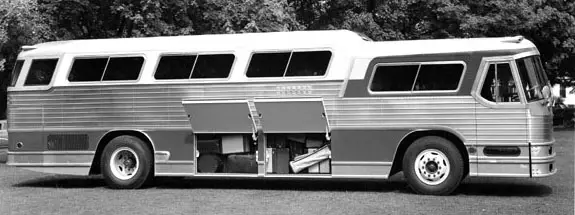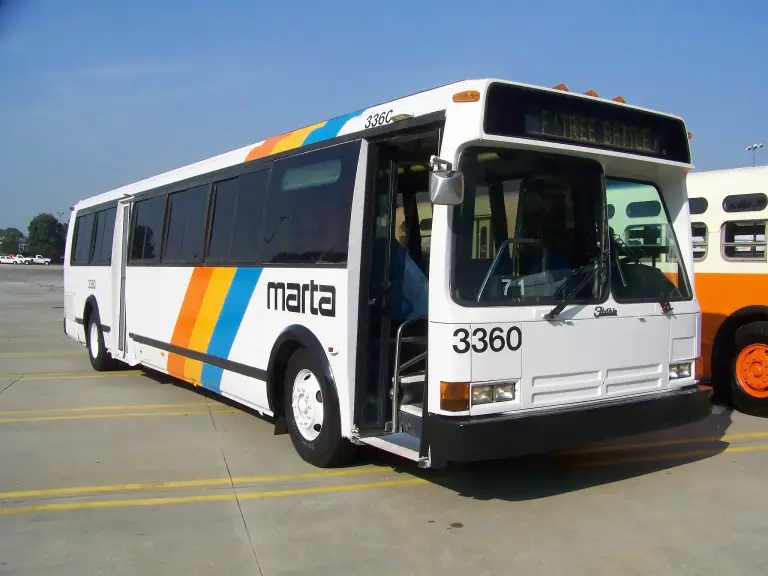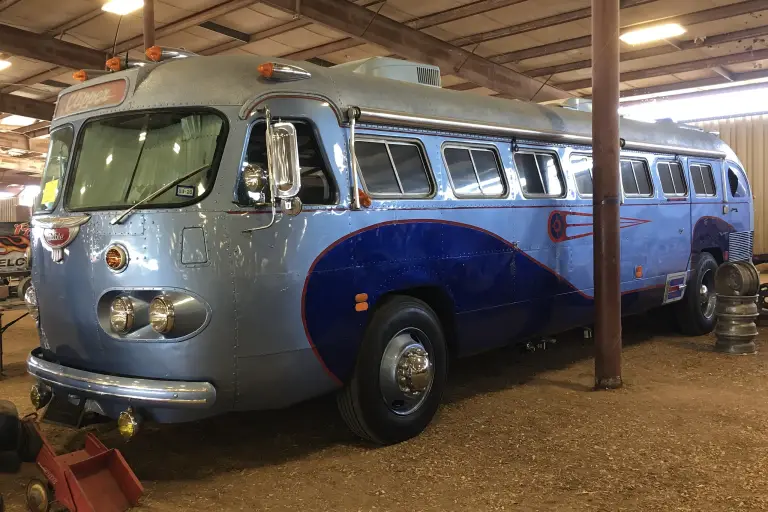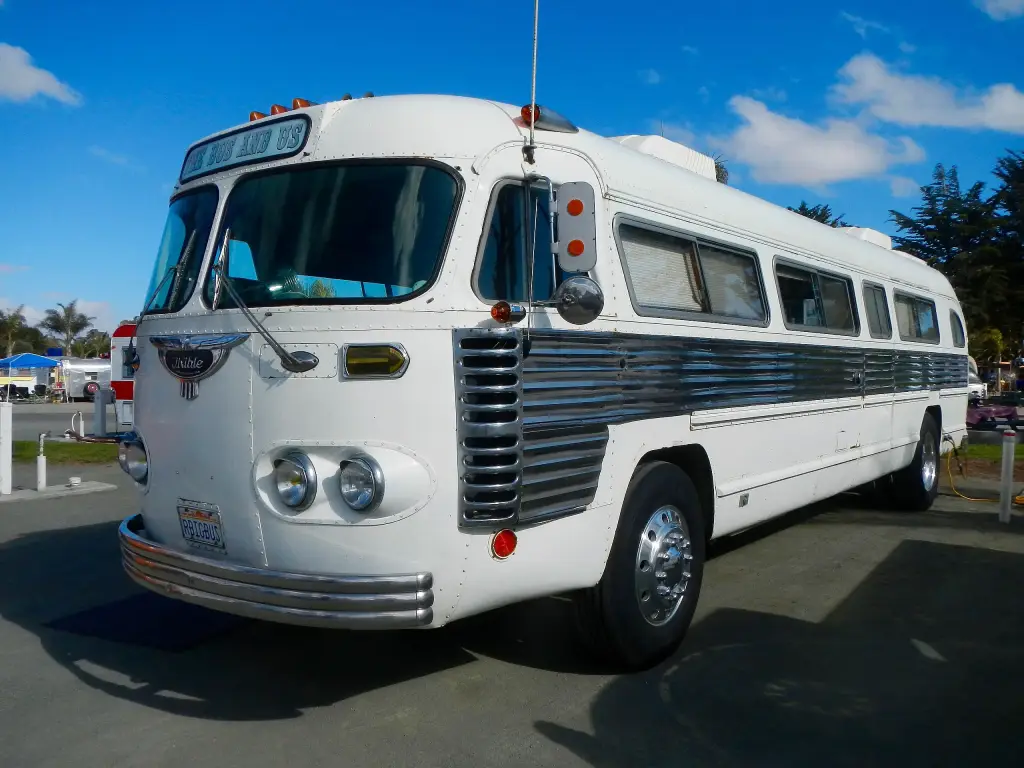
The Flxible Co. was an American manufacturer of motorcycle sidecars, funeral cars, ambulances, intercity coaches and transit buses, based in Loudonville, Ohio. It was founded in 1913 and closed in 1996, and in its last decades it was one of the largest transit-bus manufacturers in North America. The company’s production moved from highway coaches and other vehicles to transit buses over the years 1953–1970.
Flxible at a glance
| Founded | 1913, Mansfield, Ohio |
|---|---|
| Founders | Hugo H. Young and Carl F. Dudte |
| First name | Flexible Side Car Company |
| Renamed | 1919, The Flxible Company |
| Base | Loudonville, Ohio |
| Products | sidecars, hearses, ambulances, intercity coaches, transit buses |
| First bus | 1924, 12-passenger Studebaker chassis |
| Transit buses from | 1953, after absorbing Fageol Twin Coach |
| Second plant | Delaware, Ohio, from 1974 |
| Owners | Rohr Industries 1970, Grumman 1978, General Automotive 1983 |
| Last vehicles | 1995; company closed in 1996 |
Wikipedia has no separate articles on Flxible’s individual models; this page is based on the English article on the company (one source).
History of the Flxible
In 1913 Hugo H. Young and Carl F. Dudte founded the Flexible Side Car Company in Mansfield, Ohio, to build motorcycle sidecars with a flexible mounting designed by Young while he ran a Harley-Davidson dealership. The mounting let the sidecar lean with the motorcycle in corners. With growing demand and the financial help and leadership of Charles F. Kettering, a larger plant was opened in Loudonville, Ohio, and in 1919 the company dropped the first “E” from “flexible” and became The Flxible Company so that the name could be trademarked.
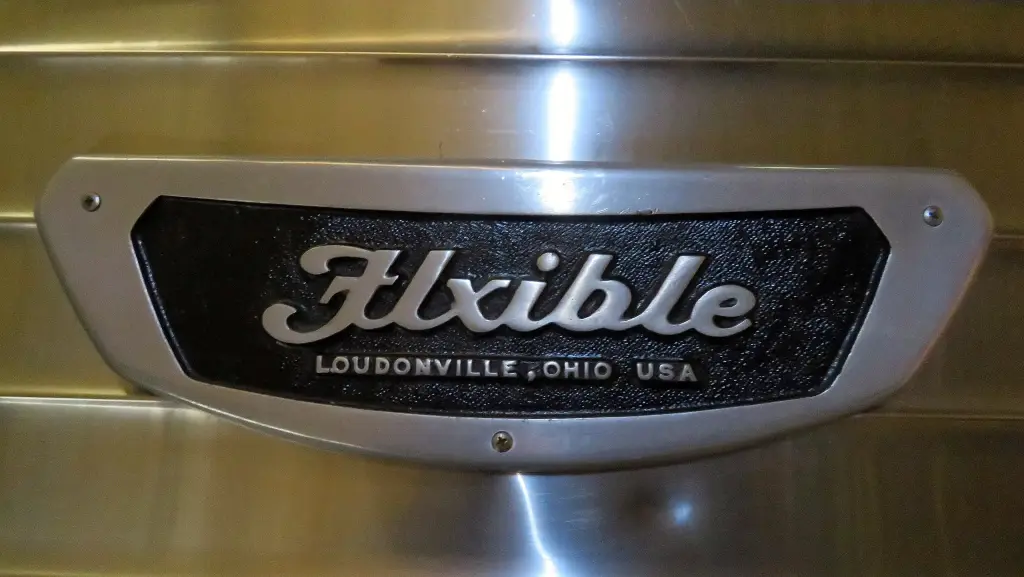
When cheap cars arrived in the 1920s the sidecar market fell away and Flxible turned to other products. Its first bus was a 12-passenger sedan on a Studebaker chassis, delivered in 1924 to E.L. Harter, who ran a passenger line from Ashland to Mt. Vernon, Ohio; he bought a second bus in April 1925. The company also built hearses and ambulances, mostly on Buick chassis, until that production ended in 1964. Its Airway buses of the mid-1930s used a Chevrolet chassis. Kettering, a Loudonville native and a vice-president of General Motors, was president of Flxible from 1914 and chairman from 1940 until his death in 1958, and through him many GM parts went into Flxible vehicles.
From coaches to transit buses
In 1953 Flxible absorbed the bus-manufacturing part of the Fageol Twin Coach Company and took its first transit-bus order from the Chicago Transit Authority. In 1964 it bought Southern Coach Manufacturing Co. of Evergreen, Alabama, and built small transit buses there until 1976. Rohr Industries bought Flxible in 1970 and in 1974 opened a new factory and headquarters in Delaware, Ohio, keeping the Loudonville plant for parts and sub-assemblies. Grumman bought the company in 1978, when it became Grumman Flxible, and sold it in 1983 to General Automotive Corporation, after which the Flxible name returned. The last Flxible vehicles were built in 1995; the company went bankrupt in 1996 and its assets were auctioned.
Coaches abroad
Flxible’s intercity coaches were popular in Mexico and other Latin American countries, though high import duties limited sales. In the early 1960s Flxible licensed DINA S.A. (Diesel Nacional) in Mexico to build Flxible-designed intercity coaches, and that continued until the late 1980s. In 1965 and 1966 the company also licensed its New Look transit bus design to Canadair in Quebec. In 1994 Flxible’s parent, General Automotive, joined Roger Penske, Mark IV Industries and Carrier in a venture with Changzhou Changjiang Bus of China; the resulting China Flxible Auto Corporation built Metro-based buses from 8 to 11 metres for Chinese cities, including a trolleybus version for Hangzhou.
The last buses in service
Flxible buses stayed in public service long after the factory closed. TriMet of Portland, Oregon, retired its last examples in May 2015; Omaha, Nebraska, replaced its buses and retired them before the end of 2018; and the Charleston Area Regional Transportation Authority in South Carolina retired the last ones in October 2019. Flxible Owners International, founded in the mid-1980s as an offshoot of the Family Motor Coach Association, keeps the marque alive with a rally in Loudonville in even-numbered years, normally in mid-July.
Design and features
- Sidecar origins: the flexible mounting that let a sidecar lean with the motorcycle gave the company its name.
- Kettering and GM: Charles F. Kettering led Flxible for decades, and GM parts and Buick chassis were widely used.
- Three product lives: sidecars and professional vehicles, then intercity coaches, then transit buses.
- Licensed production: Flxible designs were built in Mexico by DINA and in China by China Flxible Auto Corporation.
- Long service: the last Flxible buses were withdrawn from regular service only in 2019.
Flxible versions
- Sidecars (1913–1920s): the original product, with a flexible mounting.
- Hearses and ambulances: mostly on Buick chassis, built until 1964.
- Airway buses: mid-1930s models on a Chevrolet chassis.
- Clipper series: Clipper, VisiCoach and StarLiner coaches, built from the 1930s until 1967.
- Later coaches: VL100 (VistaLiner), Hi Level and Flxliner.
- Transit buses: New Look, Grumman 870 and Flxible Metro, the last built until 1995.
The company’s coach line is covered in the Flxible Clipper series and VL-100 (VistaLiner) articles, and its final transit bus in the Flxible Metro page. More Flxible vehicles are in the Flxible collection.
Video: Flxible Bus Parade
Video on YouTube.
Sources
- Flxible, English Wikipedia: company history, products, owners, licensing