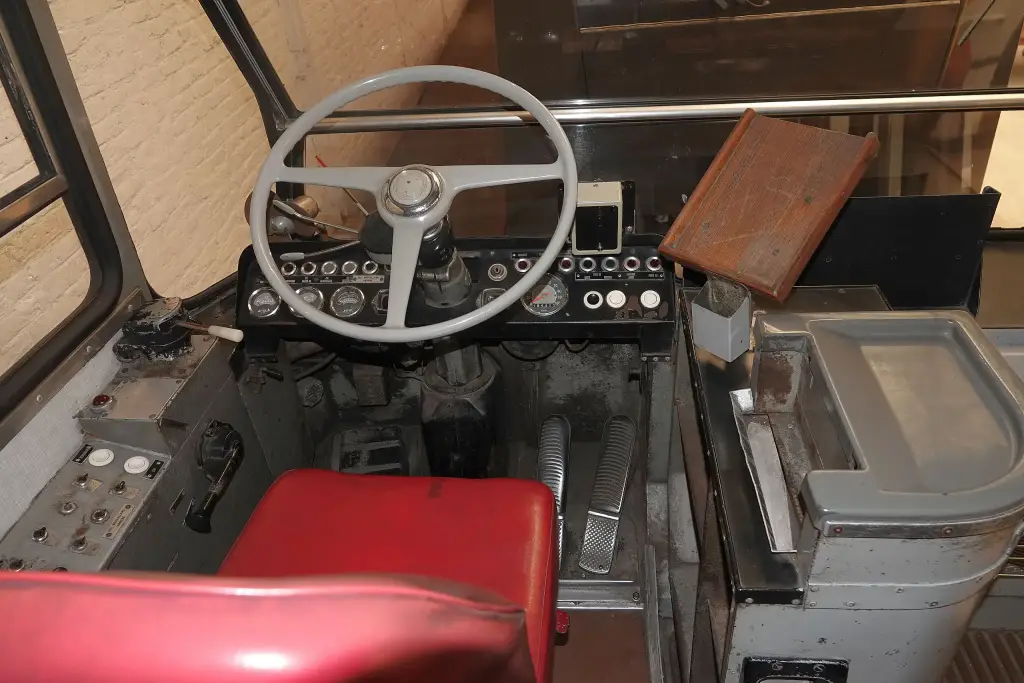
The Fiat 410 was an urban bus produced from 1960 to 1973. It marked a change in Italian public transport because it was the first city bus with a chassis designed for the purpose rather than derived from a lorry, and its flat engine was placed in the middle of the vehicle.
Fiat 410 at a glance
| Type | urban bus |
|---|---|
| Production | 1960–1973 |
| Assembly | Cameri (Novara), Italy |
| Series | 410 from 1960, 410 A from 1968 |
| Layout | flat engine in the middle of the vehicle |
| Bodywork | CANSA/Cameri works body; OM, Menarini, Piaggio, Portesi, Pistoiesi, Breda |
| Largest operator | ATAC, Rome |
| ATAC fleet | more than 1,000 vehicles in 1972 |
| Last withdrawal | 1993 |
| Double-deck derivative | Fiat 412, built with Aerfer |
The article is based on one source, the Italian Wikipedia entry for the Fiat 410.
History of the Fiat 410
A chassis made for city service
The 410 was launched in 1960 and represented a revolution in public transport: it was the first urban bus whose chassis had been designed for that use instead of being derived from a lorry. Its engine sat in the middle of the vehicle and was flat. Almost every Italian city was expanding at the time and public transport had to be adapted and strengthened; rising electricity costs and local and national political choices led many operators to replace tram and trolleybus lines with buses, which were more versatile and cheaper. The 410 was designed for mass transport in city centres and was intended in particular for the 1960 Olympic Games in Rome.
Bodywork and series
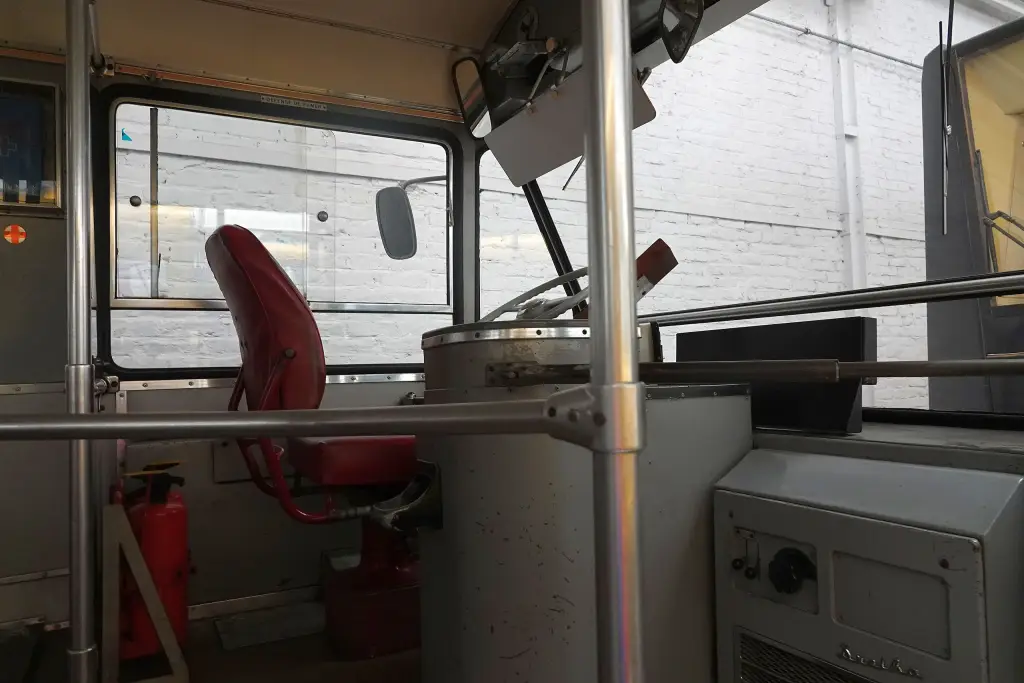
Besides the works body, called CANSA or Cameri after the plant where the vehicle was built, the 410 was bodied by specialised firms including OM, Menarini, Piaggio, Portesi, Pistoiesi and Breda CF. The first version of 1960 had a sperone, or pointed, windscreen in keeping with the styling of the period, and it stayed in production until 1968, when the second series, the 410 A, appeared. The catalogued versions included the 410 A Cameri and the 410 A Pistoiesi.
In service
In Italy the 410, together with the Fiat 409, was the main bus used to replace many urban services previously run by trolleybuses and trams. ATAC in Rome had the largest fleet, more than 1,000 vehicles in 1972, and its last 410 was withdrawn in 1993. A double-deck variant, the Fiat 412, was produced by Fiat Veicoli Industriali with Aerfer of Naples, a firm specialising in aircraft fuselages. Abroad, the Belgian builder Van Hool made 105 buses on Fiat 410 chassis for STIL, the Liège intercommunal transport company; they were delivered between 1969 and 1971 and stayed in service until 1982–83, with bodywork almost identical to that of the STIL Brossel BL55 and A99. Other Belgian cities nevertheless kept ordering buses on more conventional chassis. Many used 410s were exported to Africa, where some were still running in 2000.
Design and features
- Purpose-built chassis: the first Italian city bus not derived from a lorry.
- Flat mid-mounted engine: a low floor line made possible by the engine position.
- Many coachbuilders: works Cameri bodies plus OM, Menarini, Piaggio, Pistoiesi and Breda.
- Double-deck derivative: the Fiat 412, developed with Aerfer of Naples.
Fiat 410 versions
- Fiat 410 (1960): first series with the pointed sperone windscreen.
- Fiat 410 A Cameri (1968): second series with the works body.
- Fiat 410 A Pistoiesi: second series bodied by Pistoiesi.
- Van Hool 410 A: Belgian bodywork for STIL in Liège, 105 vehicles.
- Fiat 412: double-deck derivative built with Aerfer.
Fiat later built the Fiat 308 for intercity service, and the small Fiat 500 was the other end of the company’s range in the same years. More vehicles are in the Fiat collection.
Sources
- Fiat 410, Italian Wikipedia: production dates, chassis and engine layout, series, operators and the Van Hool contract