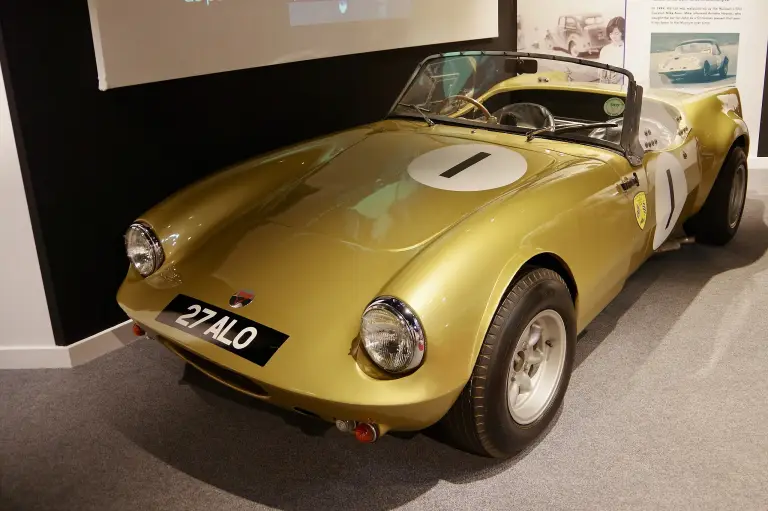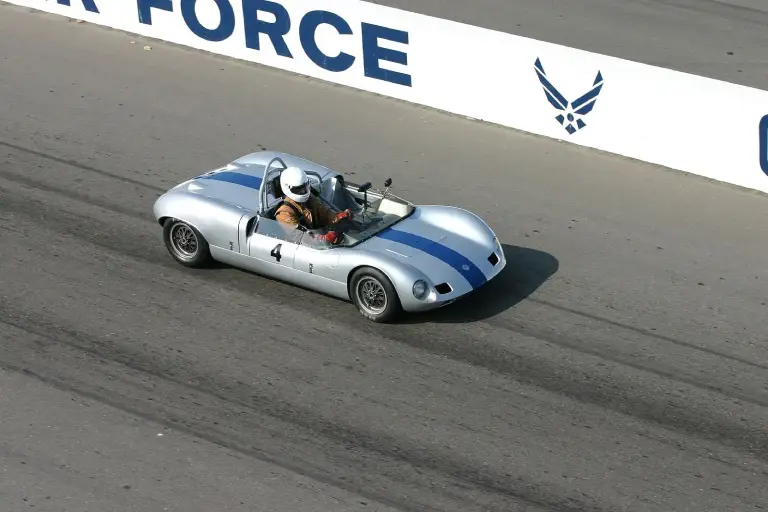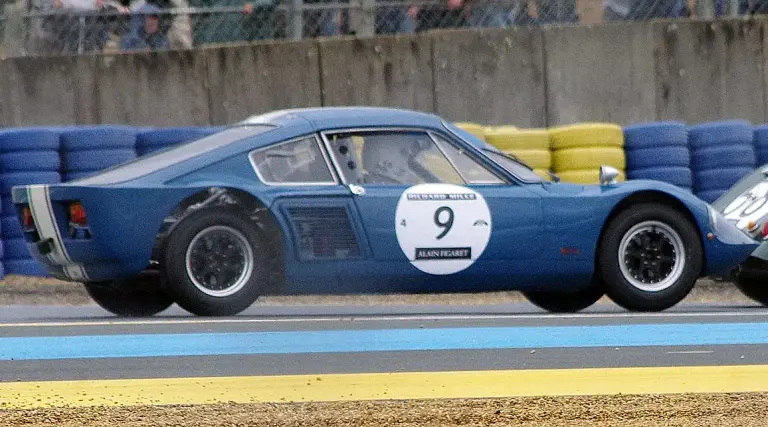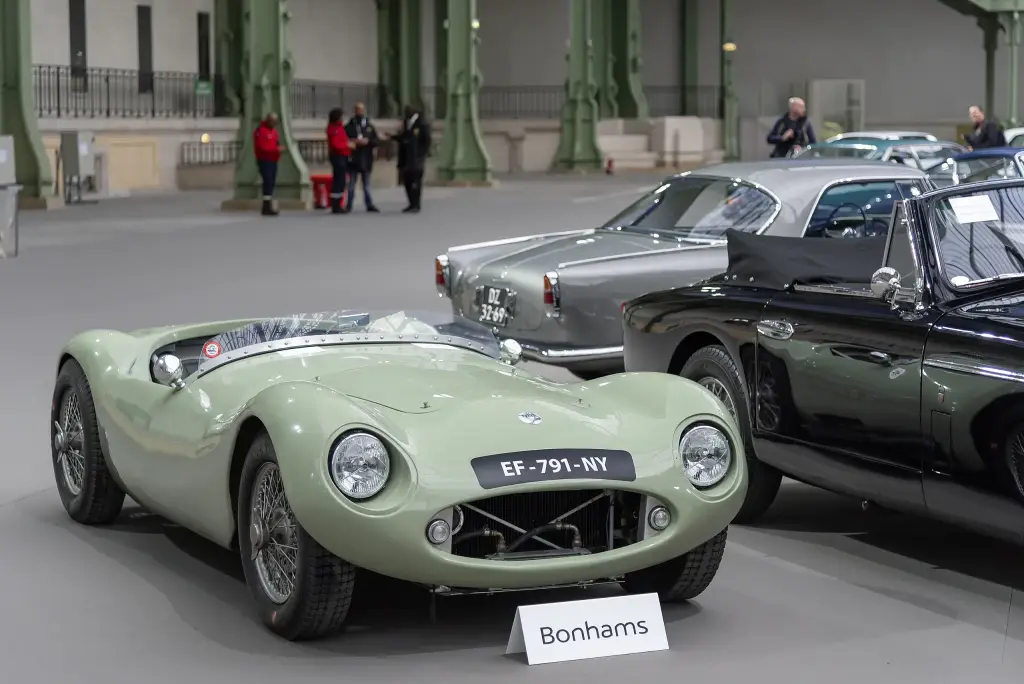
The Elva Mk I, Mk II and Mk III were the first sports racing cars built by Elva, a small British company founded in 1955 by Frank G. Nichols in Bexhill, Sussex. They were cheap, light club racers, and the line developed through three marks before the tubular-frame Mk IV of 1958.
Elva Mk I at a glance
| Company | Elva, founded 1955 by Frank G. Nichols in Bexhill, later Hastings and Rye, East Sussex |
|---|---|
| Name | from the French phrase elle va, “she goes” |
| First model | based on the CSM car built in Hastings by Mike Chapman; about 25 made |
| Front suspension | Standard Ten, rather than the Ford swing axles of the CSM |
| Rear axle | Ford Anglia |
| Engine | Ford 10 unit of 1,172 cc with an overhead-valve conversion |
| Cylinder head | designed by Malcolm Witts and Harry Weslake, with overhead inlet valves |
| Later engine | 1,100 cc Coventry-Climax FWA as standard in the racing Elvas |
| Mk II | De Dion rear axle, inboard rear brakes, longer wheelbase, lighter chassis |
| Mk II body | Falcon all-enveloping glassfibre bodyshell on the 1956 works prototype |
| Production span | models built between 1954 and 1959 |
This page is based on a single source, the English Wikipedia article on Elva, so the figures could not be cross-checked.
History of the Elva Mk I
A racing car for club drivers
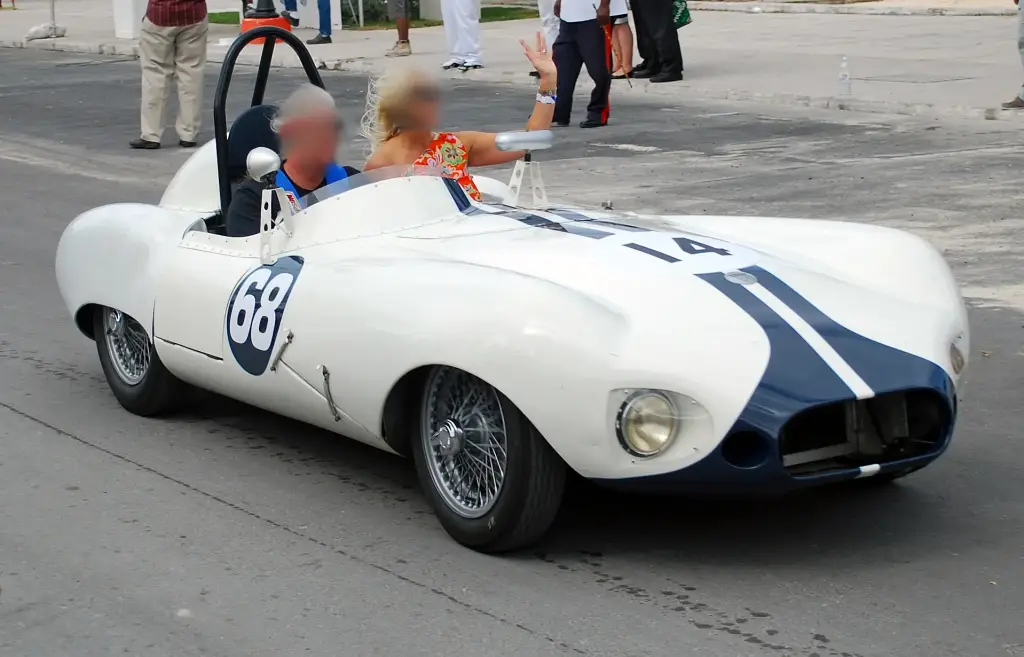
Frank Nichols’s intention was to build a low-cost sports and racing car, and a series of models was produced between 1954 and 1959. The original model was based on the CSM car built nearby in Hastings by Mike Chapman; it used Standard Ten front suspension rather than Ford swing axles, and a Ford Anglia rear axle with an overhead-valve conversion of a Ford 10 engine. About 25 were made.
The cylinder head for the 1,172 cc Ford engine was devised by Malcolm Witts and Harry Weslake and featured overhead inlet valves. While waiting for delivery of the CSM, Nichols finished second in a handicap race at Goodwood on 27 March 1954 driving a Lotus, and the Elva that followed was raced with success in 1955.
Mk I and Mk II
On 22 May 1955 Robbie Mackenzie-Low climbed Prescott in the sports Elva Mk I to set the class record at 51.14 sec, and he also won the Bodiam Hill Climb outright at the end of the season. The 1956 Elva Mk II works prototype, registered KDY 68, was fitted with a Falcon all-enveloping glassfibre bodyshell.
Nichols developed the Mk II from lessons learnt in racing the prototype, and that car was driven in 1956 races by Archie Scott Brown, Stuart Lewis-Evans and others. The production Mk II appeared in 1957 with a De Dion rear axle as on the prototype but with new location, inboard rear brakes, a lengthened wheelbase and a lighter chassis frame.
Mk III
The Elva cars were offered and raced with the 1,100 cc Coventry-Climax FWA engine as standard, and went through various bodywork and suspension changes up to the Mark III of 1958. By then the cars had established the company in the crowded 1,100 cc sports racing class, and the next step was the spaceframe Mk IV.
Design and features
- Body: a simple two-seat open glassfibre shell; the Mk II works prototype used a fully enveloping Falcon body.
- Engine: the 1,172 cc Ford ten-unit with a Weslake-designed overhead-inlet head at first, then the 1,100 cc Coventry-Climax FWA.
- Rear suspension: a Ford Anglia axle on the first cars, a De Dion set-up with inboard brakes on the Mk II.
- Chassis: a light ladder-type frame, replaced by a lighter one for the Mk II.
Elva Mk I versions
- Original Elva (1954–1955): the CSM-based car with Standard Ten front suspension, about 25 built.
- Mk I (1955): the car that set the Prescott class record in the hands of Robbie Mackenzie-Low.
- Mk II prototype (1956): works car KDY 68 with a Falcon glassfibre body.
- Mk II (1957): De Dion rear axle, inboard brakes, longer wheelbase.
- Mk III (1958): the last of the front-engined ladder-frame cars before the Mk IV.
The later Elva racing cars are described on our Elva Mk VII page, and the road-going side of the company on the Elva Courier page. More cars of the marque are in the Elva collection.
Sources
- Elva (car manufacturer), English Wikipedia: company history, models, engines, race results