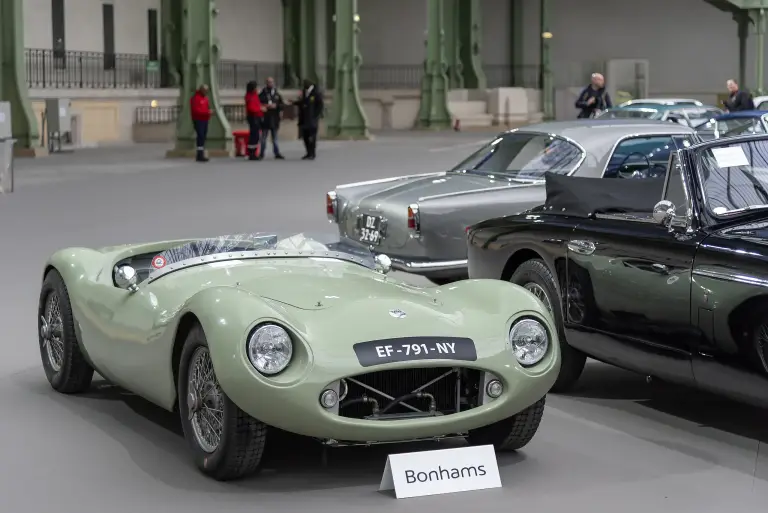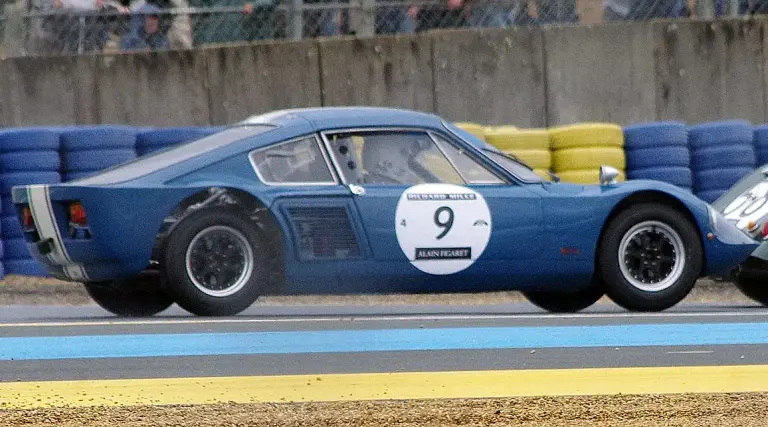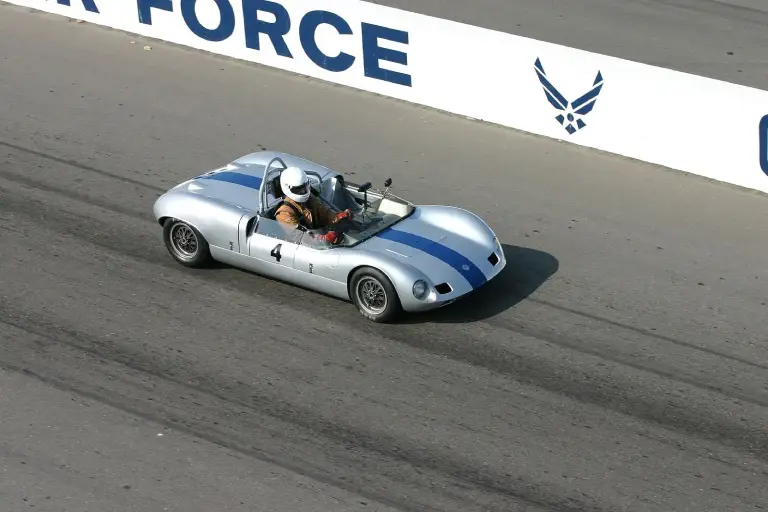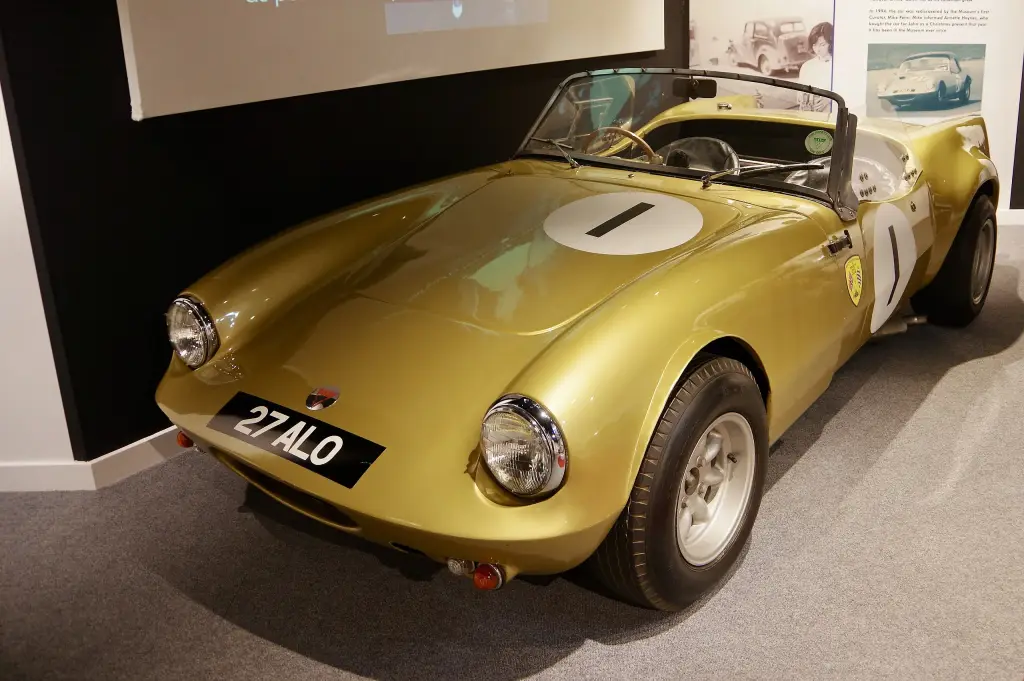
The Elva Courier was the main road car of the small British maker Elva, introduced in 1958 and developed through a series of marks until production ended in 1968. It was a light glassfibre two-seater, sold complete in the United States and Europe and in kit form in Britain.
Elva Courier at a glance
| Introduced | 1958, as the main Elva road car |
|---|---|
| Mk 1 engine | 1,500 cc MGA or Riley 1.5 litre |
| Mk 1 chassis | ladder frame with Elva-designed independent front suspension |
| Body | lightweight two-seater open glassfibre |
| Mk II | curved glass windscreen instead of the flat split type, 1,600 cc MGA engine |
| Mk I and II output | about 400 cars |
| Mk III | 1962, box frame moulded into the body, Triumph rack-and-pinion steering |
| Mk III price | £965 complete, £716 in kit form on the home market |
| Mk IV | shown at the London Show in autumn 1962; 1800 cc MGB engine, later Ford Cortina GT |
| Mk IV T | fixed-head coupé with Lotus twin-cam engine; 210 made |
| Production end | 1968, under Ken Sheppard Customised Sports Cars |
This page is based on a single source, the English Wikipedia article on Elva, so the figures could not be cross-checked.
History of the Elva Courier
The first Courier
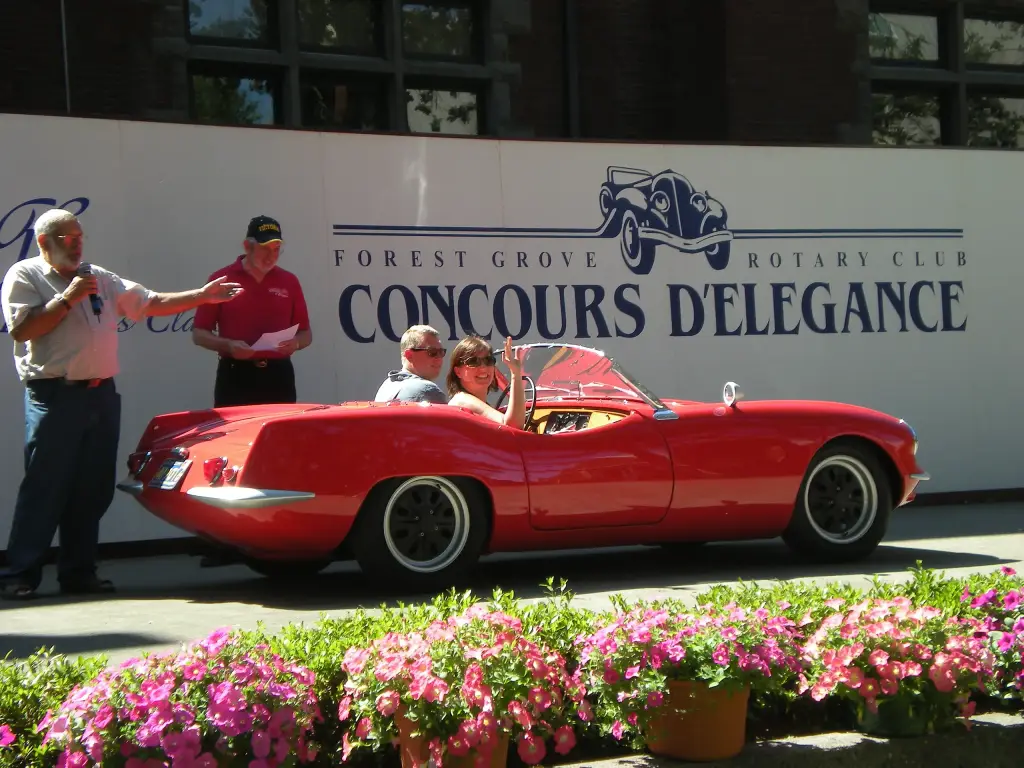
The main road car, introduced in 1958, was called the Courier and went through a series of developments throughout the existence of the company. Initially all the cars were exported, and home market sales did not start until 1960. Mark Donohue had his first racing successes in an Elva Courier, winning the SCCA F Production Championship in 1960 and the E Production Championship in 1961.
The Mk 1 used a 1,500 cc MGA or Riley 1.5 litre engine in a ladder chassis with Elva-designed independent front suspension. The engine was set well back in the chassis to help weight distribution, which produced good handling but encroached on the cockpit and made the car a little cramped. The chassis carried lightweight two-seater open glassfibre bodywork, and the car was produced complete for the US and European markets and available in kit form for the UK market.
Mk II and the move to Trojan
After about 50 cars had been made, the Courier was upgraded to the Mk II: the same car fitted with a proprietary curved glass windscreen in place of the original flat-glass split type, and the larger 1,600 cc MGA engine. Approximately 400 of the Mk I and Mk II were made.
The rights to the Elva Courier were acquired by Trojan in 1962, and production moved to the main Trojan factory in Purley Way, Croydon, Surrey. The trade press announced that the manufacturing rights had been sold to Lambretta-Trojan in England, while the Formula Junior Elva and the Mark IV sports cars would continue to be built by Frank Nichols as before.
Mk III and Mk IV
With the Trojan takeover the Mk III was introduced in 1962 and sold as a complete car, costing £965 on the home market or £716 in kit form. The chassis was now a box frame moulded into the body, Triumph rack-and-pinion steering and front suspension were standardised, and a closed coupé body was available with either a reverse-slope Ford Anglia-type rear window or a fastback.
In autumn 1962 the Elva Courier Mk IV was shown at the London Show, with a new coupé body, all-independent suspension and a glassfibre body; the MG engine gave way to the 1,800 cc MGB unit, and later the Ford Cortina GT engine was available. The final version, the fixed-head coupé Mk IV T, used Lotus twin-cam engines with the body modified to give more interior room, and could be had with all-independent suspension and four-wheel disc brakes. Two hundred and ten were made.
The end of the line
Ken Sheppard Customised Sports Cars of Shenley, Hertfordshire, acquired the Elva Courier from Trojan in 1965, but production ended in 1968.
Design and features
- Body: lightweight open two-seater glassfibre shell, later also a closed coupé with a reverse-slope or fastback rear window.
- Engine position: set well back in the chassis for weight distribution, which cost cockpit space.
- Chassis: a ladder frame at first, then a box frame moulded into the body from the Mk III.
- Steering and suspension: Triumph rack-and-pinion and front suspension from the Mk III, all-independent suspension on the Mk IV.
- Brakes: four-wheel discs on the Mk IV T.
Elva Courier versions
- Mk 1 (1958): 1,500 cc MGA or Riley engine, ladder chassis, open body.
- Mk II: curved glass windscreen and 1,600 cc MGA engine; about 400 Mk I and II in total.
- Mk III (1962): Trojan-built, box frame, Triumph steering and front suspension, coupé option.
- Mk IV (1962): all-independent suspension and 1,800 cc MGB engine, later Ford Cortina GT.
- Mk IV T: fixed-head coupé with Lotus twin-cam engine and four-wheel disc brakes, 210 made.
The racing side of the marque is covered on the Elva Mk I–III and Elva Mk VII pages, and the three prototypes of the Elva GT160 are described separately. More cars of the marque are in the Elva collection.
Video: Elva Courier Mk IV T at Laguna Seca
Video on YouTube.
Sources
- Elva (car manufacturer), English Wikipedia: company history, models, engines, production