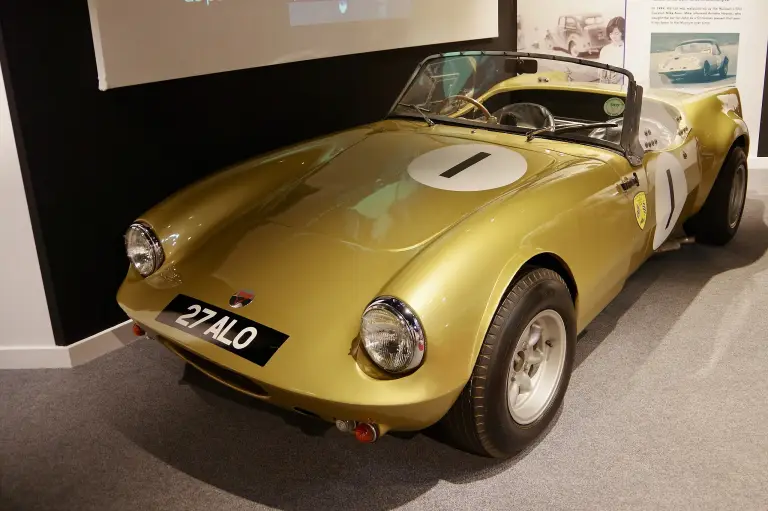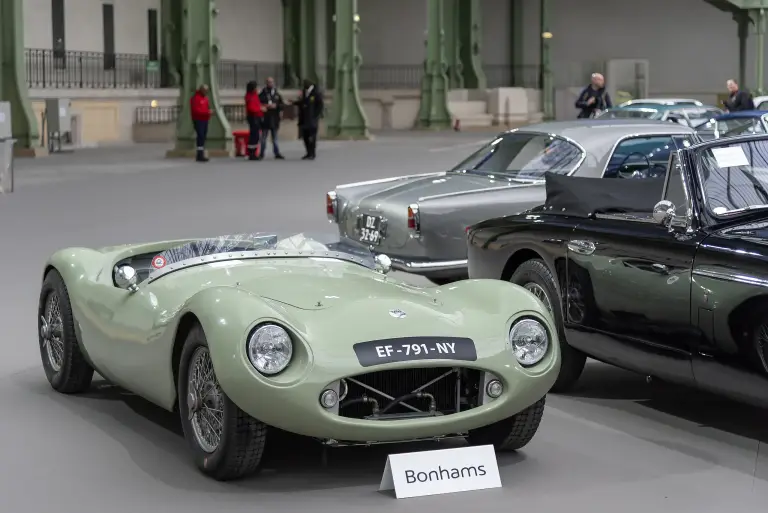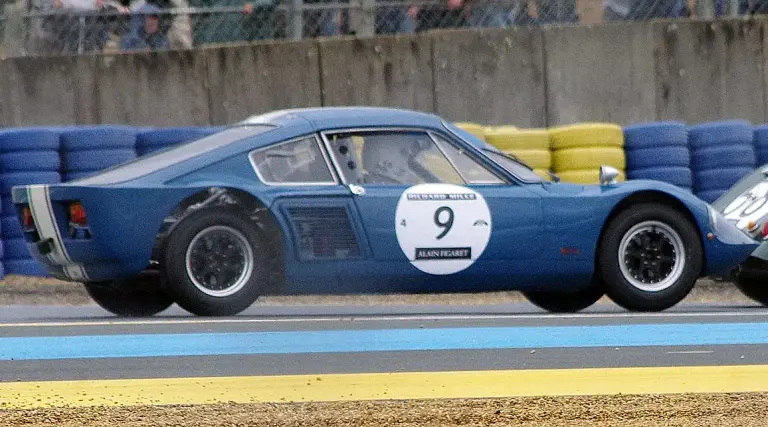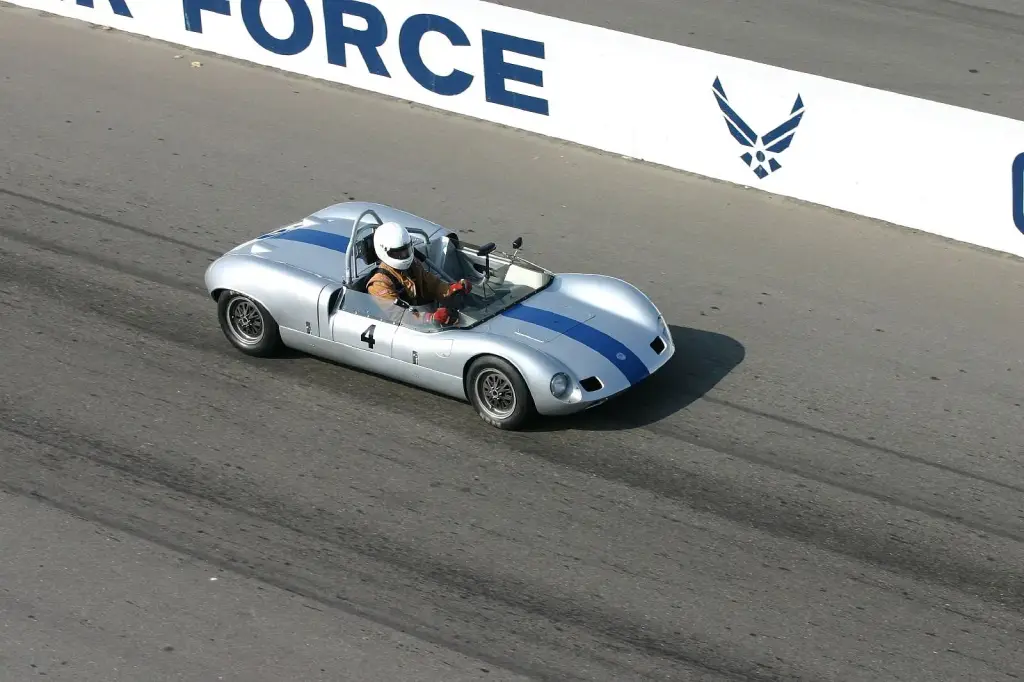
The Elva Mk VI, Mk VII and Mk VIII were rear-engined sports racing cars built after Frank Nichols restarted his company in Rye, Sussex, in 1961. The Mk VII is best remembered in Porsche-engined form, and the later Mk VIII was sold with BMW power and as the McLaren-Elva.
Elva Mk VII at a glance
| New company | built by Frank Nichols in Rye, Sussex, from 1961 |
|---|---|
| Mk VI debut | Brands Hatch, Boxing Day 1961, driven by Chris Ashmore |
| Mk VI engine | 1,100 cc Coventry-Climax |
| Mk VI design | Keith Marsden |
| Mk VIII engines | 1.8 litre BMW (modified from 1.6 litre by Nerus), or 1.15 litre Holbay-Ford |
| Mk VII handling | difficult, with a 70–30 weight bias to the rear |
| Elva-Porsche | Porsche 1.7 litre four-cam type 547, 183 hp at 7,800 rpm |
| Elva-Porsche chassis | adapted Mk VII tubular frame, 13-inch wheels, Porsche five-speed gearbox |
| Elva-Porsche pace | 0–100 km/h in about 5 seconds, around 260 km/h |
| Elva-BMW Mk VIIIS | rear-mounted 2 litre BMW four-cylinder overhead-cam engine |
| McLaren-Elva | built by the Trojan Group with Oldsmobile, Chevrolet or Ford V8 engines |
This page is based on a single source, the English Wikipedia article on Elva, so the figures could not be cross-checked.
History of the Elva Mk VII
A new company in Rye
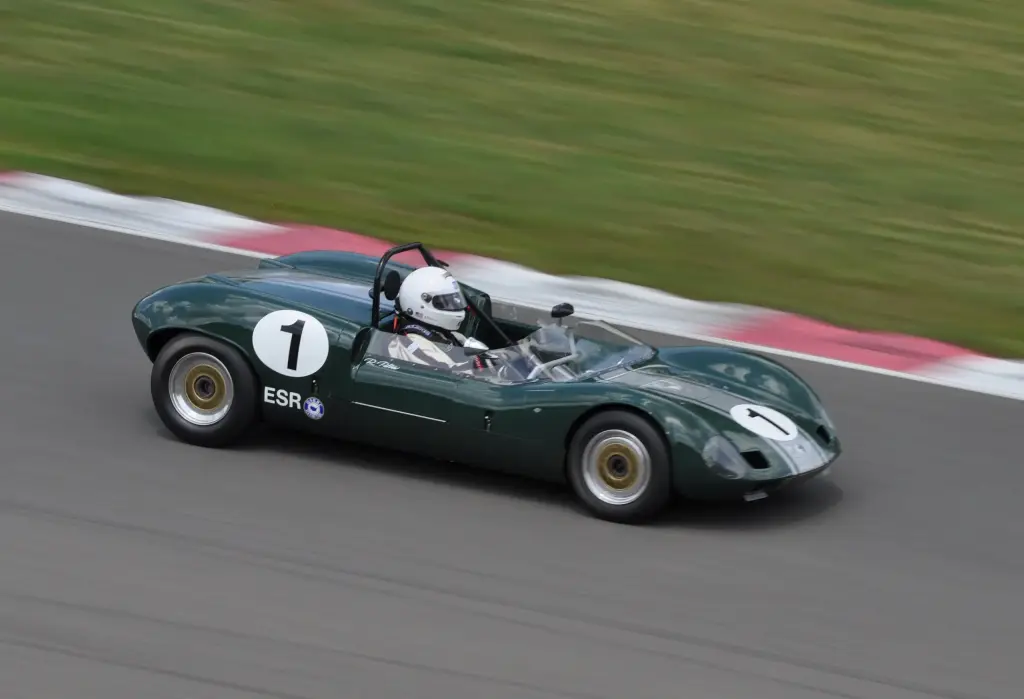
After financial problems caused by the failure of the US distributor, Frank Nichols started a new company in Rye, Sussex, in 1961 to continue building racing cars. The Elva Mk VI rear-engined sports car, still using 1,100 cc Coventry-Climax power, made its competition debut at Brands Hatch on Boxing Day 1961, driven by Chris Ashmore, and finished second to the three-litre Ferrari of Graham Hill. The car was designed by Keith Marsden.
Mk VII and Mk VIII
Around 1964–1966 Elva made a very successful series of Mk 8 sports racers, mostly with 1.8 litre BMW engines modified from 1.6 litres by Nerus and some with 1.15 litre Holbay-Ford engines. The Mk 8 had a longer wheelbase and wider track than the Mk 7, which was known for difficult handling due to a 70–30 weight bias to the rear.
Following the success of the McLaren in sports car racing, Elva became involved in producing cars for sale to customers. A tie-up with the Trojan Group was arranged and Trojan took over manufacture of the McLaren sports racer under the name McLaren-Elva-Oldsmobile. At the 1966 Racing Car Show in London in January, Elva exhibited two cars: the McLaren-Elva Mk II V8, offered with a choice of Oldsmobile, Chevrolet or Ford V8 engines, and the Elva-BMW Mk VIIIS with a rear-mounted two-litre BMW four-cylinder overhead-cam engine.
The Elva-Porsche
Around 1960 requests came from the United States for a lightweight racing sports car with a Porsche engine. Porsche developed for Elva the so-called Fuhrmann engine (type 547) with four overhead camshafts; with a displacement of 1.7 litres and a compression of 11:1 it produced 183 hp at 7,800 rpm. Porsche supplied 15 of these engines for installation in appropriately adapted Elva Mk VII chassis, with changes to the fuel and oil tanks, the cockpit and the rear part of the tubular frame.
On 8 September 1963 Bill Wuesthoff and Augie Pabst won the Road America 500, round seven of the United States Road Racing Championship, at Elkhart Lake, Wisconsin, driving an Elva Mk 7-Porsche. The first cars were ready at the end of 1963; they reached 100 km/h from rest in about five seconds and around 260 km/h, and cost over $10,000. In 1964 Porsche entered an Elva Mk VII chassis with the eight-cylinder type 771 engine in the European Hill Climb Championship; the car weighed about 520 kg, and Edgar Barth won the opening round at Rossfeld on 7 June 1964.
On film and in Africa
One US-based Mk IV had appeared in the cast of the Elvis Presley film Viva Las Vegas, and a later Mk VI sports racer played a more prominent role as Elvis’s race car. Luki Botha campaigned an Elva-Porsche in southern Africa from 1966.
Design and features
- Layout: the Mk VI moved the engine behind the driver, where the earlier Elvas had it at the front.
- Chassis: a tubular frame, adapted at the rear for the Porsche conversion.
- Body: light glassfibre panels; the Porsche-engined cars used narrow 13-inch wheels, six inches wide at the front and seven at the rear.
- Weight: the eight-cylinder hill climb car weighed about 520 kg, and the Elva-Porsche’s 70–30 rear bias made it demanding to drive.
- Engines: Coventry-Climax, BMW, Holbay-Ford, Porsche type 547 and type 771 flat-eight, and American V8s in the McLaren-Elva.
Elva Mk VII versions
- Mk VI (1961): the first rear-engined Elva, with 1,100 cc Coventry-Climax power.
- Mk VII (1963): the basis of the Porsche-engined cars; engine bay redesigned behind the cockpit.
- Mk VIII and Mk VIIIS (1964–1966): BMW-engined cars with a longer wheelbase and wider track.
- Elva-Porsche (1963–1964): 15 Porsche type 547 engines in adapted Mk VII chassis.
- McLaren-Elva (1964–1966): the McLaren sports racer built by Trojan with a choice of V8 engines.
- Elva-Porsche flat-eight (1964): a 520 kg hill climb car with the type 771 engine.
The earlier front-engined Elva racing cars are on the Elva Mk I–III page, and the road cars on the Elva Courier page. More cars of the marque are in the Elva collection.
Video: Masters Historics at Barcelona: Nigel Greensall in an Elva Mk7
Video on YouTube.
Sources
- Elva (car manufacturer), English Wikipedia: company history, models, engines, race results