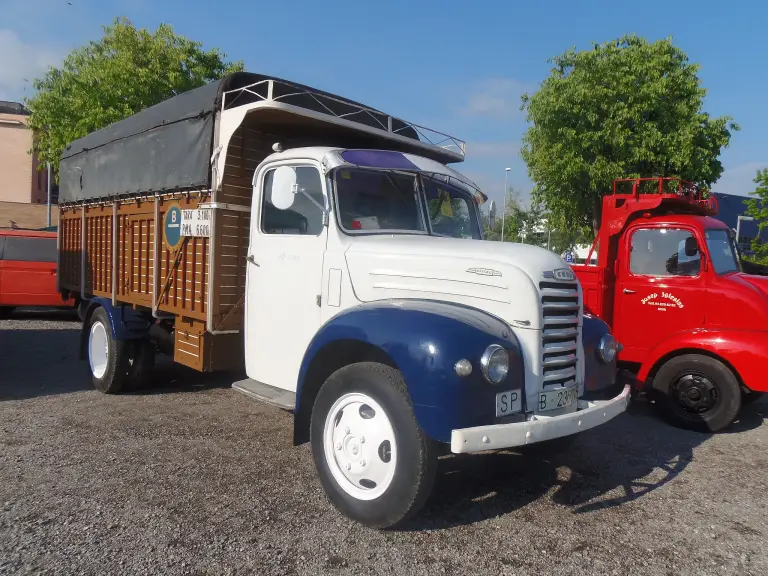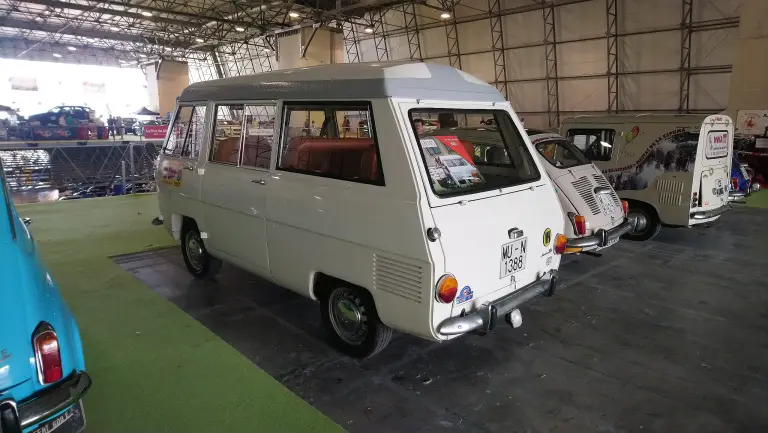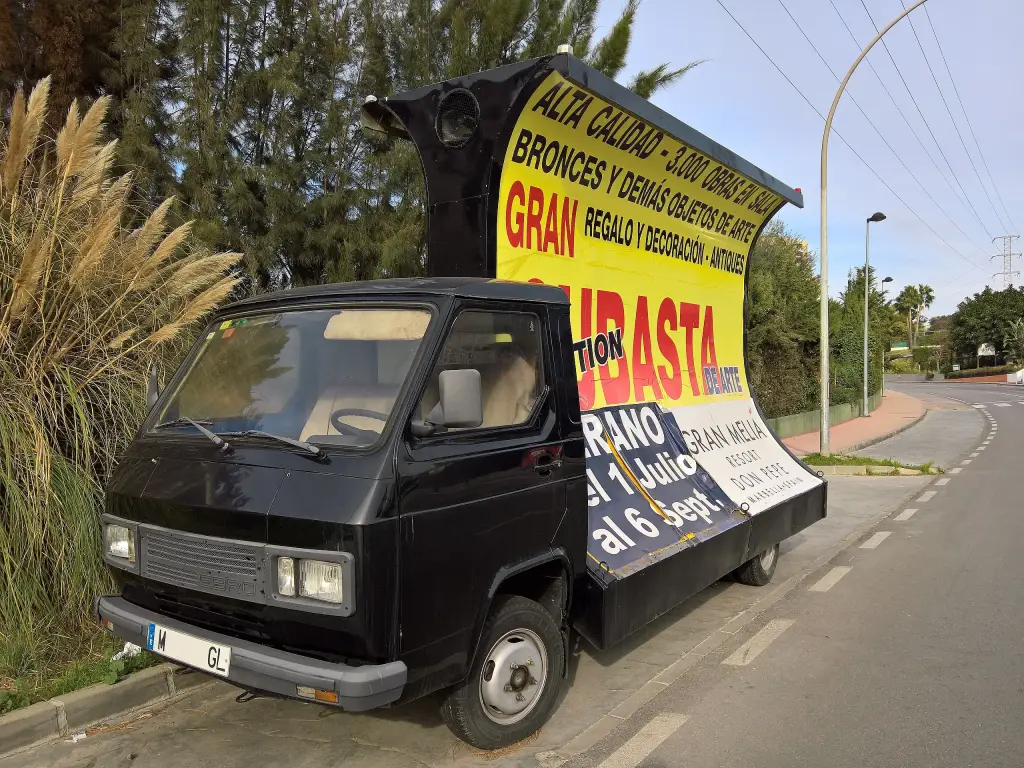
The Ebro Trade is the best-known member of a family of light commercial vehicles built in Spain from 1976 to 2001. Ebro sold it as the F260, F275 and F350, and in Britain from 1985 as the Nissan Ebro Trade; after a facelift in 1986 the Ebro name was dropped and the van became the Nissan Trade.
Ebro Trade at a glance
| Maker | Motor Ibérica (Ebro), Barcelona |
|---|---|
| Production | 1976–1986 as Ebro; 1986–2001 as Nissan |
| Predecessor | Ebro F108, a rebadged Alfa Romeo Romeo |
| Design | AISA of Madrid, the firm behind Avia |
| Ebro versions | F260, F275, F350 |
| Avia versions | Avia 1000, 1250 and 2000 |
| Engines from 1976 | 1.8 Perkins 4.108, 47 hp; 2.7 Perkins 4.165, 65.5 hp |
| Engines from 1984 | 2.0 LD20II, 58 hp; 2.8 A428, 68 hp |
| British name | Nissan Ebro Trade from 1985 |
| Updates | JX (1984), PF (1986), facelift (1989), TC (1991) |
| Last engine option | 2.8 RD28, 86 hp (1993) |
| Successor | Nissan Interstar, though the Trade was built until 2001 |
The Ebro F275 named in the older record is one of the F-series versions (F260, F275 and F350) described on the English Wikipedia page about the Nissan Trade; this page covers the whole F-series and Trade line.
History of the Ebro Trade
The Ebro/Avia years, 1976–1984
The van replaced the Ebro F108, itself a rebadged Alfa Romeo Romeo sold only in Spain. The new model was designed by AISA, the Madrid company that owned the Avia brand, and was marketed under both the Ebro and Avia names. Its initial design was square and simple, with trapezoidal elements. Avia assembled it as the Avia 1000, 1250 and 2000, the numbers reflecting cargo capacity, while the nearly identical Ebro models were called F260, F275 and F350. The design used the chassis of the F108 but had a different drivetrain and different engines, and apart from the drivetrain the only differences between the Ebro and Avia versions were the badging and the grille insert.
Heavy-duty versions had rear-wheel drive, lighter ones front-wheel drive. The lighter-duty vans used the 1.8-litre Perkins 4.108 engine with 47 hp (35 kW), while the heavier F350 and Avia 2000 used the 2.7-litre 4.165 with 65.5 hp (48 kW). The Perkins diesels were licence-built in Spain by Motor Ibérica itself. Avia was taken over by Ebro in 1977, and Nissan took a share of the company in 1979.
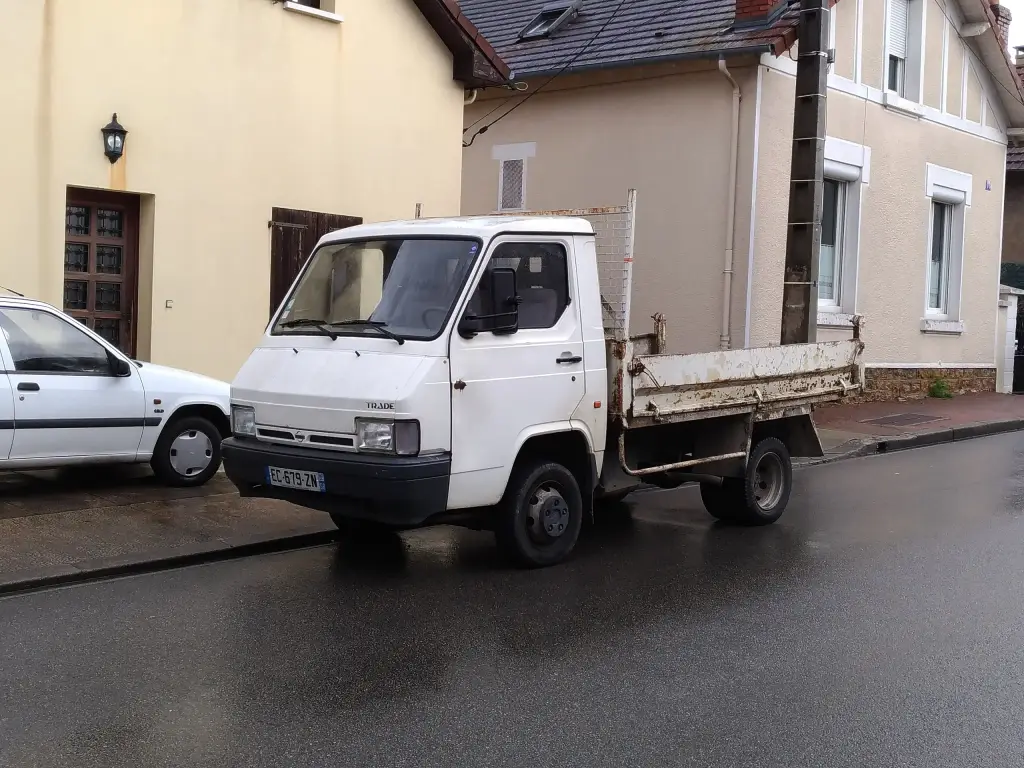
JX update and the Trade badge, 1984–1986
In 1984 the JX update programme was completed and a facelifted model with square headlights and extra black plastic was presented; this was also when the Avia name was discontinued. Nissan-built engines replaced the Perkins units: a Japanese-designed, Spanish-built 2.0-litre diesel, the LD20II, with 58 hp (43 kW), and the A428, an updated Nissan-built derivative of the Perkins 4.165 bored out to 2,820 cc with a revised head and 68 hp (50 kW). A 2.0-litre petrol version was offered in some continental markets.
The JX programme also included a right-hand drive model for Britain, where a Spanish-made truck could evade quota limits on Japanese-built vehicles. In the United Kingdom the only engine at first was the LD20II: period testers thought it underpowered, but the importers could not fit the heavier 2.8-litre diesel without pushing the van above the 1,525 kg threshold, over which stricter MOT testing and a goods vehicle operator’s licence applied. It was sold by Nissan as the Ebro Trade, with Ebro badging inside and out, although the Nissan name appeared in adverts and was often used in the press.
The Nissan Trade, 1986–2001
The JX Trade had a short life, because the design was thoroughly updated again in 1986. The PF programme brought updated engines (the LD20II E and A428II), a more comfortable interior and a new, extended front with a geometric look and wraparound turn signals. The Ebro name was dropped in most places, though it survived in some markets such as Andorra. The range included vans and chassis cabs — the vans mostly for Spain, the chassis cabs for export — a simpler Trade Van with swing-leaf side doors instead of sliding ones, a fully glazed nine-seater Trade Combi and a high-roofed Trade Largo.
A light facelift in December 1989 moved the Nissan lettering to the right of the grille, improved rust proofing, brought new seat fabrics, a single key for locks and ignition, a redesigned steering box and a reworked rear suspension on the 2.8-litre models. The 1991 TC facelift, by the Spanish industrial designer Francisco Podadera of Podadera Design, gave the van a more conventional front with larger clear wraparound headlamps and a more modern interior. Even so, without airbags or ABS it was a weak seller outside Spain and Italy, where power steering was still only an option. A 2.8-litre 86 hp RD28 became available in 1993; Nissan’s joint venture with Renault produced the Interstar as its replacement, but the Trade stayed in production until 2001.
Design and features
- Two driven layouts: light versions were front-wheel drive, heavy-duty ones rear-wheel drive.
- Spanish-built Perkins diesels: the 1.8 and 2.7 engines were made under licence by Motor Ibérica.
- British loophole: the right-hand drive JX was kept under 1,525 kg so that it escaped quota limits on Japanese imports.
- Long life: the 1976 design was still being built as the Nissan Trade in 2001, two facelifts and three engine families later.
Ebro Trade versions
- Avia 1000, 1250, 2000 and Ebro F260, F275, F350 (1976–1984): the original range, named by payload class, with Perkins diesels.
- JX (1984–1986): square headlights, black plastic trim, Nissan LD20II and A428 engines, right-hand drive for Britain.
- Trade PF (1986–1989): extended front, wraparound indicators, new interior; van, chassis cab, Trade Van, Trade Combi and Trade Largo.
- 1989 facelift: revised trim, single key, better rust proofing, reworked rear suspension on 2.8-litre models.
- TC (1991–2001): Podadera-designed front with clear wraparound headlamps, modernised interior, optional 2.8 RD28 from 1993.
The Trade was the lightest vehicle in the Ebro range, which also included the older B-45 lorry and the Ebro Siata van. More models are in the Ebro collection.
Sources
- Nissan Trade, English Wikipedia: design, engines, updates, British market
- Ebro (Motor Ibérica), Spanish Wikipedia: place of the F/Trade range in the Ebro line