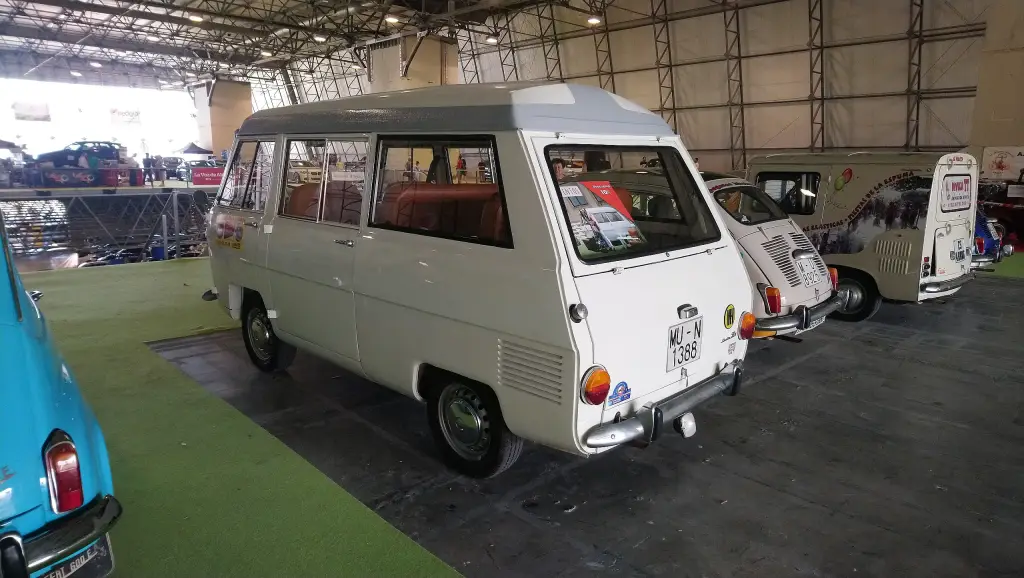
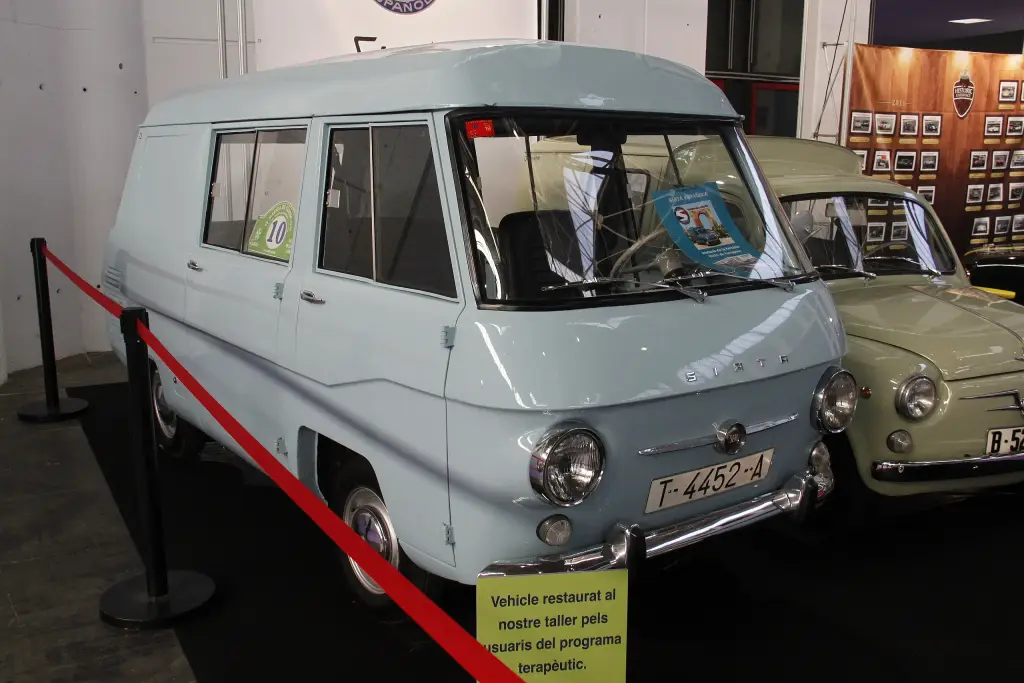
The Ebro Siata was a small Spanish delivery van built on the mechanicals of the SEAT 600 and its successors. Siata Española made it in Tarragona from 1967 as the Minivan; after the firm went bankrupt in 1972 Motor Ibérica took over the patents and sold the van as the Ebro Siata 40, 50 and 50S, and at the very end as the Avia Siata 500, until 1980.
Ebro Siata at a glance
| Maker | Siata Española, Tarragona; from 1972 Motor Ibérica |
|---|---|
| Production | 1967–1980 |
| Base | SEAT 600, then 850, 133 and finally 127 parts |
| Names | Siata Minivan, Ebro Siata 40, 50, 50S, Avia Siata 500 |
| First version | Minivan 2850, in cargo, passenger and mixed bodies |
| 1969 version | Minivan 3000, 15 cm taller |
| Engine option | SEAT 850 unit, 6 hp more than the 600 |
| Daily output | 23 vans a day |
| Special bodies | ice-cream van, ambulance, hearse |
| Last version | Avia Siata 500, 1980 |
| Total built | about 22,700 of all versions |
The van has no English Wikipedia article; this page is based on the Spanish articles on the Siata Minivan and on Siata Española.
History of the Ebro Siata
Siata Española and the Minivan
Siata Española, S.A. was the Spanish subsidiary of the Italian firm Siata, created in Barcelona with its factory in Tarragona. Between 1960 and 1973 it concentrated on special bodies, engine conversions and accessories for cars, mostly on SEAT 600 mechanicals: the Ampurias, Turisa, Tarraco, Patricia and Formichetta all came from the same workshop. The Minivan was its small delivery van, based initially on the SEAT 600 and built in Tarragona from 1967 to 1980.
It was developed as an answer to the rivals of the Formichetta, such as the Citroën Acadiane. The 600 platform was kept, but the front seats were moved forward until they sat over the axle, freeing load space and lengthening the front overhang; the suspension was strengthened and the steering modified. It was sold with cargo, passenger and mixed bodies as the Minivan 2850, the number referring to its maximum load volume. A change in the law in 1969, which treated a vehicle as industrial only when it was more than 180 cm tall and so exempt from the luxury tax, led to a new version called the Minivan 3000, 15 cm taller than the first one; from then on the SEAT 850 engine, with 6 hp more, was also offered as an option. By that point Siata was building 23 vans a day and had made about 8,000.
Ebro Siata 40, 50 and 50S
In 1972 Siata went bankrupt and Motor Ibérica bought the patents relating to the van. Components were gradually replaced by SEAT 850 parts and the model was renamed the Ebro Siata 40, with new badges. When production of the 600 ended in 1973, Motor Ibérica began using 850 frames and the van became the Ebro Siata 50, recognisable by its fuel filler at the rear and by fewer ventilation openings for the engine.
The base car was replaced again in 1975, this time by the SEAT 133, and the van was renamed once more as the Ebro Siata 50S. When Motor Ibérica bought Avia in 1977, the 50S was also sold under that brand, distinguished by a black plastic grille.
The Avia Siata 500 and the end
Towards the end of its life, in 1980, the van began to use SEAT 127 components and came covered in black plastic over much of its surface, as automotive fashion of the period demanded. The prototype was built by CAF with a false black plastic grille, an attempt to hide how dated the design was: it was by then the last van on the Spanish market still sold with a rear engine. In this form it was known as the Avia Siata 500, and although it did not repeat the success of the earlier versions, many were bought by the Guardia Civil and the Spanish Army. Across all versions and all the names it was sold under, about 22,700 were built.
Design and features
- SEAT 600 underneath: the van kept the little car’s platform, with the front seats moved over the axle for load space.
- Rear engine: in its last form it was the only van left on the Spanish market with the engine at the back.
- Many bodies: cargo, passenger and mixed versions, plus a pickup and special ice-cream, ambulance and hearse bodies.
- Changing badges: Minivan, Ebro Siata 40, 50, 50S and Avia Siata 500 as the base car changed from 600 to 850, 133 and 127.
Ebro Siata versions
- Siata Minivan 2850 (1967–1969): the original van, in cargo, passenger and mixed versions.
- Siata Minivan 3000 (1969–1972): 15 cm taller to qualify as an industrial vehicle, with the SEAT 850 engine as an option.
- Ebro Siata 40 (1972–1973): the first Ebro version, on 850 components with new badges.
- Ebro Siata 50 (1973–1975): built on SEAT 850 frames, with the fuel filler at the rear.
- Ebro Siata 50S / Avia Siata 50S (1975–1980): on SEAT 133 mechanicals, also sold as an Avia with a black plastic grille.
- Avia Siata 500 (1980): SEAT 127 components and black plastic trim, the final version.
The Ebro Siata was the smallest vehicle Motor Ibérica sold alongside the Ebro Trade van and the older B-45 lorry. More models are in the Ebro collection.
Video: Siata panelada
Video on YouTube.
Sources
- Siata Minivan, Spanish Wikipedia: development, versions, production figures
- Siata Española, Spanish Wikipedia: the company and its other models