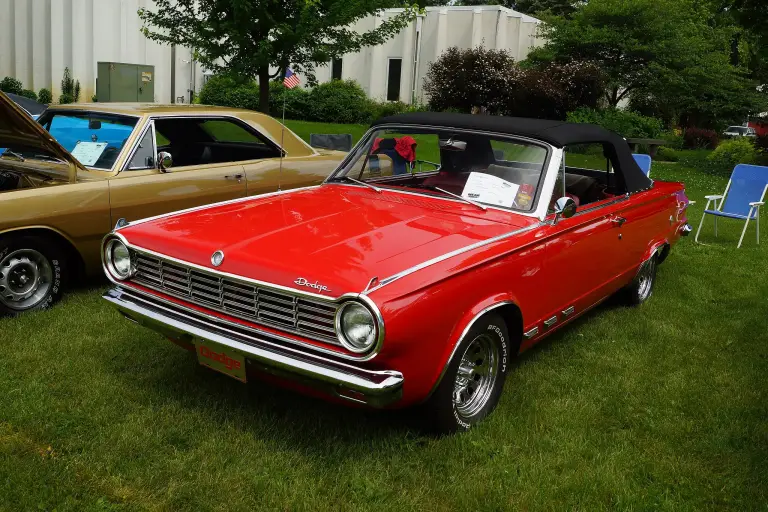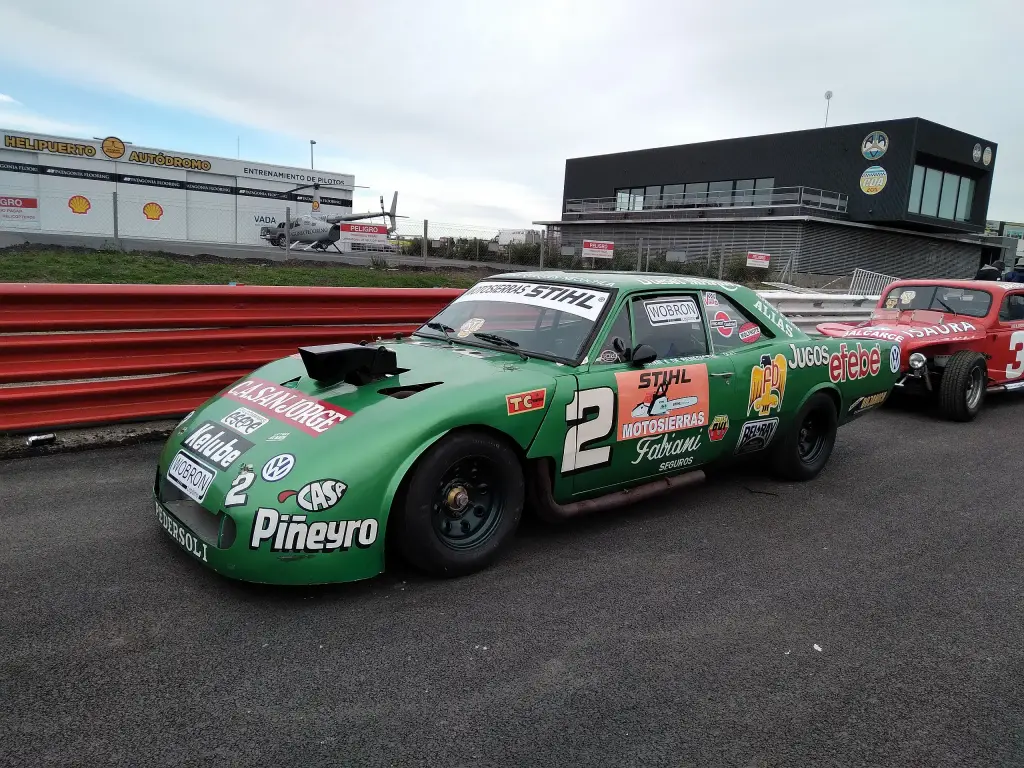
The Dodge GTX is a muscle car manufactured by Chrysler-Fevre Argentina S.A. under the Dodge brand. One of few muscle cars made in Argentina, the hardtop performance coupé was based on the 1960–66 platform A (early A-body).
Dodge GTX at a glance
| Maker | Chrysler-Fevre Argentina S.A. (Dodge) |
|---|---|
| Production | October 1970 to 1979 |
| Body | two-door hardtop coupé, no rear doors or side pillars |
| Platform | early A-body (1960–66), shared with the Argentine Dodge sedans |
| Slant-Six | 3.7 litre (225 cu in) A-119 inline six, 155 hp (SAE) at 4,500 rpm |
| V8 | 5.2 litre (318 cu in), 212 hp (SAE) at 4,400 rpm; 230 hp from 1973 |
| Gearbox | four-speed manual A 230/4, developed in Argentina |
| Predecessor | Dodge GT sedan |
| Racing | 8 of the brand’s 10 Turismo Carretera titles in the 1980s |
| End of production | 1979, when Chrysler-Fevre was sold to Volkswagen |
This article is based on the English and Spanish Wikipedia pages on the car.
History of the Dodge GTX
In 1968 Chrysler-Fevre Argentina launched a line of sedans on one body developed from the third-generation American Dart and the Valiant already sold in Argentina. The range grew into the Taxi, the Polara and the more luxurious Coronado, and from the Coronado came the Dodge GT, a sports-minded luxury sedan with a 3.7 litre Slant-Power A-119 engine of 155 hp. People liked it, but the company found that a purely sporty image attracted customers, and began to look for a more sporting product. It even imported a Mexican Dodge Dart GTS with a 340 cu in V8 to test the public’s reaction at a Turismo Carretera event.
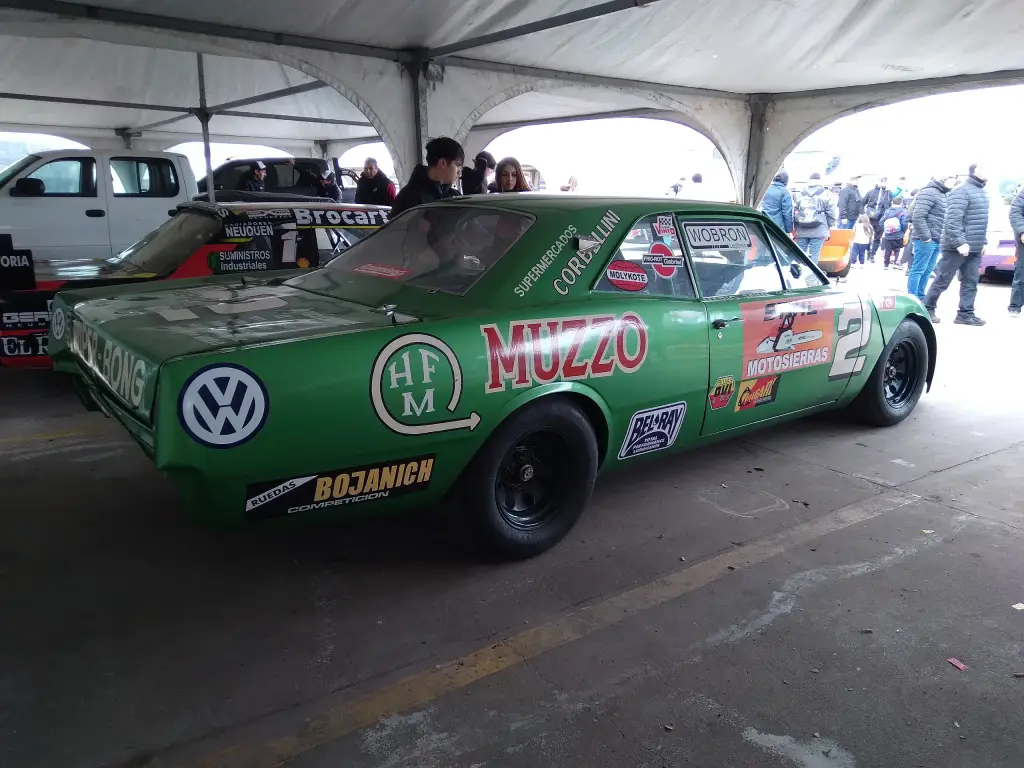
For the new car the Argentine engineers kept the sedan chassis, removed the rear doors and side pillars, stretched the front doors a few centimetres to the rear, raked the windscreen back and made the rear window smaller. The GT’s engine moved over with a new four-speed gearbox, and the GTX was presented in October 1970. The name added the letter X, for extreme, to the GT, and the company read it as Gran Turismo eXtremo.
A V8 version with the 318 cu in engine appeared the same year and looked identical to the Slant Six. In 1972 the Slant-Six GTX was replaced by a cheaper Polara coupé, leaving the GTX as the most powerful Dodge on sale. From 1974 the V8 engines were imported from Canada. Production of the GTX and the whole Dodge coupé line ended in 1979, after Chrysler-Fevre was sold to Volkswagen; the coupé was the weakest seller of the three lines then in production.
Design and features
- Look: a muscular, aggressive hardtop coupé with a pillarless side window area.
- Engines: the 3.7 litre Slant-Six in the first cars and the 5.2 litre V8, which became the model’s signature.
- Clutch: a 9.25 in clutch for the Slant-Six and a 10.5 in single dry plate for the V8.
- Interior: new seats and upholstery in 1974, wider seats and a new centre console in 1978.
Dodge GTX versions
- GTX Slant Six (1970–1972): the 155 hp straight-six car.
- GTX V8 (1970–1979): 212 hp at launch, 230 hp from 1973.
- Polara coupé and R/T: later coupé versions of the same package.
- Dodge Cherokee: a 1990s Turismo Carretera racer combining the GTX lines with an AMC Cherokee engine.
More Dodge models are in our Dodge collection, for example the Challenger.
Dodge GTX questions and answers
Was the Dodge GTX an American car?
No. It was built in Argentina by Chrysler-Fevre, though on a design derived from American Dodge cars.
What does GTX stand for?
GT plus an X for extreme; the company read it as Gran Turismo eXtremo.
What engines did it have?
A 3.7 litre Slant-Six and a 5.2 litre 318 V8.
How did it do in racing?
It took 8 of the brand’s 10 Turismo Carretera titles in the 1980s.
Sources
- Dodge GTX, English Wikipedia: overview, history
- Dodge GTX, Spanish Wikipedia: development, engines, end of production, racing