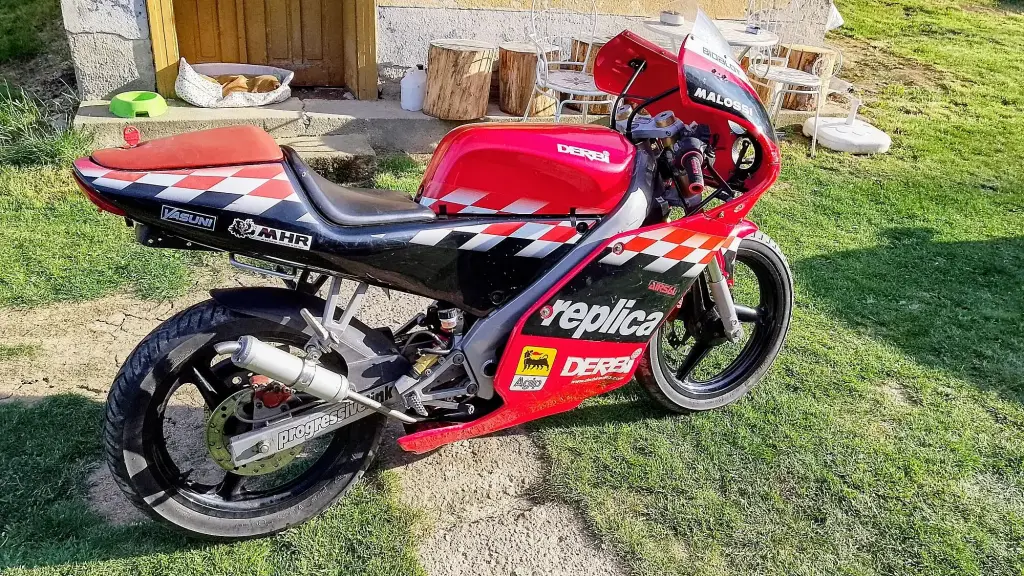
The Derbi GPR was a small sports motorcycle sold by the Spanish firm Derbi from 1990 to 2013. Its name stood for Grand Prix Replica. It was made in 50 and 125 cc form over four series, with a faired Racing version and a naked one, and from 2010 it used a new four-stroke engine.
Derbi GPR at a glance
| Maker | Derbi, Spain |
|---|---|
| Model | GPR (Grand Prix Replica) |
| Production | 1990–2013 |
| First shown | Milan, 1989 |
| Capacities | 50 cc and 125 cc |
| Versions | Racing (faired) and Nude (naked) |
| First series | 75 cc from 1990, derived from the Aprilia AF1 50 |
| Second series | 1997–2001, based on the Cagiva Prima 75 |
| Third series | from May 2002, a light restyling |
| Fourth series | 2004–2009, designed entirely by Derbi |
| Engine change | four-stroke, DOHC, four valves, from 2010 |
| Related model | Gilera SC 125, from February 2006 |
History of the Derbi GPR
The GPR was presented in Milan in 1989 and put into production the following year. The first series was derived from the Aprilia AF1 50 through a technical agreement between the two makers, and it reached the Spanish market in 1990 in 75 cc form; in 1991 a Sport 75 version joined the standard model. Its bodywork was elaborate, with a very rounded fairing nose carrying twin round headlights, two air intakes on the side panels, a tank shaped to take the rider’s legs and a squared tail with an air vent on each side. The frame was the twin-spar unit of the Aprilia AF1, with the rider footrests cut directly into it, and the engine was Derbi’s own liquid-cooled unit with a six-speed gearbox, 40 mm fork legs with 140 mm of travel, disc brakes with Grimeca calipers and a rear monoshock working through a progressive linkage on a single-sided swingarm.
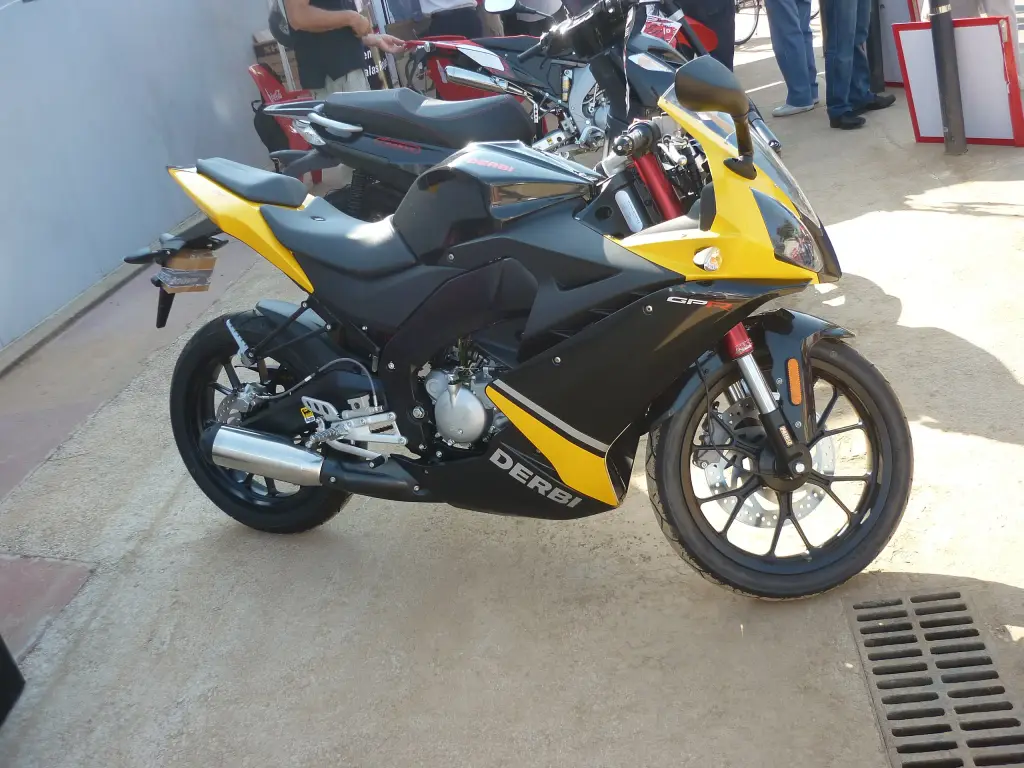
The second series arrived in Spain in June 1997 and was built until 2001. It came from an agreement with the Italian firm Cagiva and was based on the Cagiva Prima 75, with the engine reduced to 50 cc; passenger footrests and low side handles under the tail were added. The fairing was made more striking by setting the headlights inside the bodywork rather than flush with it, and the tank, still shaped for the legs, could be tilted forward on its front pivot, with a small compartment underneath. A Replica version appeared in 2001.
The third series reached the market in May 2002 as a light restyling of the previous generation. The only version was the faired 50, with very rounded, clean bodywork without vents or intakes, the seats integrated into the line, the twin headlights stacked one above the other and oval indicators. It had three-spoke wheels and inverted suspension.
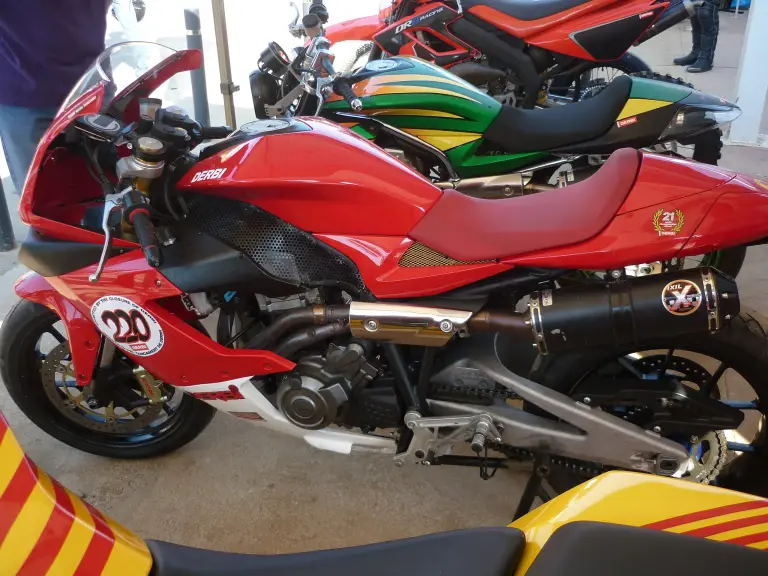
The fourth series, announced by the GPR 80 Cup prototype shown at the EICMA show in 2003, was presented in May 2004 and built until 2009. It was developed entirely by Derbi and for the first time a naked GPR, the Nude, was offered alongside the faired Racing, with its own styling and twin front headlights. All capacities shared the same chassis, with a radial front brake on a 300 mm disc and a 180 mm rear disc, and from 2006 a wider 140/70 rear tyre replaced the original 130/70. The 50 used a Derbi EBS 050 two-stroke with a mixer in the 2005 model year, replaced in 2006 by the Piaggio D50B; the 125 used a Minarelli-Yamaha two-stroke derived from the Yamaha TZR 125. In February 2006 the GPR 125 was also sold as the Gilera SC 125. The English Wikipedia adds that the original two-stroke engine came from Yamaha, that its parts swap directly with the Yamaha DTR125 and TZR125, and that it used the Yamaha Power Valve System controlled by an ECU and servo motor. In 2010 the engine was replaced by a single-cylinder four-stroke with double overhead camshafts and four valves, and production ended in 2013.
Design and features
- Grand Prix Replica: a small sports bike styled after racing machines.
- Four series in twenty-three years: from the Aprilia-derived first model to the Derbi-designed fourth.
- Racing and Nude: faired and naked versions from 2004.
- Yamaha-derived two-stroke: the original engine shared parts with the DTR125 and TZR125.
- Four-stroke from 2010: a DOHC four-valve single replaced the two-stroke.
Derbi GPR versions
- GPR 75 (1990): the first series, derived from the Aprilia AF1 50.
- GPR Sport 75 (1991): added alongside the standard first-series model.
- GPR 50 Replica (2001): a special version of the second series.
- GPR Racing and GPR Nude (2004): the fourth series in faired and naked form.
- GPR 125 (2004): the larger capacity of the fourth series, also sold as the Gilera SC 125.
- GPR four-stroke (2010): the final version with a DOHC four-valve engine.
The GPR shared its name with the GP1 scooter, and the supermotard Senda was built alongside it. More motorcycles are in the Derbi collection.
Sources
- Derbi GPR, English Wikipedia: years, engine, Power Valve System
- Derbi GPR, Italian Wikipedia: series, chassis, editions
- Derbi GPR, French Wikipedia: versions