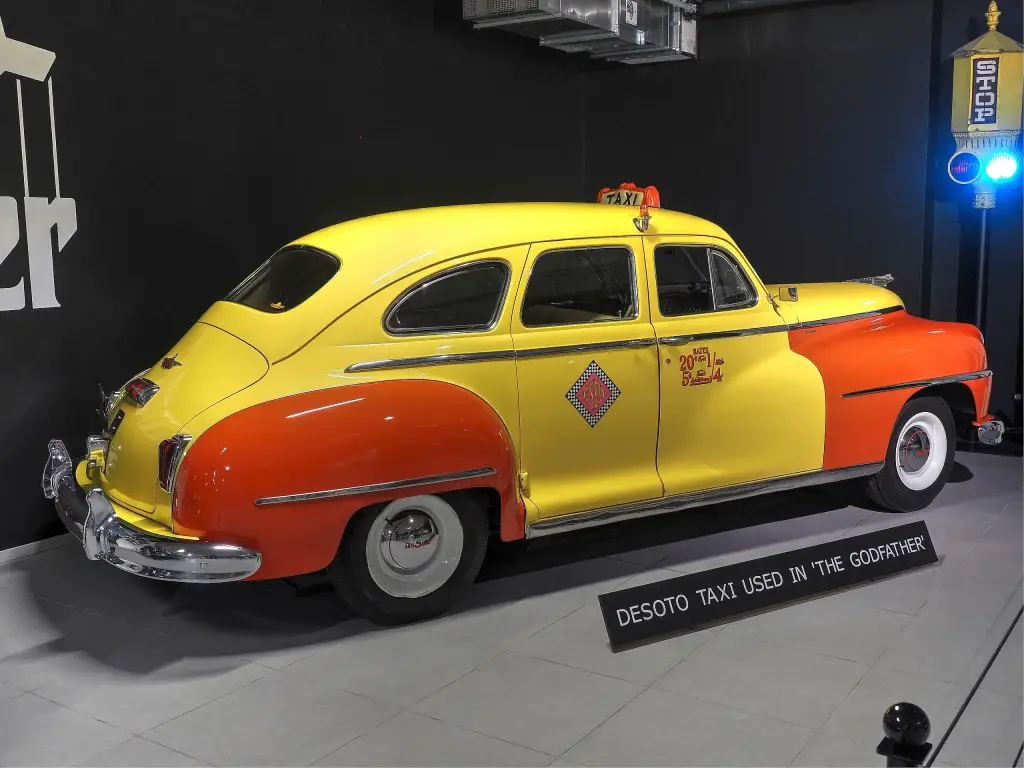
The DeSoto Custom was DeSoto’s upscale model line in the years after the Second World War. It shared its basic body and six-cylinder engine with the cheaper DeLuxe, but offered richer interiors, more standard equipment and body styles the DeLuxe never received, among them a seven-passenger sedan and, from 1950, DeSoto’s first station wagon and first hardtop coupe.
DeSoto Custom at a glance
| Maker | DeSoto division, Chrysler Corporation |
|---|---|
| Production | 1946–1952 model years |
| Position | premium line above the DeLuxe |
| Engine | Chrysler L-head 237 cu in (3.88 L) six, 109 bhp |
| Body | claimed to be rust proofed |
| Body styles | sedans, seven-passenger sedan, extended-wheelbase Suburban sedans |
| 1949 | new body from the second half of the model year |
| 1950 | first DeSoto station wagon, optional wooden panels |
| 1950 | first DeSoto hardtop coupe, pillarless |
| 1950 equipment | two-speed electric wipers, trunk light, full carpeting |
| 1951 | brakes enlarged to 12 in |
| Replaced by | the V8 Firedome from 1952 |
There is no separate English Wikipedia page for the Custom; it is described on the DeSoto Series S-10 page, so this article is based on one source.
History of the DeSoto Custom
Postwar cars
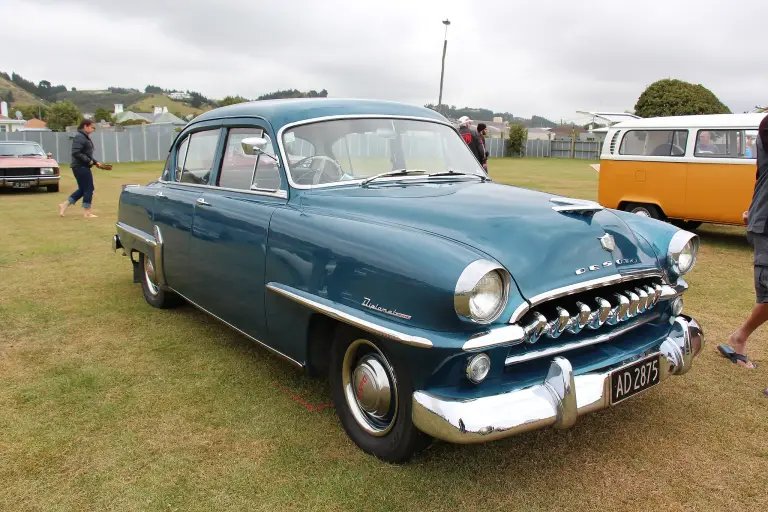
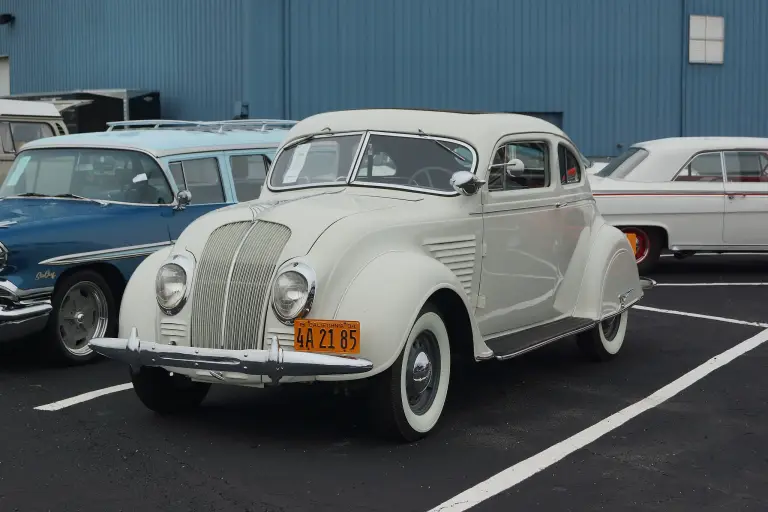
For the 1946, 1947 and 1948 model years and the first half of 1949, the Custom used DeSoto’s prewar body, lightly updated after the end of the war. It was the more expensive of the two lines: where the DeLuxe had less trim, fewer standard features and plainer interiors in fewer colour combinations, the Custom offered upscale interiors and appearance. Its range included a seven-passenger sedan and the extended-wheelbase Suburban sedans, and DeSoto claimed the body was rust proofed. Both lines shared Chrysler’s L-head 237 cu in six-cylinder engine, which delivered 109 bhp at 3,600 rpm.
A new body for 1949
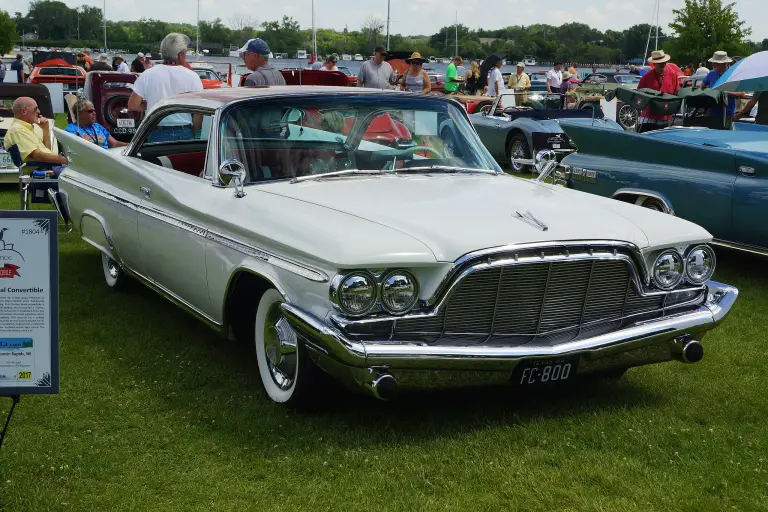
A fully redesigned Custom was launched in the second half of the 1949 model year, together with a redesigned DeLuxe; the cars are known as the 1949 Second Series. In 1950 the Custom gained DeSoto’s first station wagon body style, which was not offered as a DeLuxe and could be ordered with wooden panels bonded to the exterior steel body. That same year the Custom also received DeSoto’s first hardtop coupe, a pillarless design with the interior equipment and refinement of the convertible.
End of the line
Standard equipment on the 1950 Custom included two-speed electric windscreen wipers, a trunk light and full carpeting. In 1951 the brakes grew to 12 inches in diameter. The Custom remained DeSoto’s premium model until the V8-powered Firedome arrived for 1952; the Custom nameplate was retired at the end of that model year, while the DeLuxe carried on as the base car until the Powermaster replaced it in 1953.
How this page was made
The English Wikipedia article headed DeSoto Custom redirects to the page on the DeSoto Series S-10, which describes the base DeLuxe and the Custom together. This page uses the parts of that article that concern the Custom.
Design and features
- Two trim levels: the Custom sat above the DeLuxe on richer trim, more standard equipment and a wider choice of interior colours.
- Seven-passenger body: a long sedan body was offered only in the Custom line.
- Wood-panelled wagon: DeSoto’s first station wagon arrived in 1950 with optional timber panels.
- Pillarless hardtop: also new for 1950, with convertible-style equipment inside.
- Shared six: the same 109 bhp L-head 237 six served both lines.
DeSoto Custom versions
- Custom sedan: the standard four-door of the upmarket line.
- Seven-passenger sedan: a long-body Custom for larger families.
- Suburban sedan: an extended-wheelbase body offered in the Custom range.
- Station wagon (1950): DeSoto’s first wagon, with optional wooden panels.
- Hardtop coupe (1950): a pillarless two-door with convertible-grade trim.
The Custom was replaced at the top of the range by the V8 Firedome, and its cheaper stablemate is covered with the Diplomat in the export story. More DeSotos are in the DeSoto collection.
Video: 1955 DESOTO – LOOKING GOOD CUSTOM
Video on YouTube.
Sources
- DeSoto Series S-10, English Wikipedia: trim levels, engine, bodies, 1949 redesign, 1950 wagon and hardtop, equipment, brakes