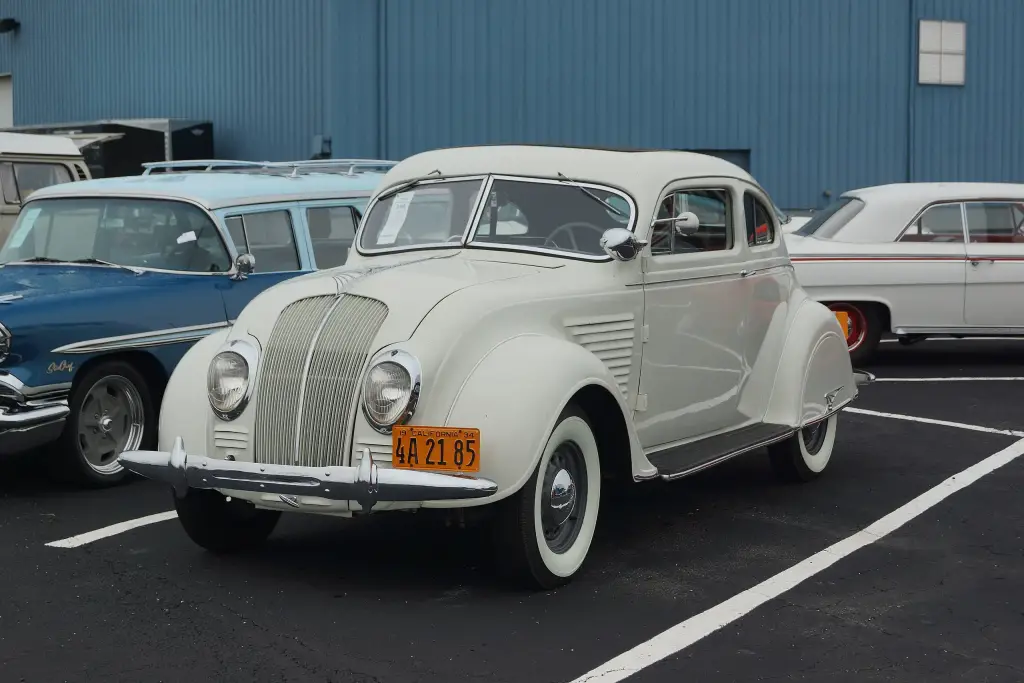
The DeSoto Airflow is a full-sized car built by DeSoto for the 1934, 1935 and 1936 model years. It was DeSoto’s version of Chrysler’s radical streamlined design, and it brought engineering innovations — unit-body construction, flush-mounted headlamps and a split windscreen — to the company’s cheaper division.
DeSoto Airflow at a glance
| Maker | DeSoto division, Chrysler Corporation |
|---|---|
| Model years | 1934, 1935 and 1936 |
| Wheelbase | 115.5 in (2,934 mm) |
| Construction | unit-body, passengers seated within the frame |
| Front end | flush headlamps either side of a waterfall grille |
| Glass | split windscreen, two angled panes |
| Rear | enclosed wheels with fender skirts |
| Orders, 30 April 1934 | 15,580 unfilled |
| Companion model | Chrysler Airflow, longer and more expensive |
| Stablemate from 1935 | DeSoto Airstream |
| Discontinued | 1936, a year before Chrysler’s Airflow |
History of the DeSoto Airflow
A body from the top of the company
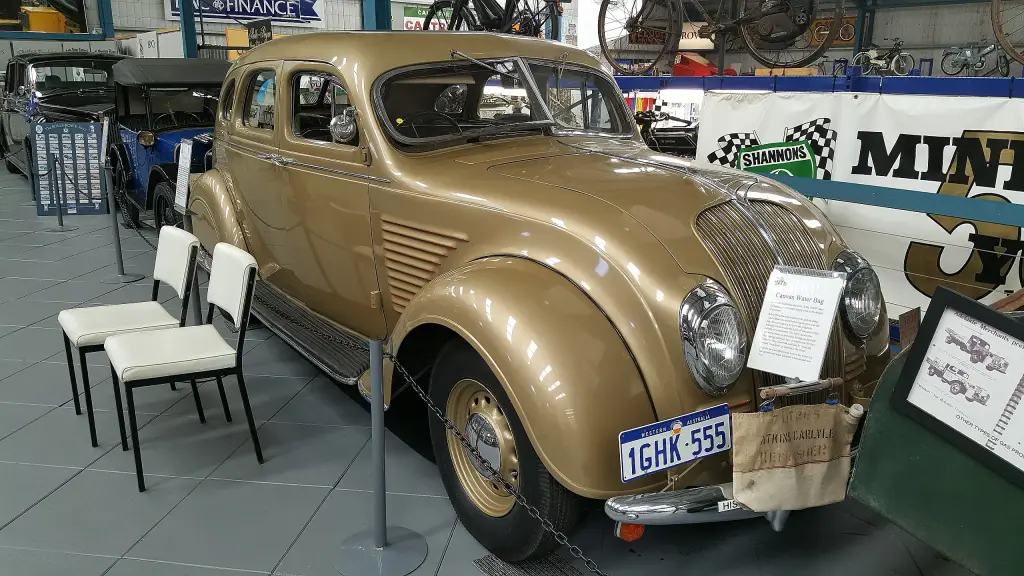
The DeSoto Airflow was the result of Chrysler Corporation’s policy of badge engineering: mechanically it was substantially similar to the longer-wheelbase, longer-bodied Chrysler Airflow, but it sat on a shorter chassis of 115.5 inches and was sold through DeSoto, the division that fitted between Plymouth and Chrysler in the price list. The design was the first major attempt to smooth away the wind-catching objects and channels of contemporary cars. Headlamps moved out of pods ahead of the radiator into flush mountings either side of a broad waterfall grille that had no upright radiator throat and no decorative cap ornament. Instead of a flat windscreen the Airflow used two angled panes, and front and rear wings took smoother, more form-fitting curves; at the back the wheels were enclosed by fender skirts.
Inside the unit body
Because the car was built as a unit body, passengers rode within the frame rather than on top of it as in most American cars of the time. The design also gave a stiffer body and better weight distribution, with the engine placed over the front wheels instead of just behind them. Seats were wider in front and deeper in the rear, with more leg room, and passengers sat well away from both axles; the press praised the handling and acceleration. The smoother exterior also made the cabin quieter than in earlier DeSotos.
Why it failed
Interest at launch was real: unfilled orders stood at 15,580 on 30 April 1934, equal to 48.3 per cent of comparable Chrysler and DeSoto shipments in 1933. But in a time of economic uncertainty the public found the car too different, and DeSoto’s short wheelbase made its body look bulky where the longer Chrysler carried the shape better. Rumours that the Airflow was unsafe persisted even though tests showed its all-steel unit body to be safer than body-on-frame rivals; in one advertising film an empty Airflow was pushed off a Pennsylvania cliff of more than 110 feet and then driven away. In May 1936 the car was promoted in some 435 American newspapers, but from 1935 Chrysler added the traditional DeSoto Airstream, which took most of the division’s sales. DeSoto withdrew the Airflow after 1936, a year before Chrysler stopped building its own Airflow.
How this page was made
The article is based on the English Wikipedia page on the DeSoto Airflow, with the engineering and marketing detail taken from it as written.
Design and features
- Unit-body construction: a stiffer body than the body-on-frame cars of the period.
- Streamlined front: flush headlamps and a waterfall grille without a traditional radiator shell.
- Split windscreen: two angled panes instead of the usual flat glass.
- Roomier cabin: wider front seats, deeper rear seats and more leg room.
- Quieter ride: the smoother shape cut wind noise inside.
DeSoto Airflow versions
- 1934 Airflow: the original streamlined body, the model that drew the orders.
- 1935–1936 Airflow: sold alongside the new Airstream, with a more prominent peaked grille and minor cosmetic changes such as hood louvers.
- Chrysler Airflow: the longer, more expensive stablemate built on the same principles.
The Airflow’s failure opened the way for the traditional Custom and the later Firedome. More DeSotos are in the DeSoto collection.
Video: 1936 DeSoto Airflow S2
Video on YouTube.
Sources
- DeSoto Airflow, English Wikipedia: design, construction, interior, orders, marketing failure, end of production