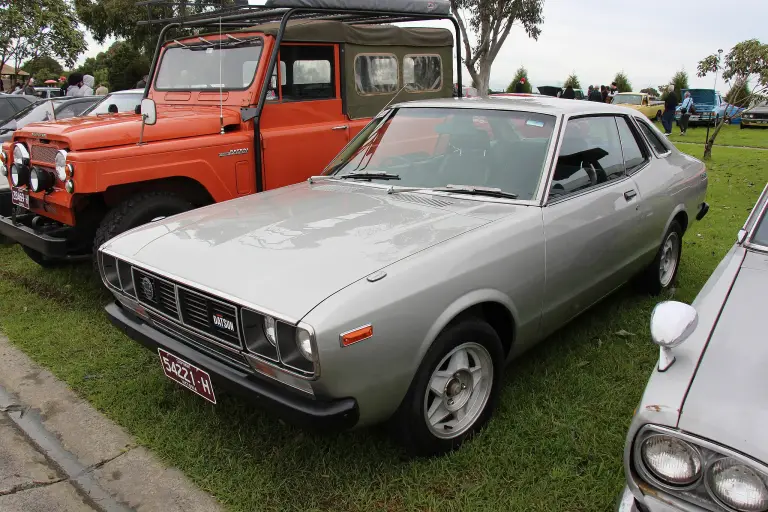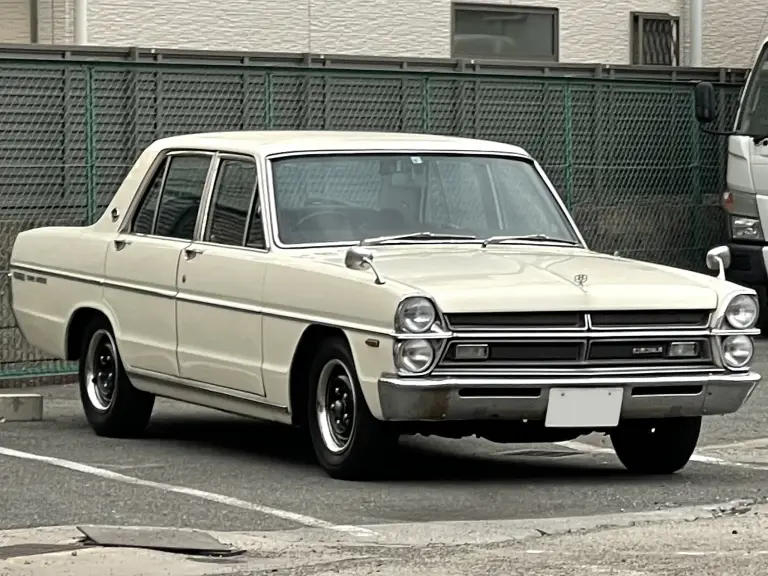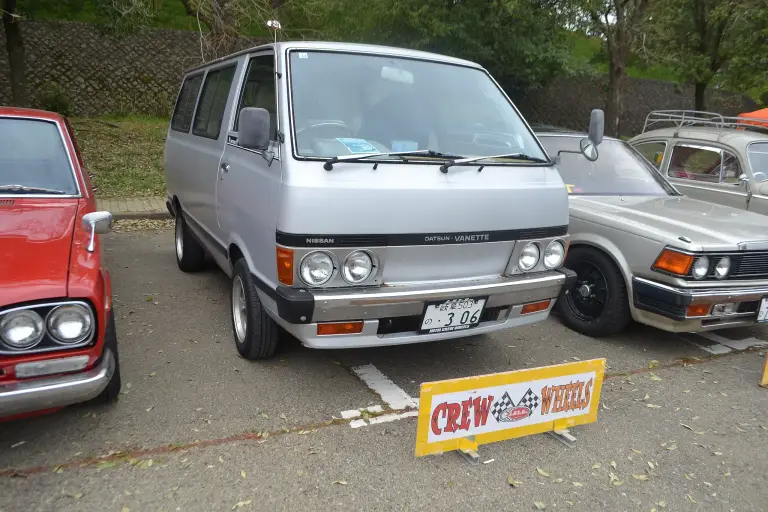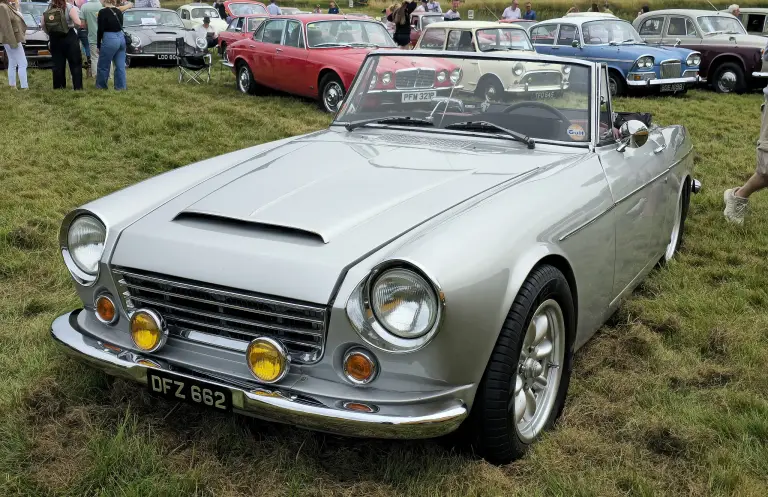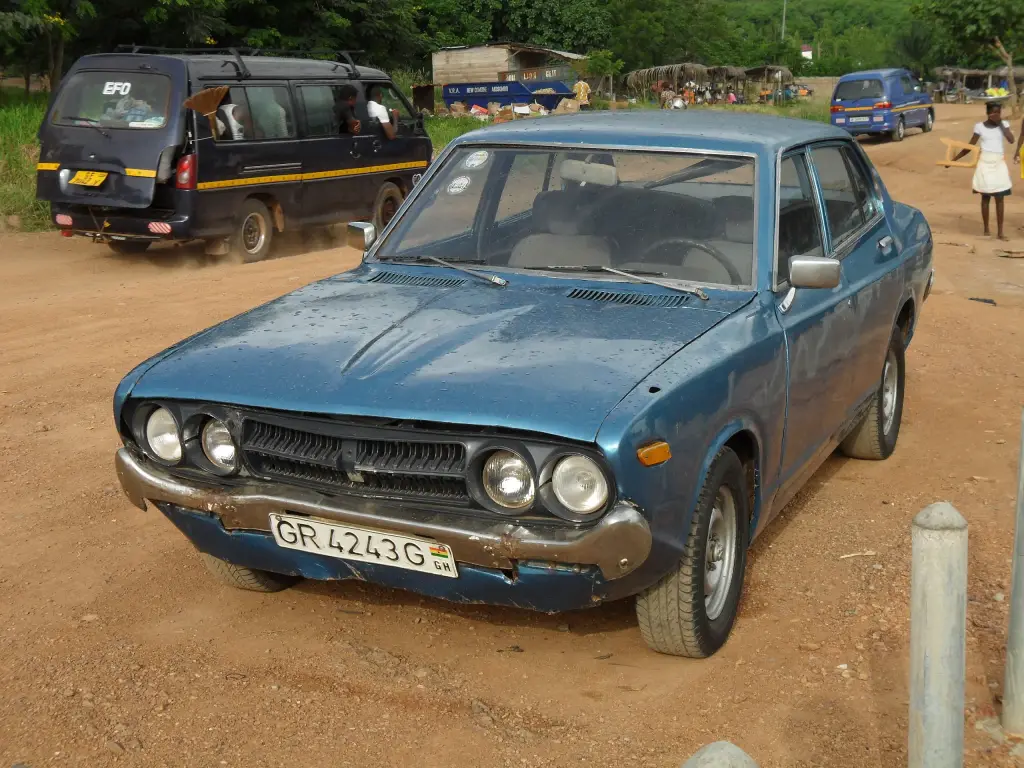
The Datsun Violet was introduced in Japan in January 1973 as a slightly smaller companion to the Bluebird 610. Export markets knew it as the Datsun 140J or 160J, and in the United States and Canada it was the Datsun 710. In 1977 the range split into the Stanza and the Auster, and the line survived until 1992.
Datsun Violet at a glance
| Maker | Nissan (Datsun), Japan |
|---|---|
| Introduced | January 1973 (710 series) |
| Bodies | two-door saloon, two-door coupé, four-door fastback, estate, van |
| Export names | Datsun 140J and 160J; Datsun 710 in North America |
| Export engines | 1.4 and 1.6 litres; 1.77 then 2.0 L L20B in America |
| Top version in Japan | 1600 SSS-E, fuel injected, 110 PS |
| Export SSS | twin-carburettor 160J SSS, 95 PS |
| Rear suspension | independent on the SSS, leaf springs on other models |
| Facelift | February 1976, new rear body and code 711 |
| Second generation | A10, from 1977, sold as the Stanza and Auster |
| Third generation | T11, from 1981, front-wheel drive |
| Discontinued | 1992 |
History of the Datsun Violet
The Violet was launched in January 1973 as a smaller version of the Datsun Bluebird 610, a move that let Nissan enlarge the Bluebird for its next generation. Outside Japan it was sold as the Datsun 140J or 160J depending on engine size, except in the United States and Canada, where it was simply the Datsun 710. The range covered two-door saloons, a two-door coupé, a four-door fastback and later a conventional four-door saloon, an estate and a van.
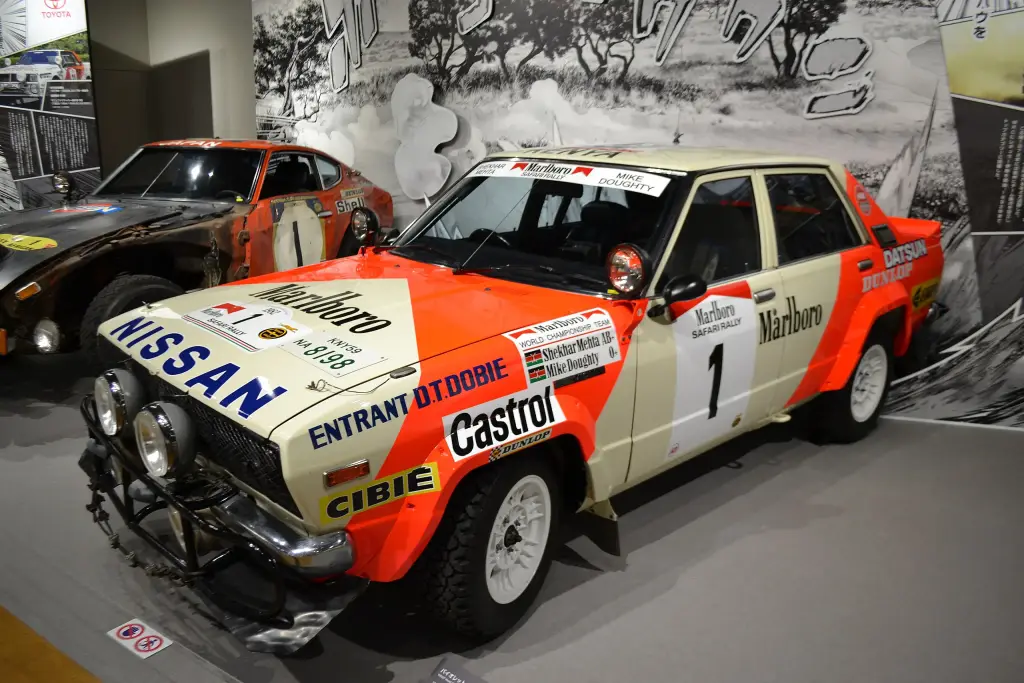
The sporting SSS model had independent rear suspension, while the other Violets made do with a leaf-sprung axle. In Japan the most powerful version was the fuel-injected 1600 SSS-E with 110 PS at 6,200 rpm, and in export markets the twin-carburettor 160J SSS claimed 95 PS, five more than the standard 160J. A 1.8-litre engine arrived in October 1975, but only for the Japanese home market. American 710s took the 1,770 cc engine of 90 hp and then, from 1974, the 2.0-litre L20B already used in the 610.
The Violet was one of the first Nissan products with “coke bottle” styling, and the look was controversial: buyers complained not only about the shape but about the restricted rear vision and the dark rear cabin. Taxi companies refused to buy any more Violets, and from February 1976 Nissan carried out a drastic facelift that replaced the entire rear end, including the roof panel and doors, with more conventional bodywork and a new code, 711. The coupé, estate and van kept their original bodies.
The second generation of 1977 carried the A10 series code and was split into three names: the Violet at home, the Stanza for Nissan Satio Store and the Auster for Nissan Prince Store. The Australian and New Zealand markets kept the Violet name. The third generation of 1981, the T11, switched to front-wheel drive and shared its platform with the Nissan Prairie; it was the first mid-size Datsun with front drive, and its new 1.6-litre engine produced 60 kW (81 PS) at 5,200 rpm. In most export markets the Violet name gave way to Nissan Stanza as the Datsun brand was phased out, with a short period when European cars were sold as the Datsun-Nissan Stanza. The Stanza, Auster and Violet were discontinued in 1992.
Design and features
- Bluebird companion: a slightly smaller car that let the Bluebird grow.
- Three export names: Datsun 140J, 160J and, in America, 710.
- SSS versions: independent rear suspension and up to 110 PS in Japan.
- 1976 facelift: a new rear body after complaints about the styling.
- Stanza and Auster: two more names for the same A10 car from 1977.
Datsun Violet versions
- Violet 710 (1973–1977): the original, sold as the Datsun 140J and 160J.
- Datsun 710 (North America): the same car with the 1.77 and later 2.0-litre engine.
- Violet 711 (1976–1977): the facelift with the conventional rear end.
- Stanza and Auster (A10, from 1977): the second generation under new names.
The Violet sat below the Datsun Bluebird and used the same platform family as the Datsun Sunny. More models are in the Datsun collection.
Video: Nissan datsun violet 710 gl
Video by DIRTYSOUTH DATSUN on YouTube.
Sources
- Nissan Violet, English Wikipedia: 710 series, engines, SSS, Stanza line
- Nissan Stanza, German Wikipedia: Stanza generations and front-wheel drive