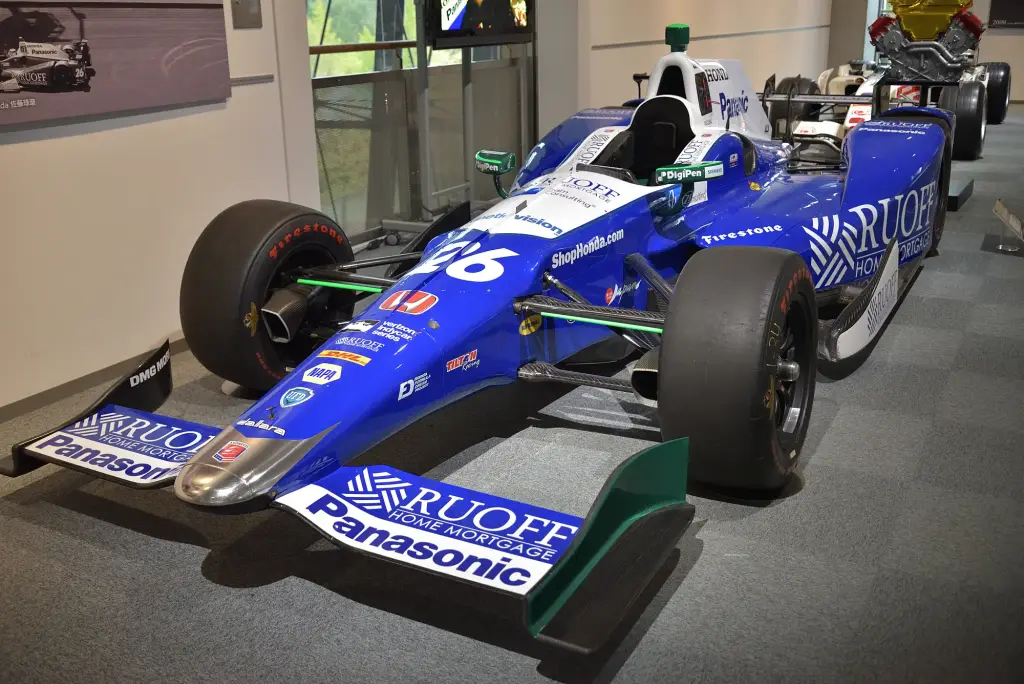
The Dallara DW12, formally named the Dallara IR-12, is an open-wheel racing car developed and produced by the Italian manufacturer Dallara for the teams of the IndyCar Series. It was first used in the 2012 season, replacing the nine-year-old Dallara IR-05, and it is named in memory of Dan Wheldon, the British driver who tested it and was killed at Las Vegas in October 2011.
Dallara DW12 at a glance
| Maker | Dallara, Italy |
|---|---|
| Series | IndyCar Series |
| First season | 2012 |
| Replaced | Dallara IR-05 |
| Chassis price | $349,000 |
| Aero kits | Dallara universal kit 2012–2014; Honda and Chevrolet from 2015 |
| Safety cell | the core rolling chassis, capped at $349,000 |
| Safety features | partial enclosure around the rear wheels, redesigned front section |
| Named after | Dan Wheldon |
| Race debut | St Petersburg, 25 March 2012 |
| First winner | Hélio Castroneves |
| Successor | Dallara IR-28, planned for 2028 |
| Longevity | no IndyCar chassis has been used for longer |
Based on one source: the English Wikipedia article on the Dallara DW12.
History of the Dallara DW12
The ICONIC project
In 2010 the Indy Racing League began to forge its ICONIC plan — Innovative, Competitive, Open-wheel, New, Industry-relevant, Cost-effective. The committee brought together racing and technical figures including IndyCar chief executive Randy Bernard, Brian Barnhart, the retired Indy 500 champion Gil de Ferran, Tony Purnell, Eddie Gossage of Texas Motor Speedway, Neil Ressler, Tony Cotman and Rick Long. That year IndyCar accepted proposals for a new chassis from BAT Engineering, Dallara, DeltaWing, Lola and Swift, and on 14 July 2010 the organisers announced that they had accepted the Dallara proposal. The plan was implemented in the 2012 season, retiring the 2003/2007-model Dallara IR-05s with naturally aspirated V8 engines that had been required since 1997.
The IndyCar Safety Cell and aero kits
Under the ICONIC regulations every team competes with a core rolling chassis called the IndyCar Safety Cell, and teams then fit bodywork known as aero kits: front and rear wings, sidepods and engine cowlings. Any manufacturer may market an aero kit, but must offer it to all teams under a price ceiling. The safety cell was capped at $349,000 and assembled at a new Dallara facility in Speedway, Indiana, while the aero kits were capped at $70,000; teams could buy a complete cell and kit together at a discount. On 12 May 2011 Dallara unveiled the first concept cars, one in oval and one in road-course aero configuration.
Testing and the Wheldon tragedy
The first official test of the IR-12 was carried out by Dan Wheldon at Mid-Ohio on 8 August 2011. Phase I was planned around three road courses and three ovals over about twelve days; the second test was held at Barber on 18 August, the third on the US Grand Prix road course at Indianapolis on 1 September, and the oval tests took place in September at Iowa and Indianapolis. Honda, with Scott Dixon, and Chevrolet, with Will Power, began Phase II at Mid-Ohio in early October. A test at Las Vegas was cancelled after Wheldon lost his life in the 2011 race there, and Dallara renamed the chassis DW12 in his honour, a practice borrowed from the Ligier Formula One team, which named its cars JS after Jo Schlesser. Testing resumed in late October and continued through February at Sebring, Fontana, Homestead, Phoenix and Sonoma; Lotus first took to the track on 12 January at Palm Beach, and a full-field open test was held on 5–6 and 8–9 March 2012 at Sebring.
Racing record
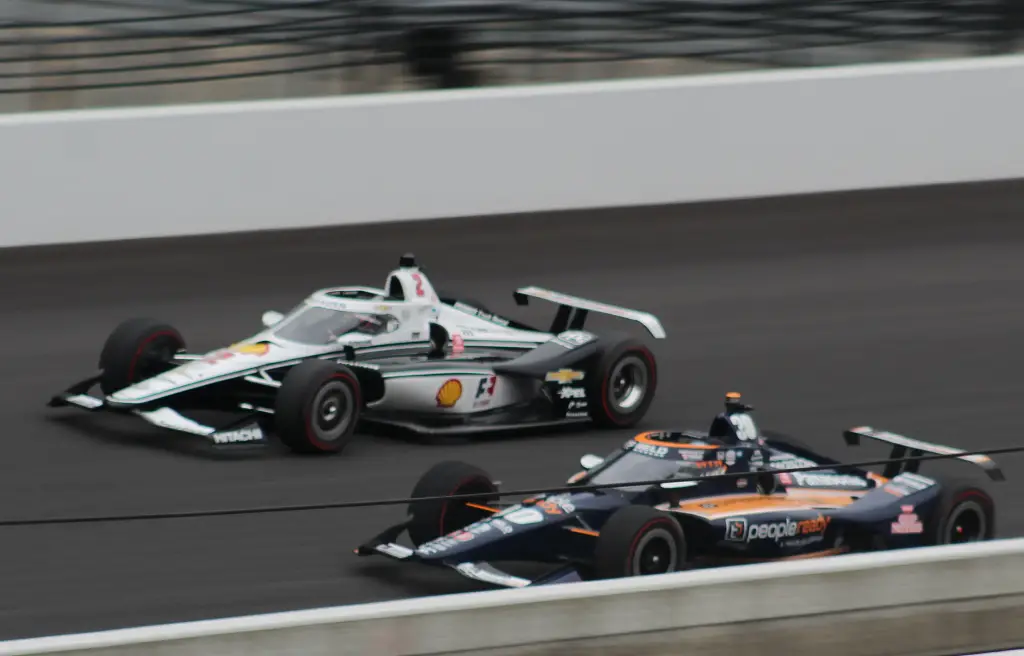
The DW12’s race debut came at the 2012 Honda Grand Prix of St Petersburg on 25 March 2012. Team Penske’s Will Power took the first pole and Hélio Castroneves won the first race. Full-field oval tests followed on 4 April at Indianapolis Motor Speedway and on 7 May at Texas Motor Speedway, and the car’s Indianapolis debut came in the 2012 Indianapolis 500. In its first three 500s the DW12 produced 136 lead changes, including a track-record 68 in 2013.
Manufacturer aero kits
For 2015 the universal aero kit provided by Dallara was retired and replaced with individual manufacturer kits. Honda and Chevrolet introduced their own in-house designs, in partnership with Wirth Research and Pratt & Miller respectively. The first official test of Chevrolet’s kit was conducted at the Circuit of the Americas by Will Power on 17 October 2014, followed by pre-season testing at NOLA on 14 March 2015. The DW12 is to be replaced by the planned Dallara IR-28, whose arrival has been pushed from 2027 to 2028 by engine-production delays, supply-chain delays and financial problems.
Design and features
- Safety cell: a common rolling chassis at a capped price, assembled by Dallara in Speedway, Indiana.
- Aero kits: teams fit their own wings, sidepods and engine cowlings, with a $70,000 price ceiling per kit.
- Rear-wheel enclosure: bodywork partly covers the rear wheels, part of a package intended to prevent single-seater crashes like the one that killed Dan Wheldon.
- Redesigned front: a new front section intended to work with the rear enclosure against the same kind of crash.
- Long service: no IndyCar chassis has been used for a longer period.
Dallara DW12 versions
- 2012–2014: the universal Dallara aero kit used by the whole field.
- 2015–2017 Honda kit: developed with Wirth Research.
- 2015–2017 Chevrolet kit: developed with Pratt & Miller.
- IR-28 (planned): the successor chassis, now expected in 2028.
Dallara’s European single-seaters are covered in Dallara Formula Three and Dallara GP2. More cars are in the Dallara collection.
Sources
- Dallara DW12, English Wikipedia: ICONIC project, safety cell, testing, race record, aero kits