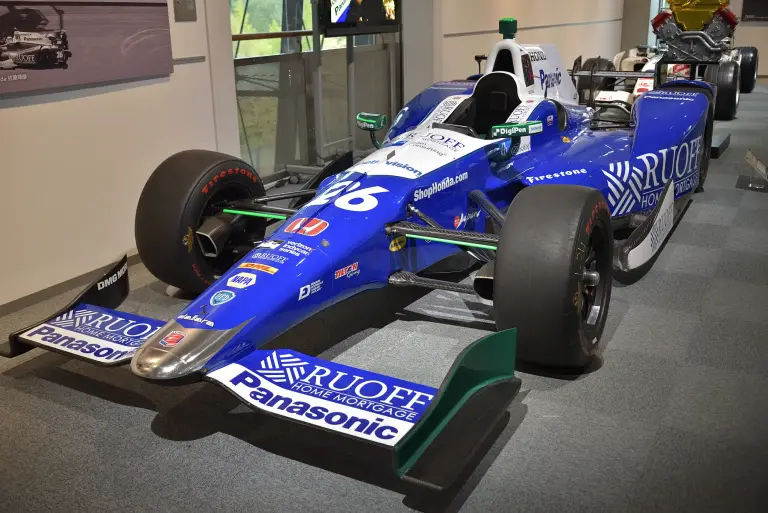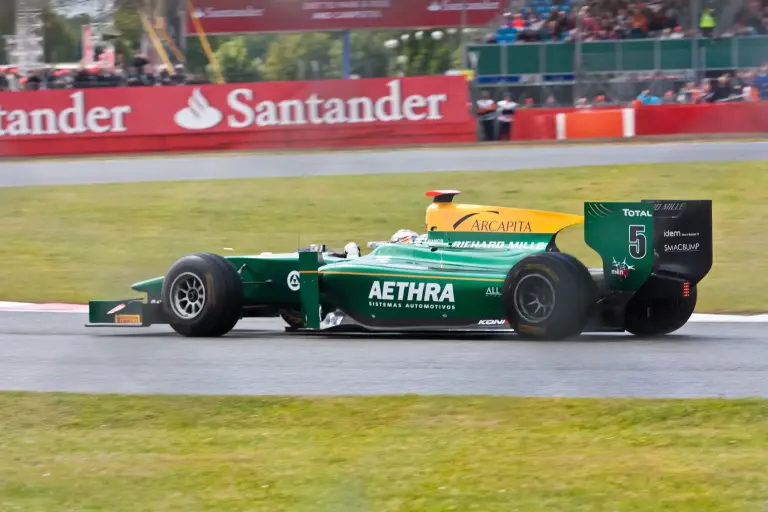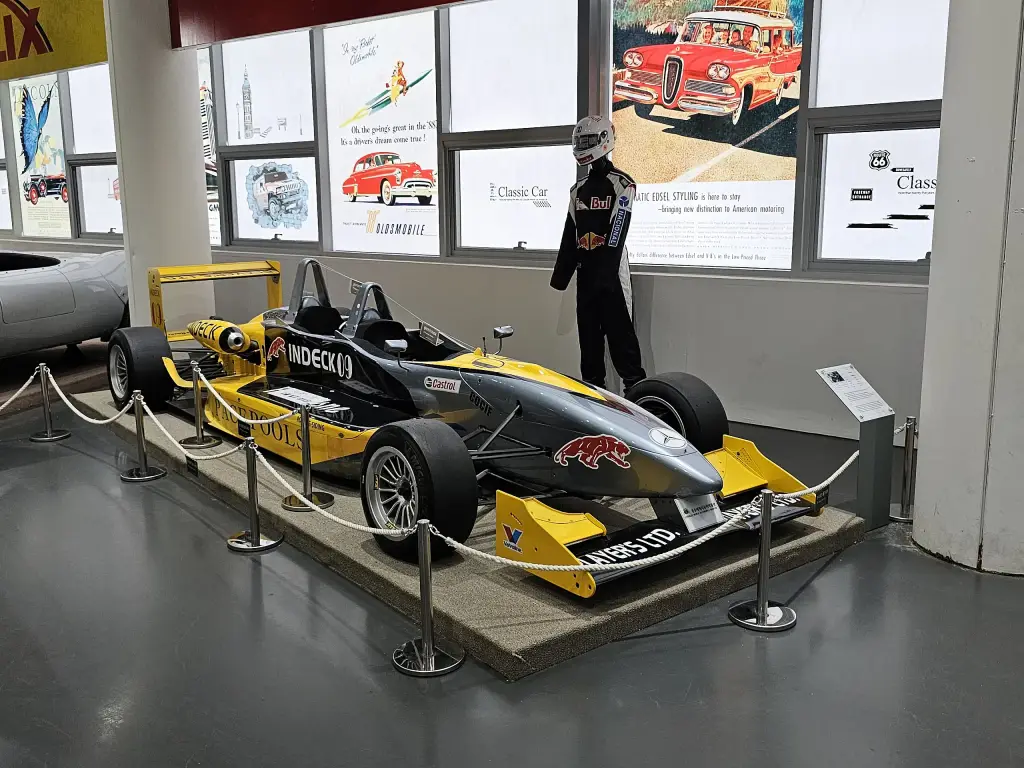
The Dallara F3 cars are a long line of open-wheel racing cars designed, developed and built by the Italian manufacturer Dallara for Formula Three categories. From the F397 of 1997 to the F317 of 2017 the same basic idea — a carbon-fibre monocoque, a load-bearing mid-mounted engine and free-standing wheels — was refined season after season, usually through aero kits sold as annual upgrades.
Dallara F3 at a glance
| Maker | Dallara, Italy |
|---|---|
| Use | Formula Three racing |
| F397 / F398 | designed in 1997 and 1998 |
| F302 | designed in 2002 |
| F303 / F304 | aero-kit evolutions of the F302, 2003 and 2004 |
| F305 | built in 2005 |
| F306 / F307 | evolutions of the F305, 2006 and 2007 |
| F308 | built in 2008, raced 2008–2011 |
| F308 upgrades | F309, F310 and F311 add-on kits |
| F312 | 2012, built to the new FIA regulations |
| F317 | aero-upgraded F312 chassis |
| Monocoque (F308) | carbon fibre reinforced plastic |
| Gearboxes (F308) | Hewland FTR and Pankl DGB03 |
| F312 production | over 53 of the original type |
Based on one source: the English Wikipedia article on the Dallara F3 cars.
History of the Dallara F3
The F397 and the 1990s cars
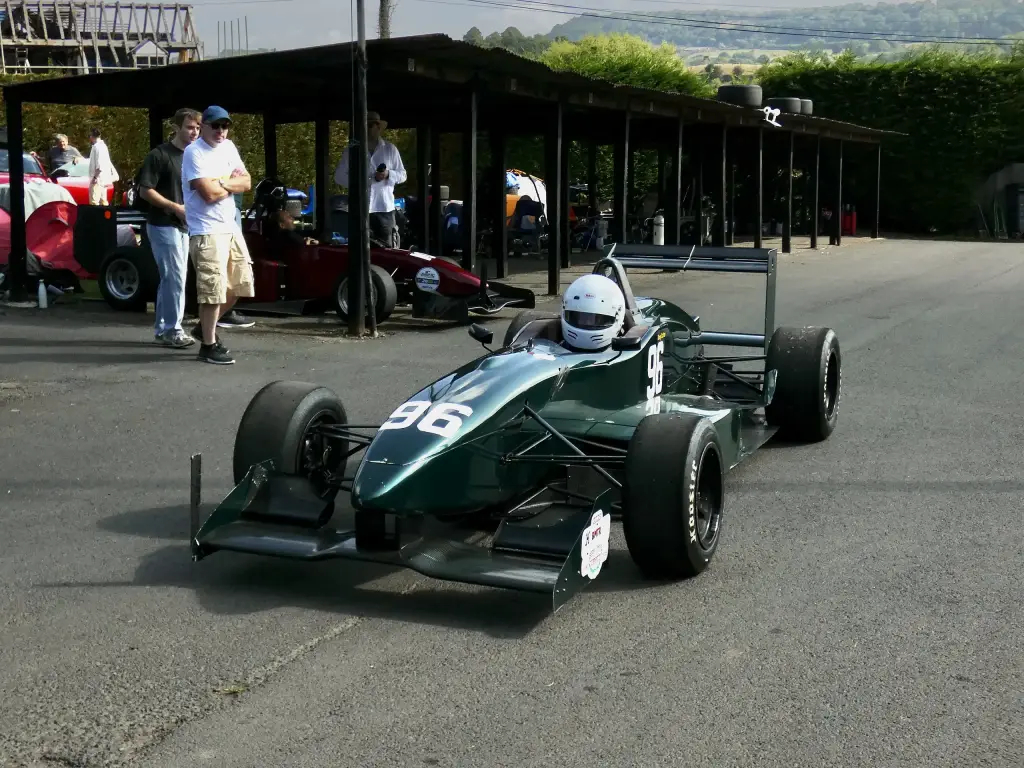
The Dallara F397 was designed in 1997, and the F398 followed a year later in 1998. These cars belong to the same family of open-wheel Formula Three chassis that Dallara supplied to teams and championships around the world, and they set the pattern the later cars followed: a compact single-seater built to the category rules, with the engine behind the driver and the wheels outside the bodywork.
F302, F303 and F304
The F302 was designed in 2002. It was the point at which Dallara began selling performance in stages: the car was upgradable with aero kits, and its evolutions became known as the F303 and the F304, introduced in 2003 and 2004 respectively. A team could therefore keep the same basic chassis and buy the latest aerodynamic package instead of a completely new car.
F305, F306 and F307
The F305 was built in 2005 and repeated the formula. It too could be upgraded with aero kits, and its evolutions were named the F306 and the F307, for 2006 and 2007. The three-year rhythm — a new base car, then two kit years — kept costs down for the teams and gave Dallara a steady stream of updates to sell.
The F308
The F308 was built in 2008 and used in different Formula Three championships and competitions between 2008 and 2011, before it was replaced by the F312 in 2012. It could be upgraded to the F309, F310 or F311 through Dallara’s annual add-on kits, which covered aerodynamic changes such as additional air deflectors and improved suspension units. The F308 is a conventional Formula Three car: a carbon fibre reinforced plastic monocoque, a load-bearing mid-mounted engine and free-standing wheels. The Hewland FTR and Pankl DGB03 gearboxes are homologated for it, and it is shifted manually by means of ignition interruption and a lever on the right-hand side, without the clutch. The front and rear wing elements, the front and rear crash boxes and the wheel carriers are also homologated, while the bodywork can be made by the teams themselves; in the Euroseries, for example, the chimneys on the sidepods were removed from every car and the sidepods were laminated shut.
The F312 and F317
The F312 proved to be one of the most popular Formula Three chassis ever built, with more than 53 of the original type produced, and it remained widely used after its successor arrived, in championships such as the Euroformula Open and the Japanese Formula Three Championship. It was designed to meet the new for 2012 FIA Formula Three regulations, which were much more restrictive than before and led to reduced downforce. Compared with the F308 it has a higher monocoque and a lower nose section, the front dampers and springs are placed inside the tub — a first for a Dallara F3 car — and the aerodynamic package was revised. The car was unveiled at the Masters of Formula 3 on 20 October 2011 at Circuit Zandvoort in the Netherlands.
The F317 is the thirty-seventh car used by the FIA-sanctioned Formula Three championships. Although it is only an aero-upgraded F312 chassis, it works as a replacement for the ageing F312; some series, such as the Euroformula Open, opted for a slightly upgraded F312 instead of the full F317 package in order to keep costs low.
Design and features
- Carbon-fibre monocoque: the F308’s tub is a carbon fibre reinforced plastic structure with a load-bearing mid-mounted engine.
- Annual aero kits: the F302 became F303 and F304, the F305 became F306 and F307, the F308 became F309, F310 or F311.
- Team bodywork: wings, crash boxes and wheel carriers are homologated, but teams laminate their own bodywork.
- Manual gearshift: the F308 is shifted by ignition interruption and a right-hand lever, without a clutch.
- 2012 regulations: the F312 introduced a higher monocoque, a lower nose and front dampers inside the tub.
Dallara F3 versions
- F397 (1997) and F398 (1998): the late-1990s cars of the line.
- F302 (2002): the first of the aero-kit cars, upgradable to F303 (2003) and F304 (2004).
- F305 (2005): upgraded to F306 in 2006 and F307 in 2007.
- F308 (2008): raced until 2011, with F309, F310 and F311 kits.
- F312 (2012): the most produced car of the family, with the F317 as its aero upgrade.
The Formula Three cars sit below the Dallara GP2 racers in the Dallara racing hierarchy, and the Dallara DW12 shows how the same firm moved into American oval racing. More cars are in the Dallara collection.
Video: Onboard with David Hauser (Dallara F305), Turckheim 2011
Video on YouTube.
Sources
- Dallara F3 cars, English Wikipedia: models, evolutions, F308 and F312 details