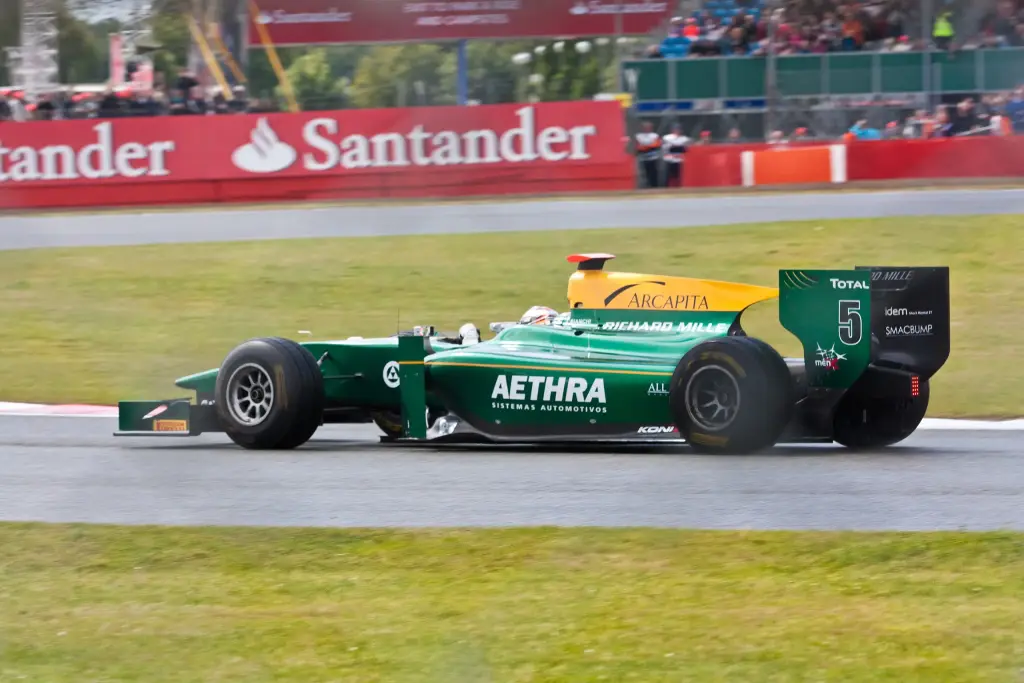
The Dallara GP2 cars were a set of racing cars developed by the Italian manufacturer Dallara for the GP2 Series, the feeder championship for Formula One. Because GP2 was a spec formula, the same car was used by every team and driver in the field. After twelve years of service the cars were retired in 2017 and succeeded by the Dallara F2 cars, when Liberty Media bought the series and rebranded it as the FIA Formula 2 Championship.
Dallara GP2 at a glance
| Maker | Dallara, Italy |
|---|---|
| Series | GP2 Series, feeder series for Formula One |
| First car | GP2/05, used 2005–2007 |
| Second car | GP2/08, used 2008–2010 |
| Chassis | carbon-fibre monocoque to FIA Formula One safety standards |
| Engine (2005) | 580 bhp Renault V8 |
| Engine (2006) | 4-litre V8 with revised internals, mapping and software |
| Gearbox | six-speed semi-automatic, paddle shift on the wheel |
| Tyres | Bridgestone; grooved in 2005, slicks afterwards |
| Performance | 0–200 km/h in 6.70 s, 320 km/h top speed |
| Electronics | Magneti Marelli |
| Brakes (2006) | Brembo monobloc calipers and disc bells |
| Retired | 2017, replaced by the Dallara F2 cars |
Based on one source: the English Wikipedia article on the Dallara GP2 cars.
History of the Dallara GP2
The GP2/05, 2005–2007
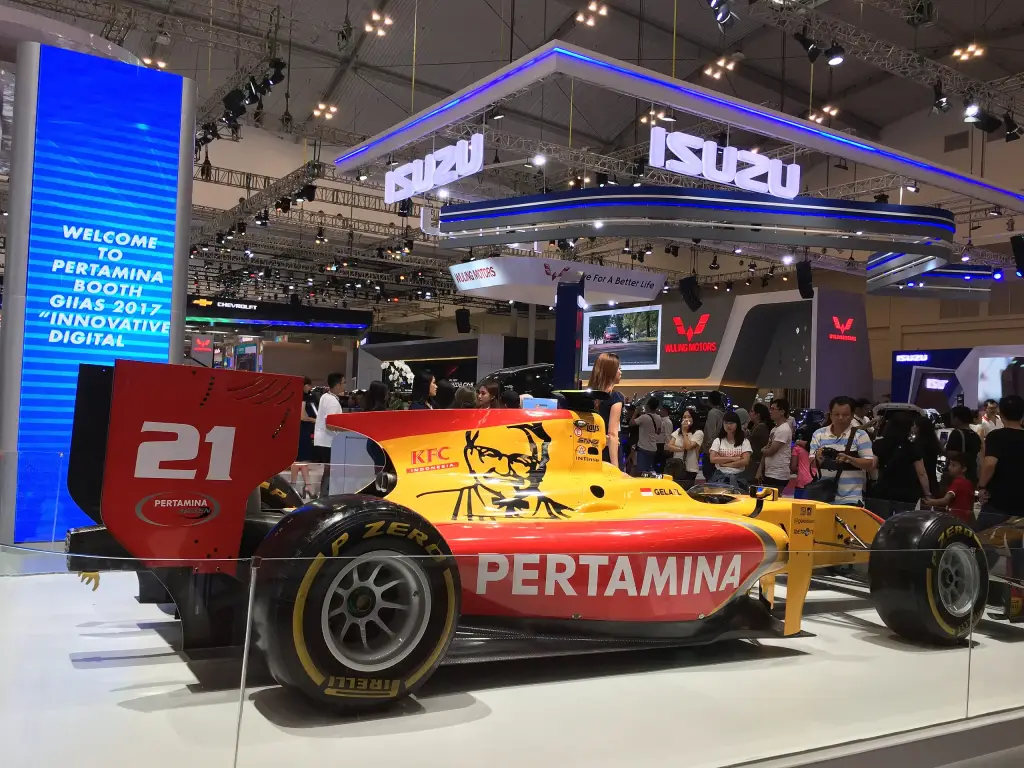
The Dallara GP2/05 was the first-generation car of the series. It had its initial shakedown at the Circuit Paul Ricard on 16 July 2004 with Franck Montagny at the wheel, and another test followed at Barcelona in November 2004, where the old Formula 3000 Lola B02/50 ran alongside it. The times of the two types were similar, though that was because an accident in the first laps forced Montagny to limit his running. The first collective test took place between 23 and 25 February 2005, again at Paul Ricard.
Chassis and engine
The chassis is a carbon-fibre monocoque built by Dallara to the safety standards of the FIA, the governing body of Formula One. It features ground effect, which makes racing more intense and maximises overtaking, and the 2006 car received a biplane rear wing, the triplane wing of 2005 being kept only for the Monaco race. The front upper and lower wishbones were reinforced, as were the front and rear suspension uprights, and the car was updated again for 2007, although the push-to-pass button tested in 2006 was not fitted.
The 2005 engine was a 580 bhp Renault V8, close enough in power to a Formula One unit that pre-season tests put the car within a few seconds a lap of the Renault works team. It used a fly-by-wire throttle and, to keep costs down and stop wealthier teams buying an advantage, could only be rebuilt after more than 4,000 kilometres of racing. For 2006 the V8 grew to four litres and received internal, mapping and software upgrades to improve performance and fuel consumption.
Gearbox, tyres and brakes
The gearbox is a six-speed semi-automatic unit changed by Formula One-style paddles on the wheel rather than a traditional lever. The 2006 gearbox was made by GearTek and had an eight-position barrel, a ratchet body and software upgrades, plus a new transverse shaft fixing system for better gear selection. Bridgestone was the tyre partner, and 2005 was the only season in which GP2 used grooved tyres like Formula One instead of slicks. The exhaust used eight-into-one technology, the brake discs were carbon, the electronics came from Magneti Marelli and the 2006 Brembo monobloc calipers and disc bells were exclusive to GP2. Cooling was upgraded for 2006 with a new water radiator and duct, an oil and water heat exchanger, a modified oil degasser and new pipes. The car had hardly any driver aids: no traction control, no launch control and no automatic gear shifting.
Performance and controversy
According to Dallara’s research and pre-season stability tests, the 2005 car could accelerate from 0 to 200 km/h in 6.70 seconds and reach 320 km/h, making it the fastest single-seater in European racing apart from the Formula One cars it was based on, and it was expected to lap within five seconds of a typical Formula One car. The opening round at Imola in 2005 brought mechanical problems and, with the organisers afraid of trouble at the start, both races used a rolling start despite dry weather; standing starts arrived at Catalunya. At Imola in 2006 the Durango team was in trouble for making its own parts instead of using Dallara’s equipment — the problem was only the skirts of the car — and two Durango entries were banned from the Silverstone Sprint after illegal repairs to their rear wings, one of which had caused Lucas di Grassi’s wing to fail in the Feature race.
The GP2/08 and the end of the line
The Dallara GP2/08 was the second-generation car, replacing the GP2/05 and used from 2008 to 2010, in keeping with the series policy of a new chassis every three years. Planning and design began in September 2006 under the series technical director Didier Perrin. Further generations followed the same rhythm, and after twelve years the GP2 cars were retired in 2017, when the championship became Formula 2 and Dallara supplied the F2 cars instead.
Design and features
- Spec formula: every team in the GP2 Series raced the same Dallara chassis.
- Ground effect: the underbody was shaped to improve overtaking.
- Paddle shift: a six-speed semi-automatic gearbox with Formula One-style paddles.
- Long-life engine: the Renault V8 could only be rebuilt after 4,000 km of racing.
- No driver aids: no traction control, launch control or automatic shifting.
Dallara GP2 versions
- GP2/05 (2005–2007): the first-generation car, with a triplane rear wing in 2005 and a biplane wing from 2006.
- 2006 specification: a four-litre V8, GearTek gearbox and Brembo monobloc brakes.
- 2007 update: revised suspension and bodywork, without the push-to-pass button.
- GP2/08 (2008–2010): the second-generation car, designed from September 2006.
The GP2 cars are the single-seater relations of the Dallara Formula Three chassis, and the company’s biggest American project is the Dallara DW12. More cars are in the Dallara collection.
Video: David Hauser, Dallara GP2, Turckheim 2013
Video on YouTube.
Sources
- Dallara GP2 cars, English Wikipedia: history, chassis, engine, gearbox, performance