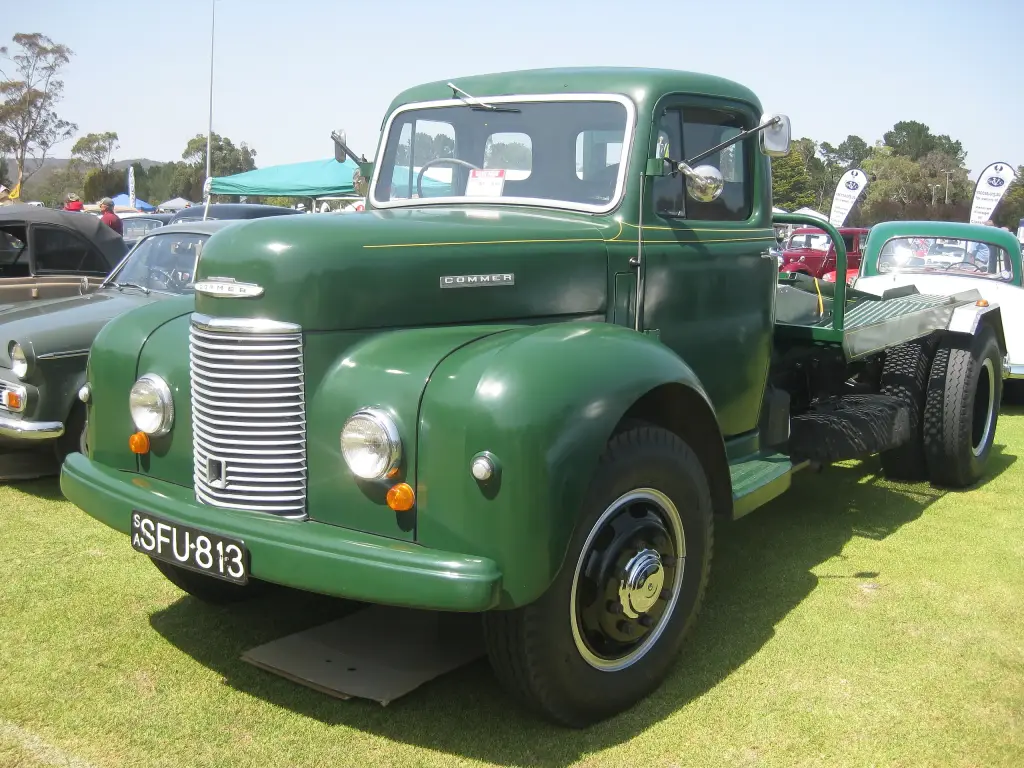
The Commer Superpoise was the Luton firm’s Q-series lorry range, introduced in 1939 with a choice of semi-forward or full-forward control and a more streamlined front that took after American International trucks. A new QX range arrived in 1955, and production ended in 1961.
Commer Superpoise at a glance
| Maker | Commer, Rootes Group, Luton |
|---|---|
| Range name | Superpoise, Q-series |
| Introduced | 1939 |
| Control | semi-forward or full-forward |
| Payload | 1½ to 6 tons |
| Engines | 6-cylinder petrol or diesel |
| QX range | 1955, payloads of 2 to 5 tons |
| Styling | 1955 cab by Airflow Streamlines of Northampton |
| Related | Dodge 200 series of 1958 shared the cab design |
| Production ended | 1961 |
| Model | Dinky Toys No. 430 Commer Breakdown Vehicle, 1954–64 |
Based on one source: the English Wikipedia article on Commer and its Superpoise section.
History of the Commer Superpoise
A modern lorry for 1939
The Commer Superpoise range, known as the Q-series, was introduced in 1939. It came with both semi-forward and full-forward control options, so buyers could choose a conventional bonneted look or the more compact forward-control layout. The new models were more streamlined and modern in appearance than the trucks they replaced and adopted a front end in the manner of the American International K and KB series. The line covered trucks of 1½ to 6 tons capacity, powered by 6-cylinder petrol or diesel engines.
The QX of 1955
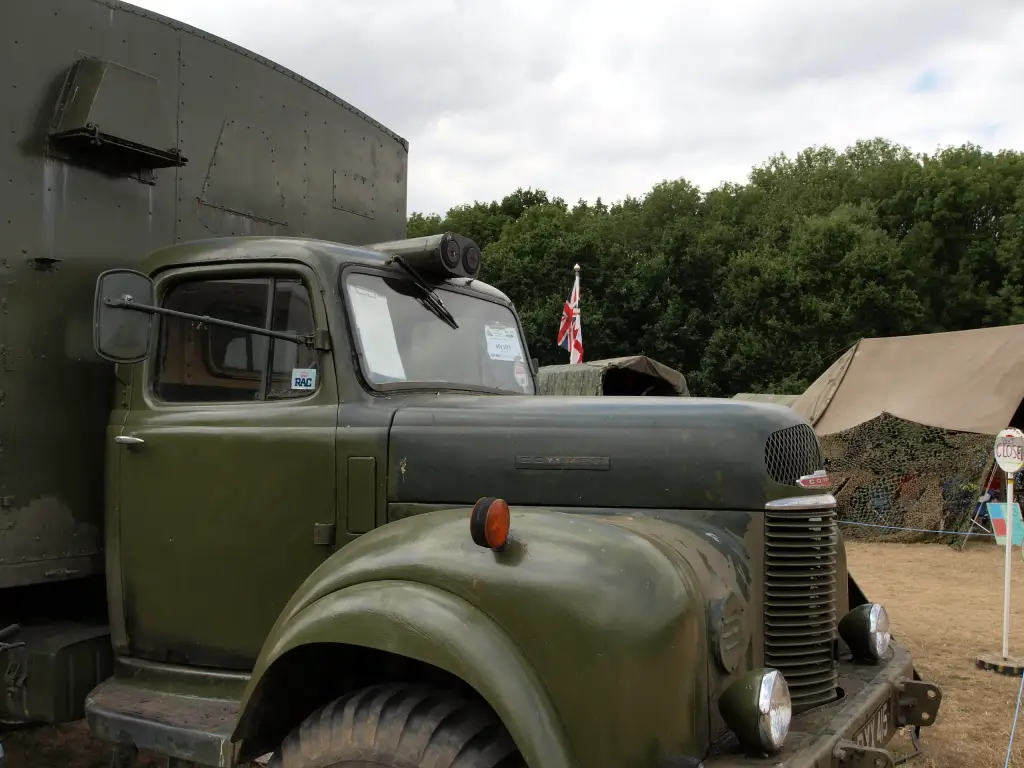
A new Superpoise range, the QX-series, was introduced in 1955 with payloads of between 2 and 5 tons. The QX name had also been used on some earlier Superpoises, so the two generations share a designation. The 1955 truck’s cab was styled by Airflow Streamlines of Northampton.
A shared cab with Dodge
Commer was not purchased by Chrysler until 1967, but the British Dodge 200 series, successor to the Dodge 100 “Kew” trucks and introduced in 1958, had its cab styled by the same Airflow Streamlines after Chrysler contracted the firm. Because the 1955 Superpoise had been styled by the same company, the two vehicles used almost the same cab design and had many parts in common. For export the Dodge 200 was sold as a Fargo or DeSoto.
Sales and the end
The Superpoise proved fairly popular but did not provide fierce competition for products of better-known brands such as Leyland and Bedford. Production ended in 1961. The model outlived itself in miniature as well: Meccano’s Dinky Toys made a Commer Breakdown Vehicle on Superpoise lines as No. 430 between 1954 and 1964.
Design and features
- Two control layouts: semi-forward and full-forward control on the same range.
- American-influenced front: styling borrowed from International K and KB trucks.
- Wide payload span: 1½ to 6 tons in 1939, 2 to 5 tons in the 1955 QX.
- Shared cab: the 1955 cab was also used by the Dodge 200 series.
- Six-cylinder power: petrol or diesel engines across the range.
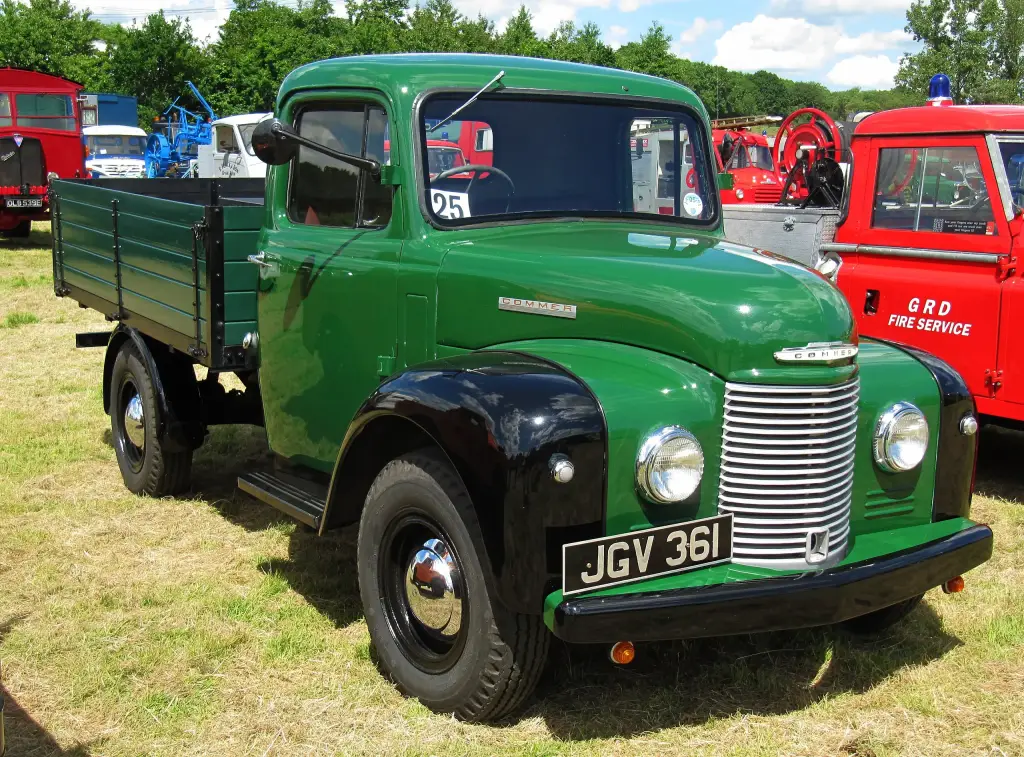
Commer Superpoise versions
- Q-series (1939): semi-forward and full-forward control, 1½ to 6 tons.
- QX-series (1955): the new range with 2 to 5 ton payloads.
- Dodge 200 series (1958): a Chrysler-badged relative with an almost identical Airflow cab.
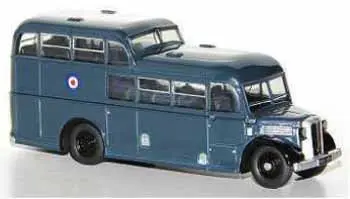
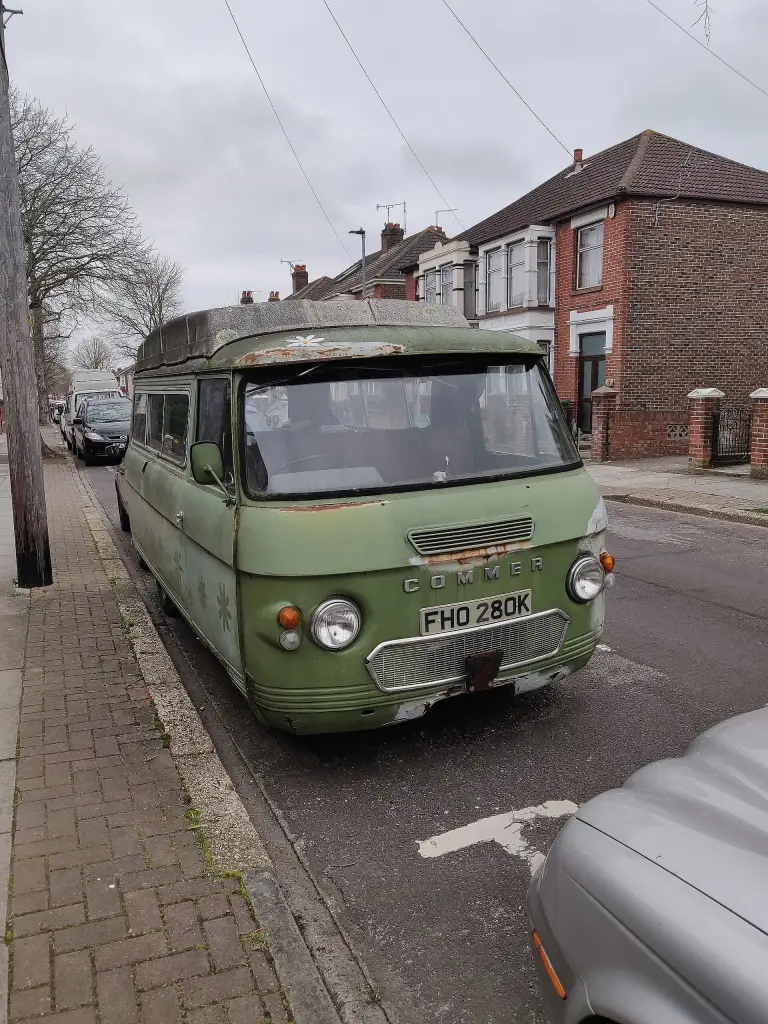
The Superpoise was one of the Commer trucks that preceded the forward-control Commer FC van, and the post-war Commando bus came from the same Luton works. More vehicles are in the Commer collection.
Video: Commer superpoise, and Leyland martian
Video by celticgreyrider on YouTube.
Sources
- Commer, English Wikipedia: Q-series, QX range, styling, Dodge 200 connection, end of production, Dinky model