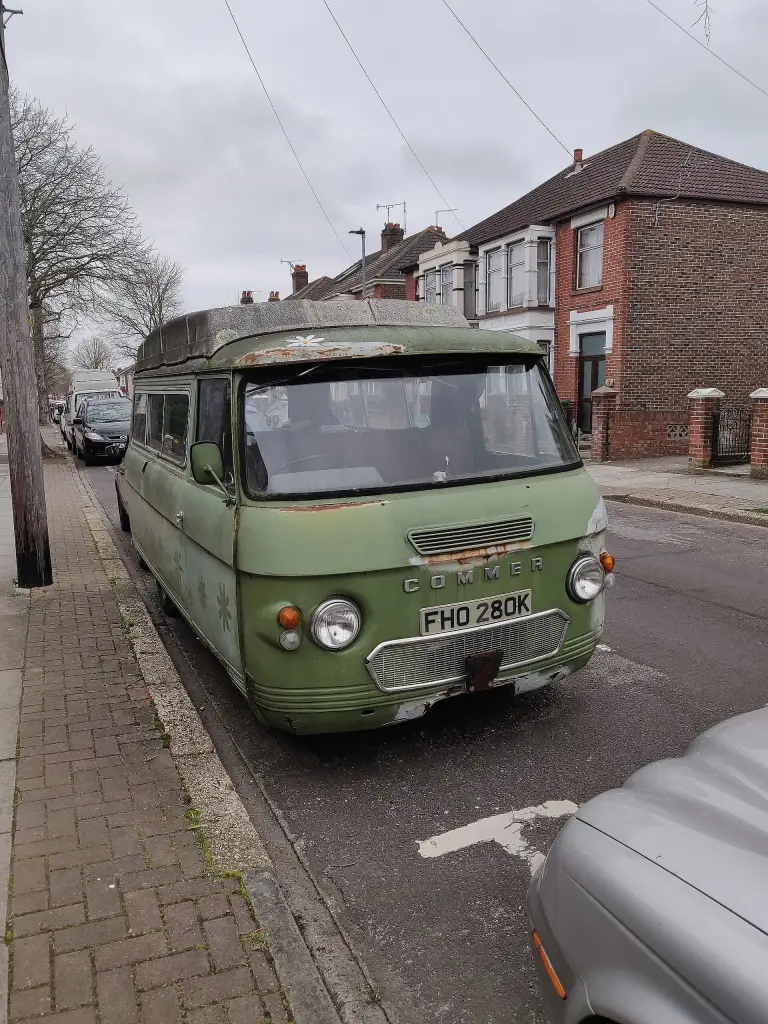
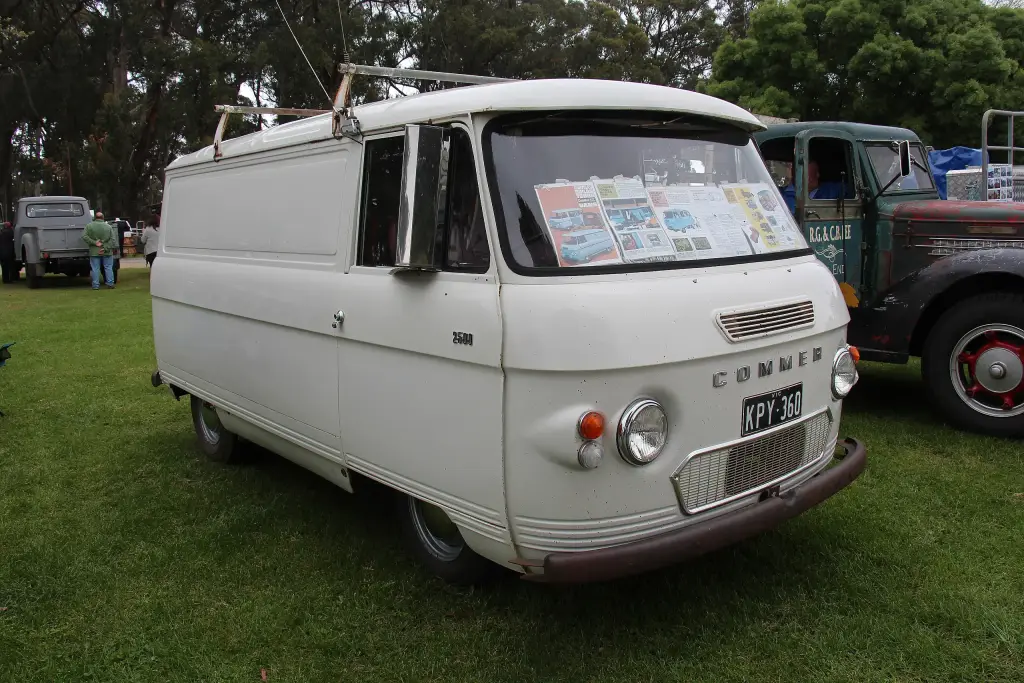
The Commer FC was a forward-control van introduced in 1960 and built in many body styles, including a 1,500 cc van. It was renamed the PB in 1967 and the SpaceVan in 1974, served the British Post Office in large numbers and remained in production until 1983.
Commer FC at a glance
| Maker | Commer, Rootes Group, Luton |
|---|---|
| Introduced | 1960 |
| Names | FC from 1960, PB from 1967, SpaceVan from 1974 |
| Layout | forward control, narrow front track |
| Engines | 1,500 cc (PA), 1,600 cc, 1,725 cc from 1968 (PB), Perkins 4108 diesel |
| Gearbox | four-speed manual; Borg-Warner 35 three-speed automatic in the 1970s |
| Brakes | front drums; the handbrake worked on them |
| Sold as | Commer, Dodge, DeSoto and Fargo |
| New Zealand | assembled by Todd Motors at Petone until 1974 |
| Production ended | 1983 |
| Road test | 1974 camper: 70 mph maximum, 0–50 mph in 25 seconds |
History of the Commer FC
The FC of 1960
Commer became known in later years as a maker of vans for the British Post Office, and the FC, introduced in 1960, was the model behind that reputation. It was offered with many body styles, including a 1,500 cc van. The design was a forward-control van with a rounded front and a narrow front track, a legacy of suspension derived from Humber cars.
Engines and the PA and PB
The first PA series used the Hillman-derived 1,500 cc four-cylinder engine; a larger 1,600 cc unit followed, and from 1968 the PB received the 1,725 cc engine. Only the cast-iron-head version of that engine was used. A Perkins 4108 diesel was also available. The four-speed gearbox of manual cars was based on the units of the Hillman Minx of the Audax generation and later Rootes Arrow cars such as the Hillman Hunter. In the 1970s a Borg-Warner 35 three-speed automatic with a dashboard-mounted selector could be ordered, but it was not a popular option and few were built.
Life with a forward-control van
One of the reasons the van was less popular with fleet operators than the Bedford and Ford Transit it sold against was that the forward-control layout restricted access to the engine: on the BMC J2 and J4 the same problem applied, and without dropping the suspension subframe the only way to remove the engine was to crane it out through the passenger door. An unusual feature was the handbrake, which operated on the front drum brakes. A 1974 road test of a motor caravan with the 1,725 cc engine recorded a maximum speed of 70 mph and a 0–50 mph time of 25 seconds: a higher top speed but slower acceleration than the BMC rival, and at 70 mph the van was “plainly at its absolute limit”, so 65 mph was suggested as a realistic maximum.
SpaceVan, Dodge and the Post Office
In 1974 the van became the SpaceVan. After Rootes merged with Chrysler to form Chrysler Europe it was also sold under the Dodge, DeSoto and Fargo names, and from 1976 only as the Dodge SpaceVan. One condition of the government bailout of Chrysler’s British operations in 1976 was reportedly a commitment to upgrade the Spacevan, praised for its brakes, cornering and price but criticised for power, comfort and top speed; a revised version appeared in 1977 with the same mechanicals, more equipment and a new interior. The Post Office Telecommunications contract kept it in production, and its fleet passed to British Telecom on its formation in October 1981. By then there were two 1.7-litre petrol engines of 50 or 58 hp and a 1.8-litre Perkins diesel of 42 hp, with a four-speed manual and no automatic. The last SpaceVan was built in 1983; the Dodge 50 series and the Talbot Express took its place.
Design and features
- Narrow front track: inherited from Humber car suspension and giving the van its distinctive look.
- Front-drum handbrake: an unusual arrangement for a light commercial vehicle.
- Hillman-based driveline: four-speed gearbox from Minx and Hunter practice.
- Long service life: 1960 to 1983 across FC, PA, PB and SpaceVan names.
- Body styles: vans, campers, minibuses and chassis-cab conversions.
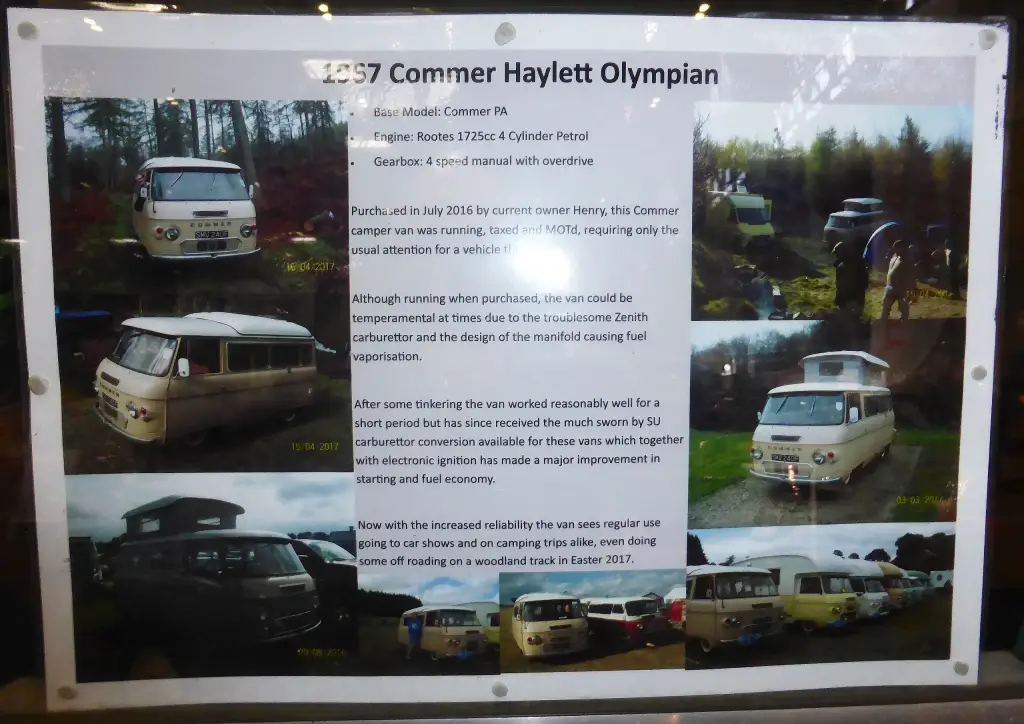
Commer FC versions
- FC (1960): the original forward-control van, with a 1,500 cc option.
- PA: the Hillman-derived 1,500 cc series.
- PB (1967): new name; the 1,725 cc engine from 1968.
- SpaceVan (1974): the final Commer-badged version, revised in 1977.
- Dodge, DeSoto and Fargo: export and post-1976 badges.
- New Zealand: Todd Motors built a panel van, a minibus and chassis-cab models at Petone until 1974.
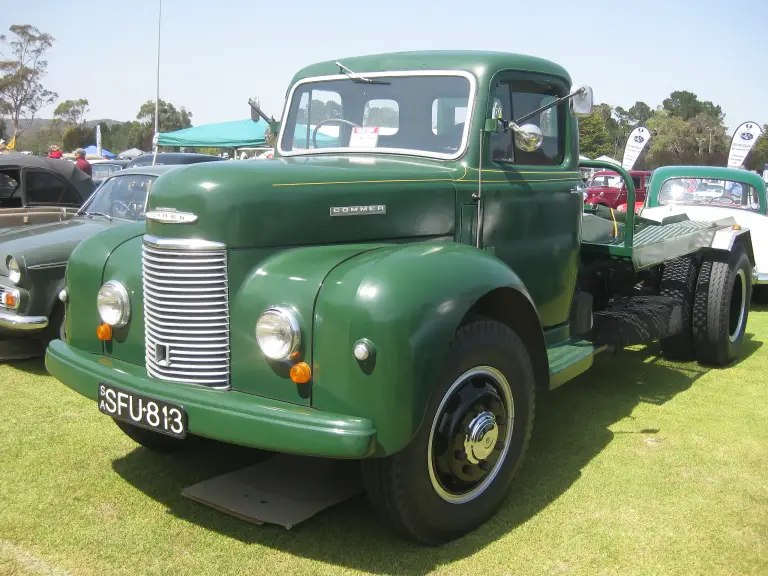
The FC replaced Commer’s earlier delivery vans and sat below the company’s trucks such as the Superpoise. Other Commer vehicles are in the Commer collection.
Sources
- Commer FC, English Wikipedia: history, engines, gearbox, road test, New Zealand production
- Commer, English Wikipedia: Post Office role, Chrysler period, Dodge badges