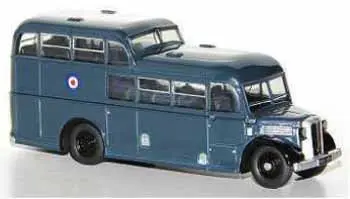
The Commer Commando was one of the bus chassis that the Luton firm Commer released after the Second World War. It is remembered above all as a Royal Air Force crew bus, some of which were fitted with a one-and-a-half-length observation deck.
Commer Commando at a glance
| Maker | Commer, Commercial Cars Ltd, Luton |
|---|---|
| Type | bus chassis |
| Launched | after the Second World War |
| Notable user | Royal Air Force, as a crew bus |
| Special body | 1½-length observation deck |
| Sister model | Commer Avenger, announced 28 February 1948 |
| Engines | 6-cylinder petrol or diesel in Commer’s truck ranges; the TS3 diesel was fitted to the Avenger from 1954 |
| Company history | Commercial Cars Ltd from 1905, Humber from 1926, Rootes Group from 1931 |
| Brand ended | the Commer name was replaced by Dodge in the 1970s |
| First Commer bus | 1909 |
Based on one source: the English Wikipedia article on Commer, which covers the Commando in a few lines of its buses section.
History of the Commer Commando
Commer and its buses
Commer was a British manufacturer of commercial and military vehicles from 1905 until 1979, and buses were part of its output from the beginning: the company’s first bus was made in 1909, the same year in which four Commer buses were delivered to Widnes. The business behind the name was Commercial Cars Limited, incorporated in September 1905 and based at Biscot Road in Luton, where the workshops were mostly complete by late 1906.
The post-war range
After the Second World War Commer renewed its bus line. The Commando was released in those years, and the Avenger followed on 28 February 1948; from 1954 the Avenger could be had with the Rootes TS3 two-stroke diesel, the horizontally opposed three-cylinder engine that became known as the “Commer Knocker” for its distinctive noise. The Commando itself is documented mainly through its military use.
The RAF crew bus
Following the Second World War the Commando was used as a crew bus by the Royal Air Force, and at least some of these vehicles carried a one-and-a-half-length observation deck — a body that turned the bus into a mobile viewing platform for airfield work. Beyond that, published accounts of the model are few, and the Commando is best understood as one of the chassis that Commer offered to coachbuilders while it rebuilt its civilian bus business.
The end of the name
Commer had passed to Humber in 1926 and, through Humber, into the Rootes Group in 1931. During the 1970s, after Rootes was taken over by Chrysler Europe, the Commer name was replaced by Dodge, and the Luton works later passed to Renault Trucks.
Design and features
- Bus chassis: supplied for outside bodywork, in the tradition of British passenger transport.
- RAF crew bus: the Commando’s best-known role after the war.
- Observation deck: a one-and-a-half-length deck on the RAF version.
- Rootes engineering: part of the same post-war programme as the Avenger, which received the TS3 diesel in 1954.
Commer Commando versions
- Commando bus chassis: the standard post-war passenger chassis.
- RAF crew bus: with a 1½-length observation deck.
- Avenger (1948): the sister model announced on 28 February 1948.
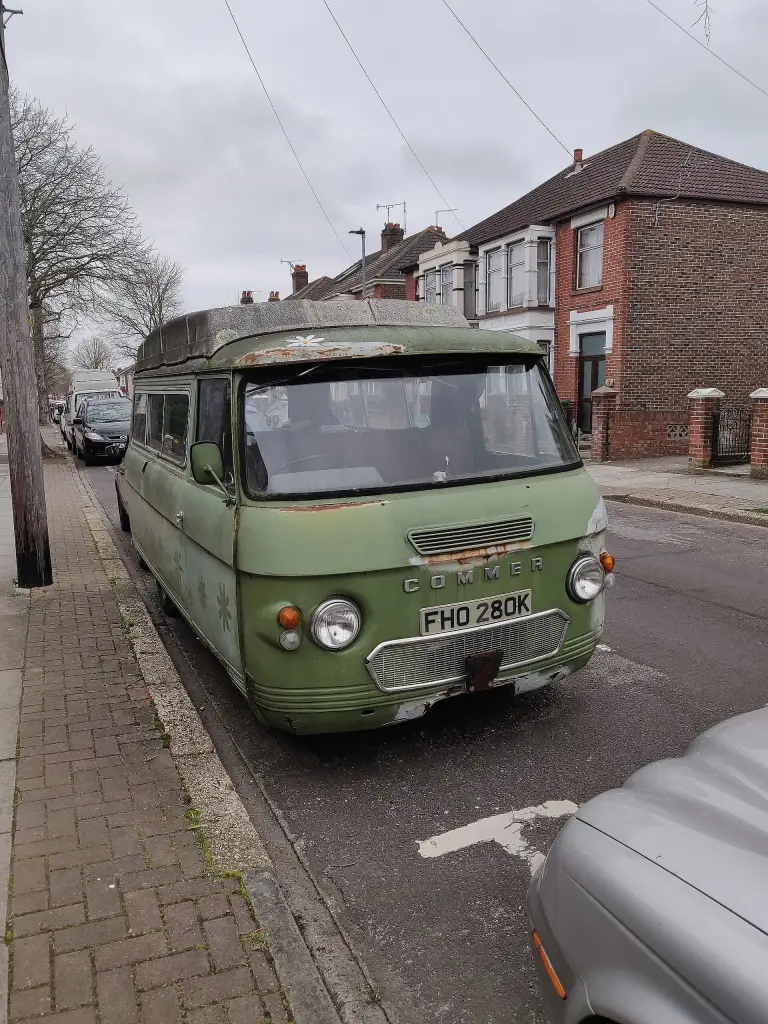
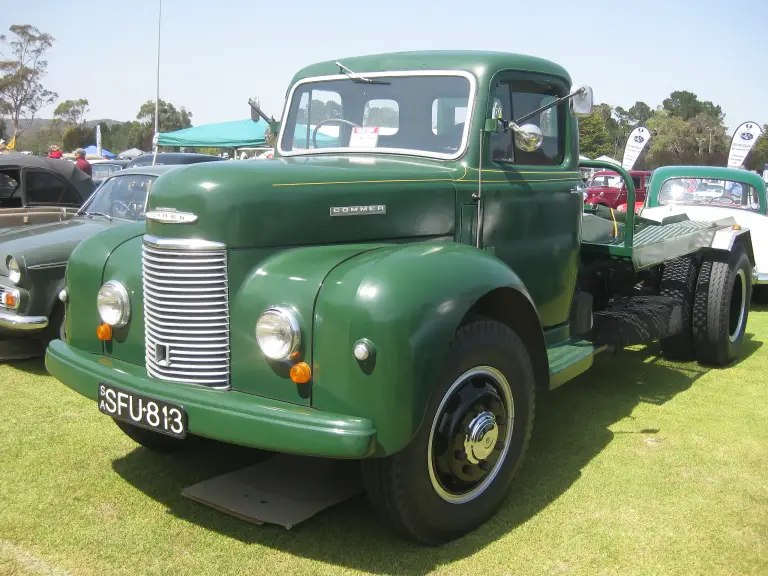
The Commando belongs with Commer’s trucks such as the Superpoise and with the forward-control Commer FC van. More vehicles of the marque are in the Commer collection.
Sources
- Commer, English Wikipedia: bus line, Commando and Avenger, RAF crew bus, company history