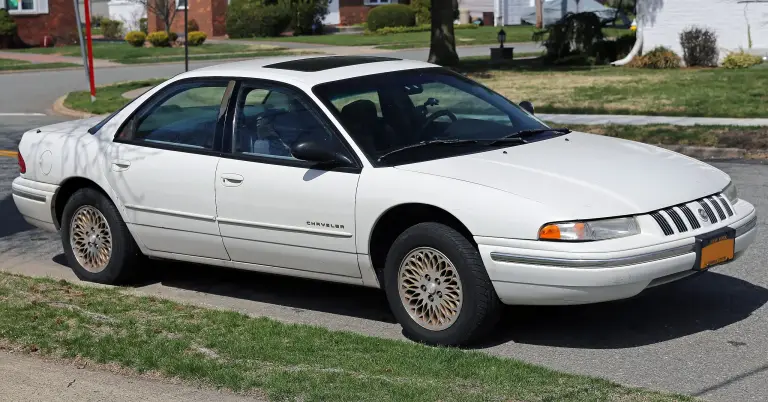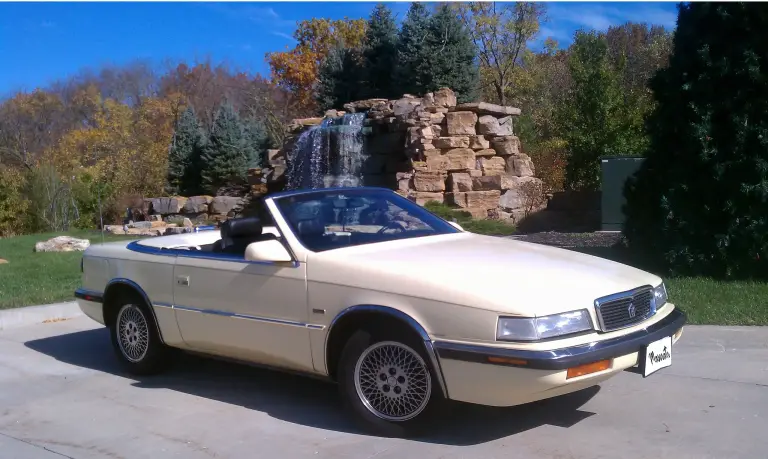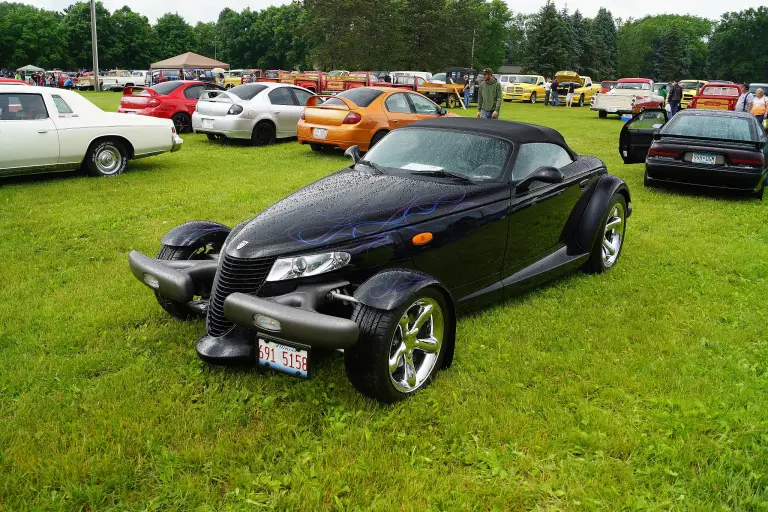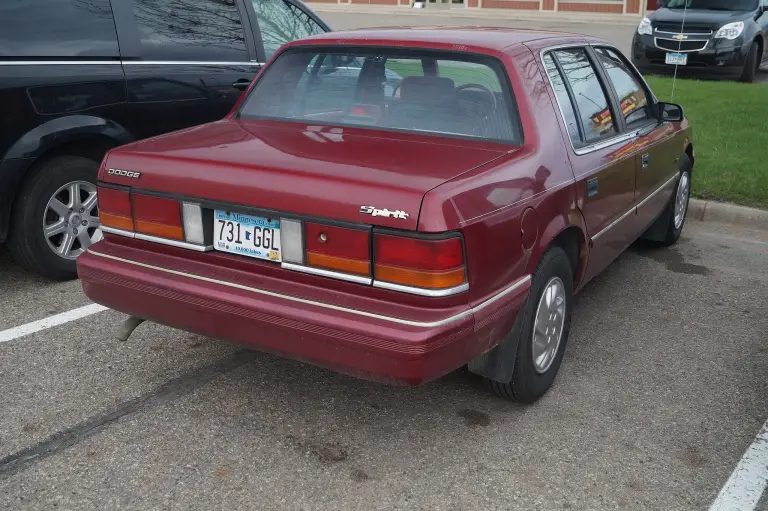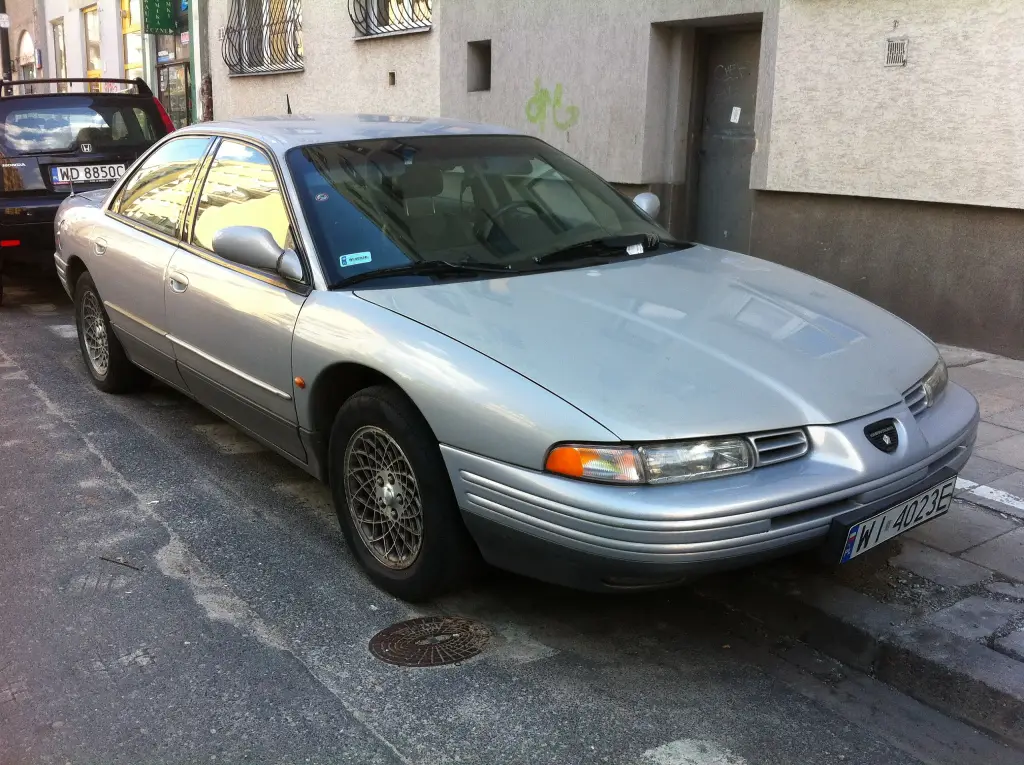
The Chrysler Vision was the name under which the Eagle Vision was sold in Europe. A full-size front-wheel-drive sports sedan built from 1992 to 1997 on Chrysler’s LH platform, it was one of the first cab-forward Chryslers, with a drag coefficient of 0.31, and it was the only Eagle designed and built entirely in-house by Chrysler.
Chrysler Vision at a glance
| Production | 1992–1997 |
|---|---|
| European name | Chrysler Vision; sold as the Eagle Vision in North America |
| Platform | Chrysler LH, front-wheel drive |
| Body | four-door sports sedan |
| Engines | 3.3 L pushrod V6 and 3.5 L SOHC V6 |
| Transmission | four-speed automatic, 42LE |
| Drag coefficient | 0.31 |
| Suspension | touring setup standard, performance optional |
| Design origin | Lamborghini Portofino concept of 1987 |
| Award | Automobile Magazine Automobile of the Year 1993 |
The Chrysler Vision is the European version of the Eagle Vision; this page uses the English Wikipedia article on the Eagle Vision.
History of the Chrysler Vision
From Navajo to Portofino
The Vision’s design can be traced to 1985 at Chrysler’s Advanced Concept Studio in Carlsbad, California, where the lead designer Kevin Verduyn set out to create an exotic four-passenger grand tourer for the 1990s. The process started with the interior to give generous passenger space, and full-size drawings guided the studio sculptors in building a fibreglass model code-named Navajo. A 1986 management review sent the design to Highland Park, where it generated enthusiasm but had no chassis to sit on. In March 1987 Chrysler bought the bankrupt Lamborghini, and to mark its European re-entry it wanted a striking prototype for the Frankfurt show less than six months away: the Navajo body was placed on a modified Lamborghini Jalpa chassis and became the Lamborghini Portofino, whose reception set Chrysler on the road to a production sedan with the same cab-forward shape — a long, low windscreen, short overhangs and wheels at the corners.
Chassis and engines
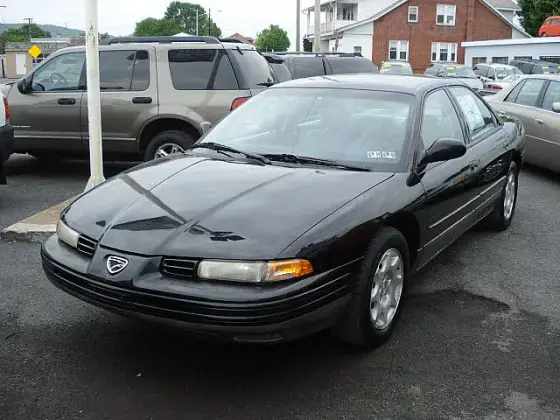
Chassis design began in the late 1980s after Chrysler bought American Motors, from which the Eagle division came. An early Dodge LH design resembling the outgoing Dynasty was scrapped when François Castaing, formerly AMC’s vice-president of product engineering, became Chrysler’s vice-president of vehicle engineering in 1988, and the work restarted from the Eagle Premier, whose longitudinal engine mounting, front suspension geometry and brakes were inherited. The chassis became a flexible architecture able to take front- or rear-wheel drive, designated LH and LX, and the transmission borrowed from the A604 Ultradrive to become the A606 or 42LE. By 1990 Chrysler decided the car needed a new engine: the 3.3-litre V6’s 60-degree block was bored out to 3.5 litres and its pushrod valves replaced by SOHC heads with four valves per cylinder.
A European sports sedan
Without badges the Vision could pass for a first-generation Concorde, the main difference being the tail lamp clusters: the Vision used amber rear indicators over the Concorde’s red ones and lacked the Concorde’s faux light bar between them, while its smaller grille, split by a prominent centre badge, was likened to nostrils. The interior was nearly identical to the Concorde’s apart from the absence of faux wood and the steering wheel emblem, and the Vision never offered a split bench with a column shifter, only bucket seats and a console. It was the only LH sedan with touring suspension as standard, with a performance set-up optional, and it came with a monochromatic look and no badges on the doors. The upscale TSi added leather seats, eight-way power seats for both front occupants, a leather wheel and shift knob. The Vision was Automobile Magazine’s Automobile of the Year for 1993 and the only Eagle designed and built wholly in-house by Chrysler, ending production in 1997.
Design and features
- Cab-forward shape: a drag coefficient of 0.31, equal to a two-seat Porsche sports car of the era.
- Longitudinal V6: a Renault-influenced layout inherited from the Eagle Premier.
- Sports chassis: the only LH sedan with touring suspension as standard.
- Amber indicators: European-style rear lamps that distinguished it from the Concorde.
- TSi equipment: leather, eight-way power seats on both sides and a leather wheel.
Chrysler Vision versions
- Vision (1992–1997): the standard sports sedan.
- Vision TSi: the upscale trim with leather and power seats.
- Eagle Vision: the same car sold in North America under the Eagle brand.
The Vision shared its LH platform with the Chrysler Concorde, Intrepid and LHS, and it replaced the Dynasty generation of Chrysler saloons. More cars are in the Chrysler collection.
Video: Chrysler Eagle Vision
Video by Dalek Zarn on YouTube.
Sources
- Eagle Vision, English Wikipedia: design history, chassis, engines, equipment
- Chrysler Vision, Wikimedia Commons: photographs