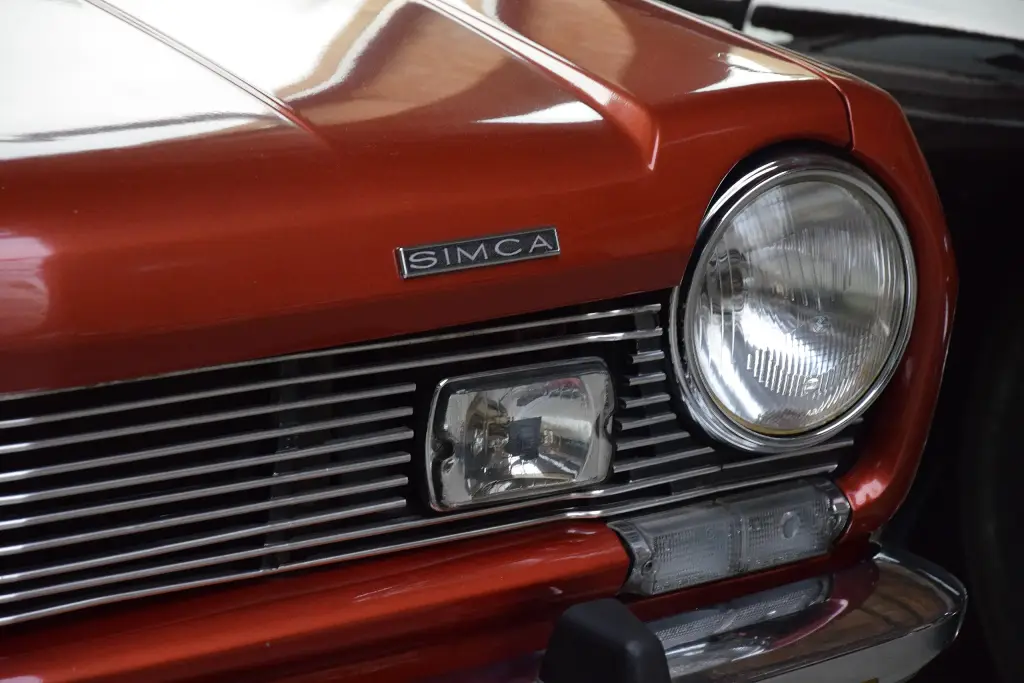
The Chrysler 1100 is the name the Simca 1100 carried in Spain. Simca, controlled by Chrysler from 1963, launched the car in 1967 as a compact front-wheel-drive family hatchback and kept it in production for more than fifteen years. Its combination of a transverse engine, all-independent suspension, front disc brakes and a folding rear seat made it one of the most influential small cars of its era.
Chrysler 1100 at a glance
| Also known as | Simca 1100 |
|---|---|
| Production | 1967–1982 for the hatchbacks; vans until 1985 |
| Designed by | Simca, Project 928 started in 1962 |
| Layout | front engine, transverse, front-wheel drive |
| Engines | 1,118 cc four, later 1,204 cc and 1,294 cc |
| Body styles | three- and five-door hatchback, estate, delivery van |
| Suspension | double wishbones front, semi-trailing arms rear |
| Brakes | discs at the front |
| Steering | rack and pinion |
| Length | 3.94 m |
| Replaced by | Simca-Talbot Horizon |
| Spin-offs | Matra Simca Rancho |
The Chrysler 1100 is the Spanish name of the Simca 1100; this page is based on one source, the English Wikipedia article on the Simca 1100.
History of the Chrysler 1100
Project 928
The 1100 came out of Project 928, begun by Simca in 1962 and finished by the engineers Philippe Grundeler and Charles Scales. Market research in the early 1960s showed French buyers turning towards front-wheel drive for comfort and space, so Simca planned a complete range of front-wheel-drive cars — saloons, estates and light commercials — that would fit the French 6CV tax class between the Simca Mille and the Simca 1300. Both transverse and longitudinal engine layouts were tested, and in 1963 the transverse design was approved. Chrysler, which had taken a controlling interest in Simca that year, approved the programme in 1964 with a target of summer 1967. The timetable included a new transmission and a larger development of the rear-engined Simca 1000’s 944 cc “Poissy” engine, now at 1,118 cc.
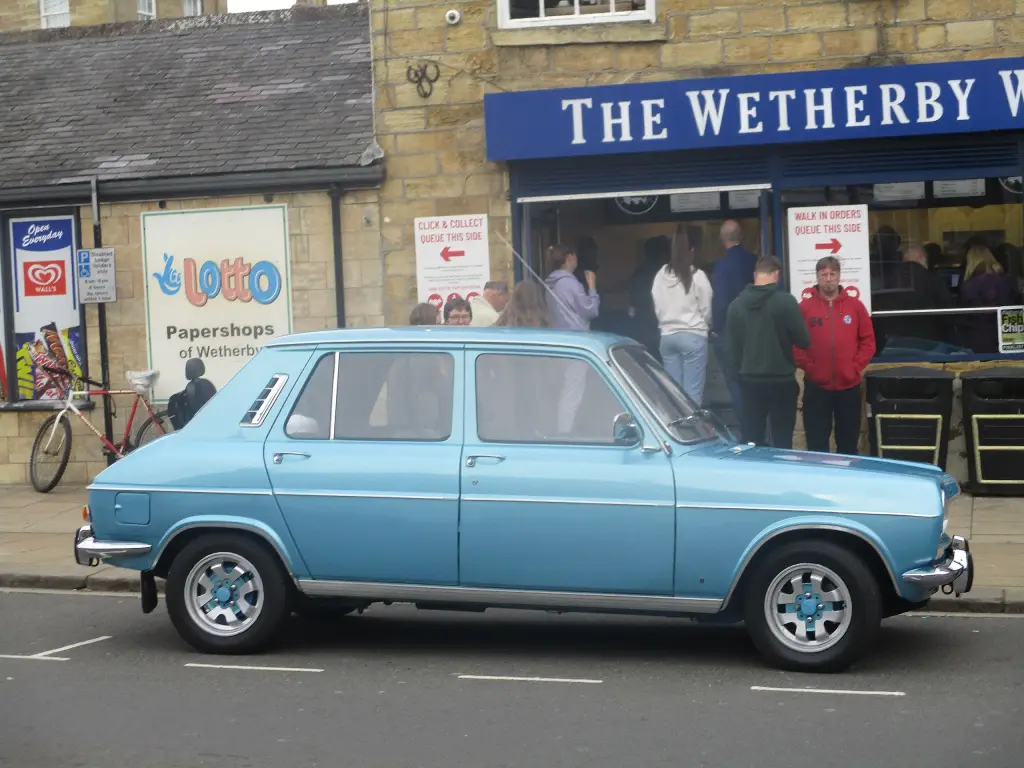
A modern package
The result was one of the first unitary family hatchbacks to combine a transversely mounted engine and front-wheel drive with modern independent suspension all round and anti-roll bars, front disc brakes, rack-and-pinion steering and folding rear seats. The engine was slanted to allow a lower bonnet, and the engine, gearbox and suspension were carried on a subframe so that the body itself was relatively unstressed; the body was welded to the frame rather than bolted. At just under four metres long, the 1100 set the pattern that European and Japanese C-segment hatchbacks followed for decades, and Volkswagen is reported to have studied it closely while developing the Golf.
Range and end of production
Buyers could choose three- and five-door hatchbacks, an estate called the Break — the same length as the hatchback but boxier and more spacious, on two doors until 1970 and four afterwards — and a delivery van. A 1,204 cc Simca 1200 and a 1,294 cc Simca 1300 were added later, and the mechanicals also served the Matra Simca Rancho crossover. The hatchbacks were replaced by the Simca-Talbot Horizon, while the vans stayed in production until 1985.
Design and features
- Transverse engine and front-wheel drive: one of the first small family cars to combine the two with unequal-length driveshafts.
- Independent suspension all round: double wishbones at the front and semi-trailing arms at the rear, with anti-roll bars and torsion-bar springs.
- Front disc brakes and rack-and-pinion steering: advanced equipment for a car of this size in 1967.
- Folding rear seat: the hatchback body and folding seat turned a small car into a practical load carrier.
- Subframe-mounted running gear: engine, gearbox and suspension sat on a subframe welded into the unitary body.
Chrysler 1100 versions
- Three- and five-door hatchbacks: the core of the range from 1967.
- Break estate: the same length as the hatchback, with a boxier body; two doors until 1970, four afterwards.
- Delivery van: a commercial version that stayed in production until 1985.
- Simca 1200 and 1300: larger-engined versions added later in the model’s life.
- Matra Simca Rancho: a family crossover built on the 1100’s mechanicals.
The 1100 was the smaller stablemate of the Chrysler 180 and shared its front-wheel-drive thinking with the Chrysler Alpine that replaced the larger Simca 1300/1301. More cars are in the Chrysler collection.
Video: 1981 Talbot aka Simca Chrysler 1100 LS automatic
Video by dutchurbanminer on YouTube.
Sources
- Simca 1100, English Wikipedia: development, engineering, range
- Simca 1100, Wikimedia Commons: photographs