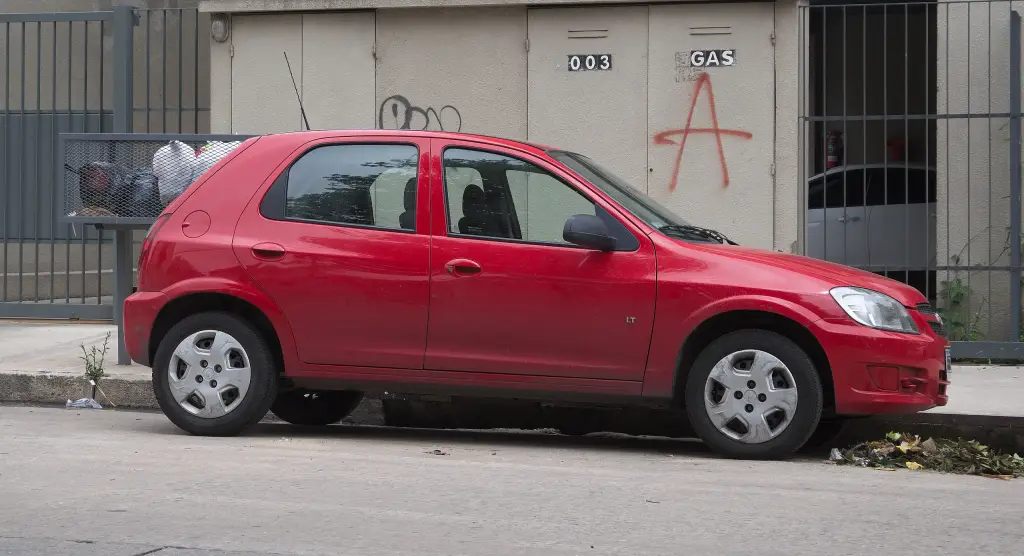
The Chevrolet Celta was a low-cost supermini built for Latin America between 2000 and 2015. Based on the Opel Corsa B and made in Gravataí in southern Brazil, it was designed to be cheap to buy and cheap to run, and more than 1.5 million were built.
Chevrolet Celta at a glance
| Production | 2000–2015 |
|---|---|
| Market | Latin America |
| Built at | Gravataí, Brazil |
| Base | Opel Corsa B floorpan |
| Body styles | Three-door and five-door hatchback |
| Engines | 1.0 L, later 1.0 VHC and VHCE; 1.4 L from 2003 |
| Power | 60 PS at launch, 70 PS from 2002, 77–78 PS from 2009 |
| Weight | about 850 kg |
| Sedan version | Chevrolet Prisma, from 2007 |
| Also sold as | Suzuki Fun in Argentina, 2004–2011 |
| Built in total | about 1.5 million |
History of the Chevrolet Celta
The Celta was released in Brazil in 2000 as a three-door hatchback with a 60 PS 1.0-litre engine. It was based on the Opel Corsa B but drew styling cues from the Chevrolet Vectra B, and it was meant to be the cheapest new Chevrolet in the region. A five-door arrived in 2002 with the 1.0 engine upgraded to 70 PS using high-compression VHC technology, and a 1.4-litre engine with 85 PS was added in 2003. An Off-Road accessories kit was offered in 2005, when the 1.0-litre engine became a petrol-ethanol flex-fuel unit.
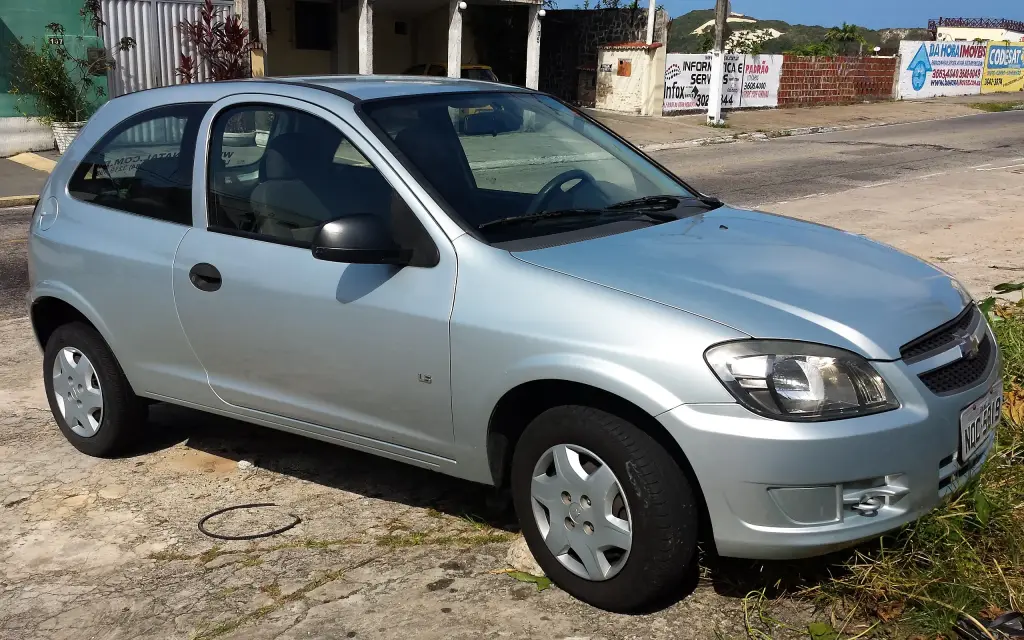
The car was facelifted in 2006 with a more modern front end closer to the Brazilian Vectra, and a second, final facelift came in 2011. A sedan version called the Chevrolet Prisma appeared in early 2007 with a 1.4-litre flex-fuel engine of 97 PS on ethanol and 95 hp on petrol; in early 2009 the Prisma and Celta gained a 1.0-litre VHC-E engine with 77–78 PS. In Argentina the Japanese maker Suzuki sold the car as the Suzuki Fun from 2004 to 2011, as a three- or five-door hatchback in LS and LT trim, until the Suzuki brand left the country and the facelifted Celta took over.
By early 2012 1.5 million Celtas had been built at Gravataí. In Latin NCAP testing in 2011 the basic car without airbags scored only one star for adult occupants and two for children, although the car had been designed in 2000, before that protocol existed, and met the regulations of the countries where it was sold. Production ended in 2015 so the plant could build more of the Chevrolet Onix and Prisma, which replaced the Celta in the Brazilian market.
Design and features
- Cheap to buy and run: a simple hatchback on an already proven Corsa B floorpan.
- Flex fuel: the 1.0-litre engine was converted to petrol-ethanol operation in 2005.
- Prisma sedan: a saloon version shared the same front end and engines.
- Suzuki Fun: the same car was sold in Argentina through Suzuki dealers for seven years.
Chevrolet Celta versions
- 1.0 hatchback: the original three-door, five-door from 2002.
- 1.4: the larger engine offered from 2003 in some markets.
- Prisma: the four-door sedan introduced in 2007.
- Suzuki Fun: the Argentine-badged version of 2004–2011.
The Celta was the low-cost base of the Brazilian range below the Chevrolet Aveo and shared its market with the Chevrolet Montana. More cars are in the Chevrolet collection.
Sources
- Chevrolet Celta, English Wikipedia: history, engines, facelifts, safety, replacement