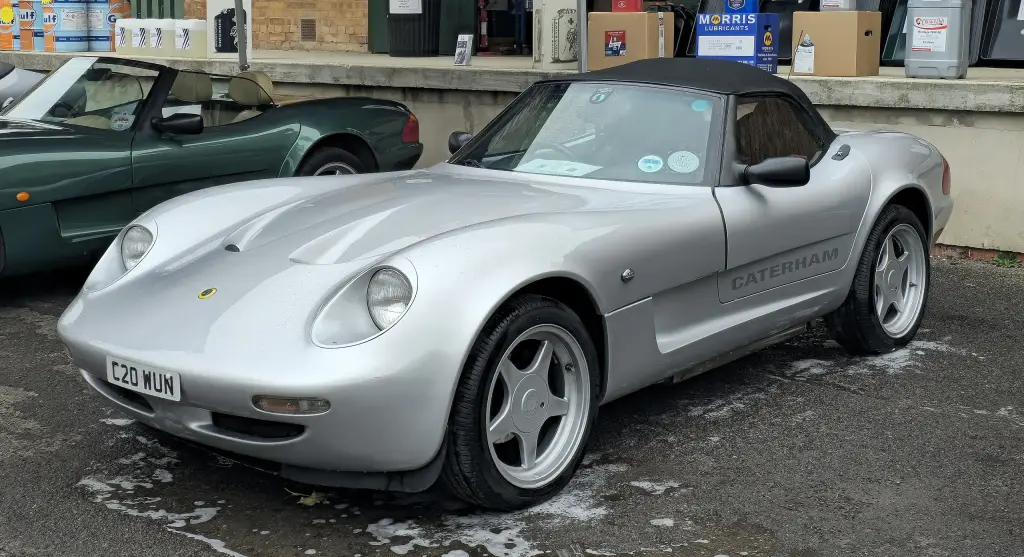
The Caterham 21 is a two-seat roadster designed and hand built by Caterham Cars in the 1990s. It used the mechanicals of the Caterham 7 but was meant to be a more practical version of that car, with conventional sports car styling. Caterham hoped to build 200 a year and made between 40 and 50 before the project was quietly shelved in 1999.
Caterham 21 at a glance
| Maker | Caterham Cars, England |
|---|---|
| Built | 1994–1999, hand built |
| Announced at | the 1994 British Motor Show, 21 years of Caterham Seven production |
| Body | two-seat roadster, styled by Iain Robertson |
| Project led by | Jez Coates |
| Mechanics | taken from the Caterham 7 |
| Engines | four-cylinder, 1.6 to 2.0 litres, 115–230 bhp |
| Gearbox | Ford Type 9, Caterham six-speed optional |
| Weight | about 100 kg more than the Seven |
| Planned output | 200 cars a year |
| Actually built | 40 to 50 |
| Base performance | 0–60 mph in 6.7 s and 127 mph with 133 hp |
| Racing | GT editions raced from 1999 to 2001 |
This article is based on one source, the English Wikipedia article on the Caterham 21.
History of the Caterham 21
Origins (1994)
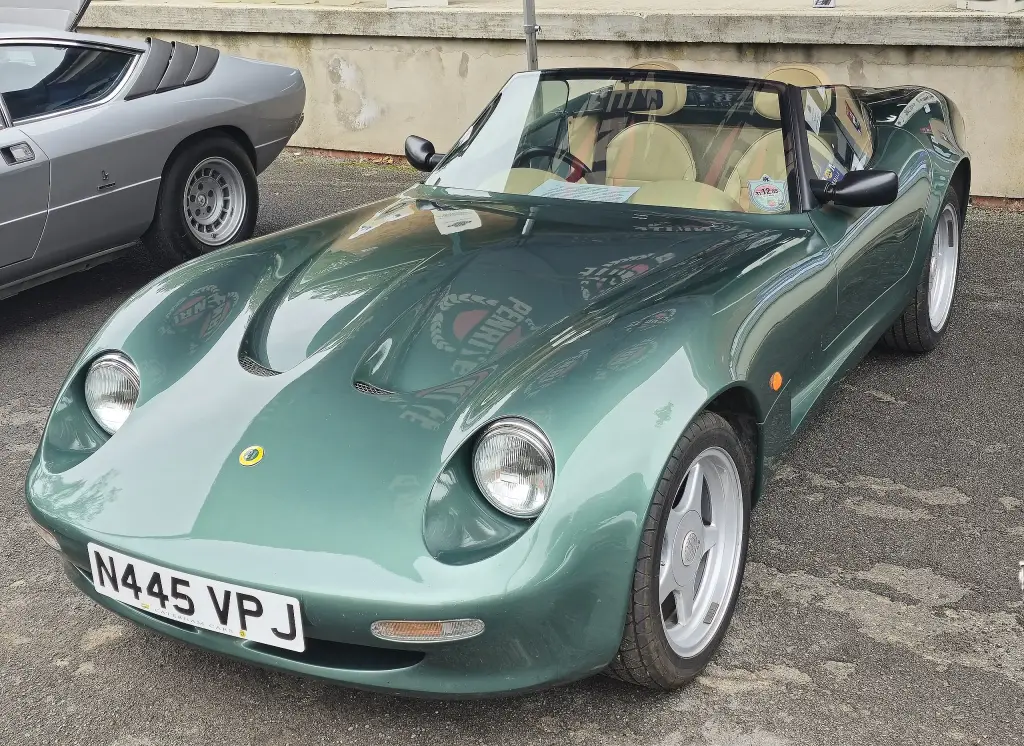
The 21 was announced at the 1994 British Motor Show to celebrate 21 years of Caterham Cars building the Lotus Seven. It was styled by Iain Robertson and developed by a team under Jez Coates; the aim was to offer “the chance to experience Caterham motoring in a more practical format”. It was offered with a range of four-cylinder engines from 1.6 to 2.0 litres and 115 to 230 bhp. Caterham originally intended to produce 200 cars a year, but only 40 to 50 examples were made before the project was shelved in 1999.
Design
Mechanically the 21 was almost identical to the Seven; the difference was the body, whose shape was inspired by the Lotus Eleven and came out curved and low-slung. The car had no wind-up windows and its door sills were high and wide, which drew criticism from contemporary reviewers about practicality. Extra strengthening in the sills and at the front made the initial chassis considerably more rigid than that of the 7, and adjustments to the suspension, together with the 21’s extra 100 kg, gave a better ride. Some parts came from mainstream models: the rear light clusters from the Mk1 Ford Mondeo hatchback, the door mirrors from the Rover 200 and the front indicators from the Suzuki Cappuccino.
Engines and gearbox
Most cars built by the factory used the 1.6 or 1.8-litre versions of the K-Series engine, all controlled by the Rover MEMS engine management. Two cars were built with engines in the Very High Performance Derivative specification. The Ford Type 9 gearbox, as used in the Ford Sierra, was standard, with Caterham’s own six-speed manual as an option. With the 133 hp tune the base car reached 60 mph in 6.7 seconds and 127 mph.
The GTO and racing
A single fixed-roof car, the 21 GTO, was built for racing. It used the 230 hp engine from the Caterham 7 R500 and could reach 60 mph in 3.8 seconds and 153 mph. The GT editions of the 21 were raced successfully from 1999 to 2001, and the GT car run by GPS Racing won its class in the Belcar 24-hour race, beating the Lotus Elises in that class. Caterham used the GTO to develop the Minister R500 engine; the last GTO ended up with Great Lakes Caterham in Michigan and was fitted with the RST-V8 engine later used in the Caterham Levante.
The Series 2 prototype
Caterham built a single Series 2 prototype, intended to take a standard superstructure from the MG F and leave room for a larger engine, which would have moved the car into the territory of makers such as TVR. It received a lukewarm reception and was not put into production.
Design and features
- Seven mechanicals: the 21 used the running gear of the Caterham 7, including its engines and gearbox.
- Rounded body: styling inspired by the Lotus Eleven, with high, wide sills and no wind-up windows.
- Stiffer chassis: extra strengthening in the sills and front end made it more rigid than the Seven.
- Better ride: revised suspension and about 100 kg of extra weight softened the car compared with the 7.
Caterham 21 versions
- 21 (1994–1999): the standard open two-seater, mostly with 1.6 or 1.8-litre K-Series engines.
- VHPD cars: two examples built with the Very High Performance Derivative engine.
- 21 GTO: a single fixed-roof racing car with the 230 hp engine of the Seven R500.
- GT editions: raced from 1999 to 2001, including a class win at the Belcar 24 hours.
- Series 2 prototype: one car with MG F superstructure, not produced.
The 21 was built on the mechanicals of the Caterham Seven, and the later range was headed by the Seven CSR. More cars are in the Caterham collection.
Sources
- Caterham 21, English Wikipedia: history, design, engines, racing