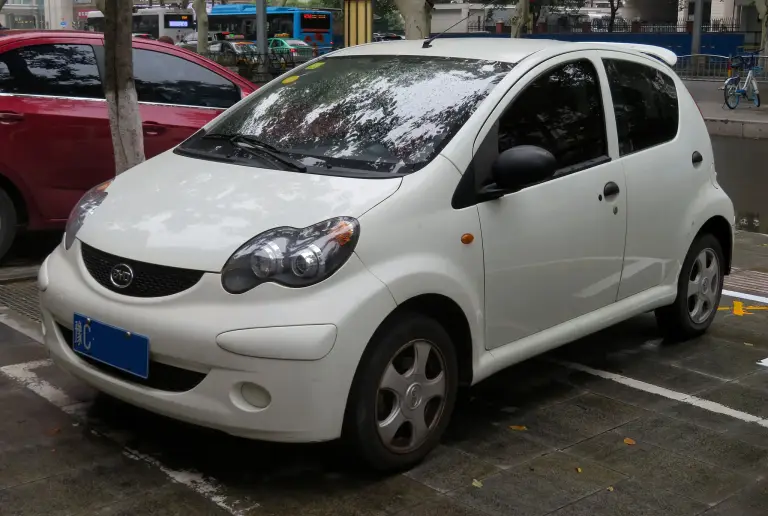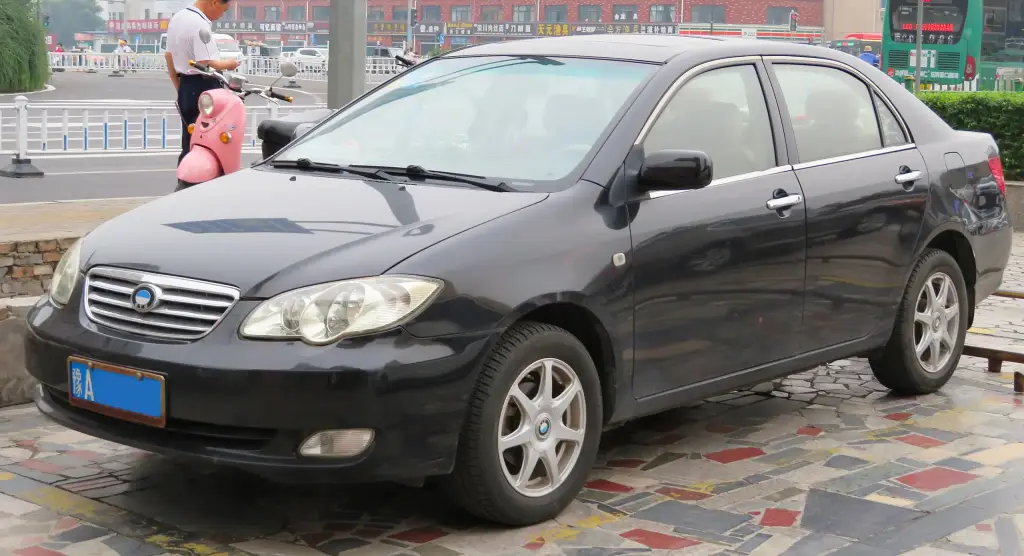
The BYD F3 is a compact car that BYD produced between 2005 and 2021. It was the first BYD vehicle of the company’s own design, and it grew into a whole family of models, including the F3R hatchback, the F3DM plug-in hybrid, the L3 and the larger G3.
BYD F3 at a glance
| Maker | BYD, China |
|---|---|
| Production | 2005–2021 |
| First generation | from September 2005 |
| Also assembled | TagAZ, Russia, 2011–2013 |
| Early engines | Mitsubishi 4G15S 1.5 (105 hp), 4G18 1.6 (99 hp) |
| Later engines | BYD473QE 1.5 (107 hp); turbo 1.5 (151 hp) |
| Transmissions | 5-speed manual, 6-speed manual, 6-speed automatic |
| 2014 facelift | new grille, headlights, tail lights, bumpers, wheels and mirrors |
| 2016 model year | 109 hp, redesigned front and rear ends |
| Derivatives | F3R, F3DM, L3, G3 |
| Discontinued | late 2021 |
The article is based on the English Wikipedia page on the BYD F3.
History of the BYD F3
First generation (2005)
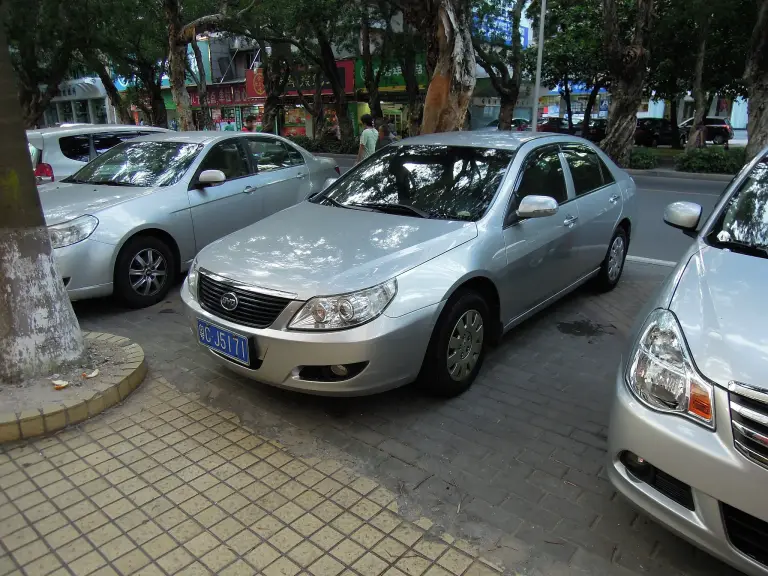
Production of the first-generation F3 began in September 2005. Early cars were powered by Mitsubishi’s 4G-series four-cylinder engines: the 1.5-litre 4G15S with 78 kW (105 hp) and the 1.6-litre 4G18 with 73.5 kW (99 hp). Both used distributor-less Bosch ignition and fuel injection and met Euro 4 emissions standards. A 1.6-litre Mitsubishi engine was standard, and from 2011 the Mitsubishi units were replaced by BYD’s own engines.
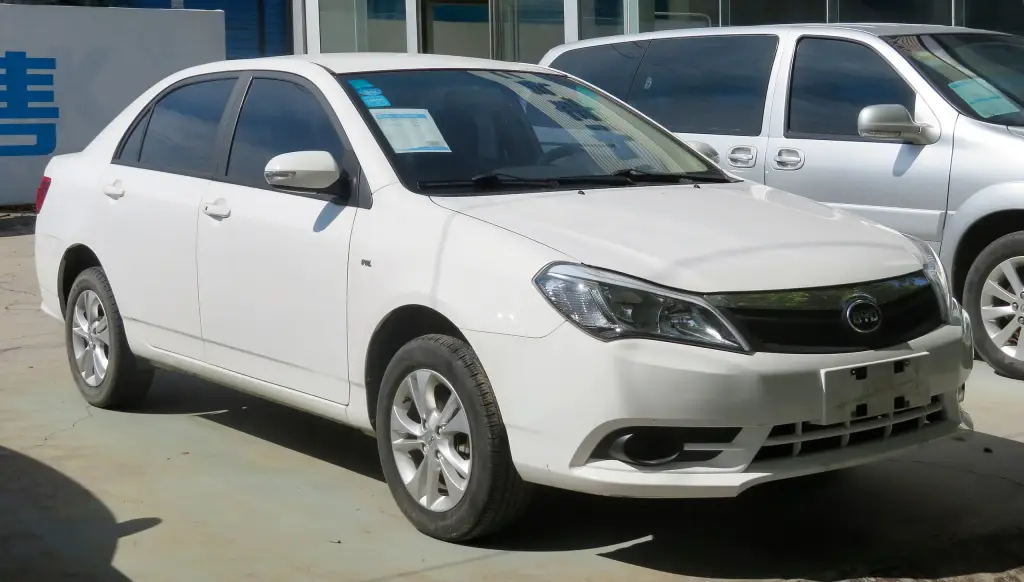
Between 2011 and 2013 the F3 was assembled in Russia at the TagAZ factory. The car could be ordered in three trim packages, GL-i, GL-X and GL-Xi, with air conditioning, an AM/FM/CD/MP3 stereo, electric windows and mirrors as standard. Leather seats, a third brake light, front airbags, fog lights and an infotainment system were optional. Alloy wheels with 195/60 R15 tyres and four-wheel ABS disc brakes were fitted as standard.
2014 facelift
In March 2014 the first-generation F3 was facelifted and continued in production alongside the second-generation model. It received a new grille, headlights, tail lights, bumpers, wheels and mirrors. The main engine was the 1.5-litre BYD473QE with 107 horsepower, the F3’s signature unit since 2011; a turbocharged 1.5-litre BYD476ZQA with 151 horsepower was also offered. Transmission choices were a five-speed manual, a six-speed manual and a six-speed automatic, and the turbo engine was dropped in mid-2015.
2016 model year
The F3 was facelifted again in 2015 for the 2016 model year, with redesigned front and rear ends. It kept the 1.5-litre four-cylinder engine, now quoted at 109 hp, with a five-speed manual or a six-speed automatic. In foreign markets the 2016 facelift was rebadged and sold as the updated BYD L3. The last model year update came in 2020, and in 2019 the first-generation car returned for 2020 as a single Classic trim with the BYD473QF engine and a five-speed manual.
Second generation and the end
In April 2012 the second-generation F3, also called F3 Plus or Surui, was launched at the Beijing Auto Show. It was sold alongside the first-generation facelift cars and later spawned the more upmarket BYD Qin, which replaced the Surui. As of 2019 the F3 was still sold alongside the Surui and the E5 in four trims: Classic, Fashion, Elite and Exclusive. The F3 was discontinued in late 2021 because of falling sales and BYD’s switch of focus to electric vehicles.
Design and features
- First own design: the model that turned BYD from a battery maker into a car manufacturer.
- Mitsubishi engines first: 1.5- and 1.6-litre four-cylinders, replaced by BYD units from 2011.
- Economical: about 4.7 L/100 km quoted for the 1.5-litre car.
- Wide equipment: ABS disc brakes and alloy wheels as standard; leather and infotainment optional.
BYD F3 versions
- F3 sedan (2005–2021): the main car, in first- and second-generation form.
- F3R hatchback: a five-door derivative of the first generation.
- F3DM: a plug-in hybrid version of the F3.
- F3 Plus / Surui (2012): the second generation, a more premium car.
- L3: the 2016 facelift rebadged for export markets.
- G3: a slightly larger and more upmarket version introduced in 2009.
The larger G3 was developed from the F3, and the smaller F0 sat below it in the range. More cars are in the BYD collection.
Sources
- BYD F3, English Wikipedia: history, engines, facelifts, derivatives