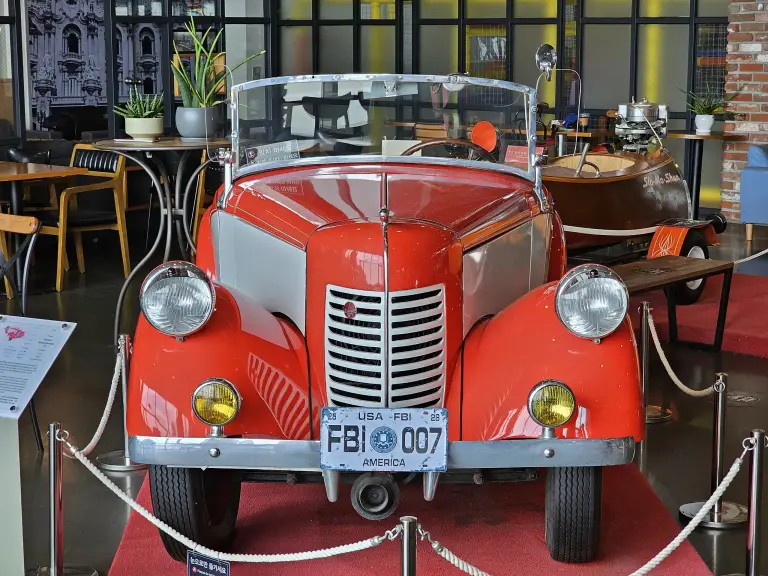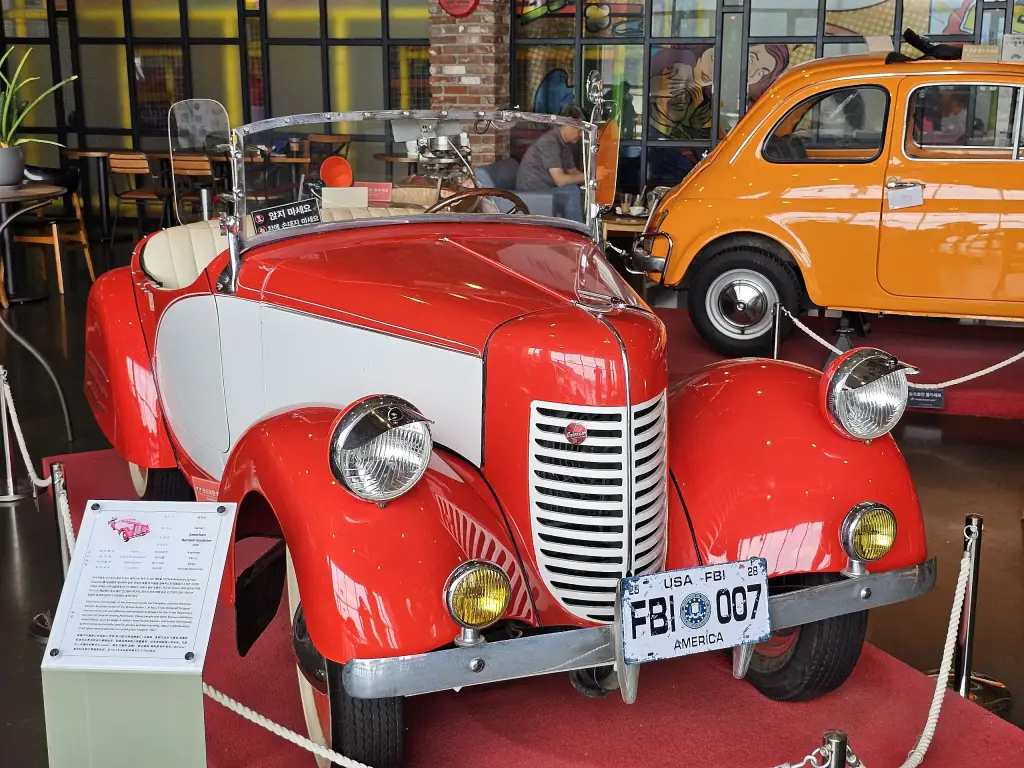
The Bantam Roadster was the open model in the range that American Bantam launched in 1937. It was a small, inexpensive car built on the tooling the company had bought from the bankrupt American Austin Car Company, with new styling by Count Alexis de Sakhnoffsky and a reworked 747 cc engine.
Bantam Roadster at a glance
| Maker | American Bantam Car Company, Butler, Pennsylvania |
|---|---|
| Model years | from 1937; company car production ended 18 August 1943 |
| Basis | American Austin tooling bought in 1935 |
| Designer | Count Alexis de Sakhnoffsky |
| New for 1937 | front grille, front fenders and rear fenders |
| Engine | 747 cc (45.6 cu in) four-cylinder |
| Power | 20 hp at 4,000 rpm |
| Compression ratio | 7:1 |
| Fuel system | aluminium induction system and cylinder head |
| Lubrication | fully pressurised oil system |
| Shared range | delivery vans, light trucks and woodie station wagons |
| Total Bantam cars | about 6,000 of all types |
based on one source: the roadster is described in a section of the English Wikipedia article on American Bantam.
History of the Bantam Roadster
The 1937 redesign
When Roy Evans and his partners bought the assets of American Austin in August 1935, they acquired a small car and the tooling to build it, but no money for a new model. American Bantam was incorporated in June 1936, and in early 1937 Evans telephoned Count Alexis de Sakhnoffsky, the original Austin body designer, and asked him to design a new line of bodies around the existing tooling. Sakhnoffsky visited the Butler factory in Pennsylvania and designed a completely new front grille, new front fenders and new rear fenders. The refreshed selection of American Bantam roadsters and delivery vans went on sale in 1937.
Engine and chassis
The roadster kept the Austin engine’s 45.6 cubic inch (747 cc) displacement but the unit was redesigned with a new aluminium induction system and cylinder head. It adopted a fully pressurised oil system, a compression ratio raised by 40 percent to 7:1, and plain babbitt crankshaft bearings. The result was 20 horsepower at 4,000 rpm, a 50 percent improvement over the Austin engine. That modest output suited a very light car, and the same mechanical package served the whole Bantam range.
One body among many
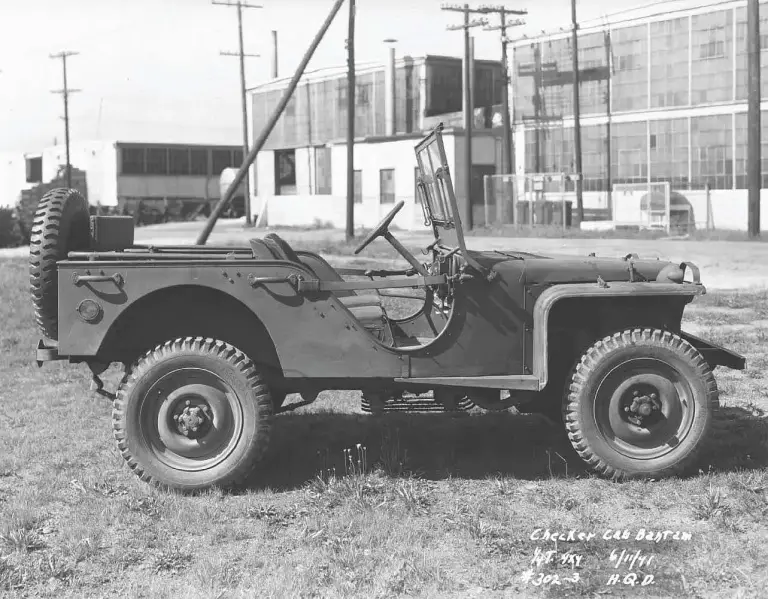
The roadster was only one of a wide range of Bantam body styles, which ran from light trucks to woodie station wagons. All of them were built in small numbers: only about 6,000 Bantams of all types were produced. The 1938 Bantam model, closely related to the roadster, was the inspiration for Donald Duck’s car in the 1937 cartoon Don Donald. American Bantam continued to build cars until 18 August 1943, by which time the factory was devoted to wartime work, above all the Bantam BRC jeep and its trailers.
Design and features
- Open body: the roadster was the open car of the 1937 Bantam range.
- Sakhnoffsky front: a new grille and fenders gave the old Austin shape a modern look.
- Small engine: 747 cc and 20 hp, half as much again as the original Austin unit.
- Shared chassis: the same mechanical package underpinned Bantam vans and light trucks.
- Light weight: a tiny car built for cheap motoring in the late 1930s.
Bantam Roadster versions
- Roadster: the open model described here.
- Delivery van: a small commercial body launched alongside the roadster in 1937.
- Light trucks: utility bodies on the same Bantam chassis.
- Woodie station wagon: the estate version of the range.
- Bantam BRC: the wartime quarter-ton reconnaissance car that ended the civilian line.
The whole company is covered in the article on American Bantam, and the wartime vehicle in the article on the Bantam BRC. More cars are in the Bantam collection.
Sources
- American Bantam, English Wikipedia: 1937 range, Sakhnoffsky styling, engine, body styles, end of production