The Bantam BRC (Bantam Reconnaissance Car) was an American quarter-ton four-wheel-drive vehicle designed in 1940 and the direct precursor of the World War II jeep. It was built in several versions, the main one being the BRC-40, and was used by the United States, the United Kingdom and the Soviet Union.
Bantam BRC at a glance
| Type | quarter-ton 4×4 reconnaissance and liaison car |
|---|---|
| Built | 1940–1943 |
| Designer | Karl Probst of Detroit |
| Engine | Continental BY-4112, 1,835 cc, 48 hp |
| Axles | Studebaker Champion with Spicer joints |
| Wheelbase | 80 in (2,032 mm) |
| Track | 47 in (1,194 mm) |
| Prototype weight | 922 kg (planned 841 kg, limit 590 kg) |
| First delivery | 23 September 1940, Camp Holabird |
| Pre-series | 70 vehicles, Model 60 / Mk II / BRC-60 |
| Main version | BRC-40 |
| Total built | 2,642, not counting the prototype |
based on one source: the English Wikipedia article on the Bantam BRC.
History of the Bantam BRC
The 1940 tender
As the United States prepared for war, the Department of War issued an invitation to tender in July 1940 for a light military vehicle for reconnaissance, liaison and other duties, classified as a quarter-ton 4×4 truck. The specifications, approved by the Technical Armament Committee on 27 May 1940, called for all-wheel drive, a simple open body with a nearly rectangular outline, three seats, an 80-inch wheelbase, a 47-inch track and a maximum weight of 590 kg. Only two of 135 American car manufacturers showed interest: American Bantam and Willys-Overland. Bantam, a small and financially troubled company in Butler, Pennsylvania, received the specifications on 17 July and immediately engaged the independent Detroit designer Karl Probst. He ordered axles and a two-speed transfer case from Spicer in Toledo, arrived on 18 July, and had the preliminary design ready the next day. The engine was a four-cylinder Continental BY-4112 of 1,835 cc and 48 hp. The designers ignored the weight limit as unattainable and planned for 841 kg.
Prototype and trials
Bantam submitted its offer on 22 July and won the tender on 5 August, promising the prototype in 49 days against Willys’ 120. The car was finished on time and delivered on its own wheels on 23 September 1940 to the testing centre at Camp Holabird, 275 km away. The 30-day endurance test covered 5,800 km and was successful: breakdowns, including frame cracks, were repaired quickly, since any failure lasting more than 24 hours would have meant disqualification. Military representatives were impressed by the vehicle’s off-road ability, and on 27 October the Bantam was presented to the Armored Weapons Commission at Fort Knox. This first vehicle was known as the pilot model.
BRC-60 and BRC-40
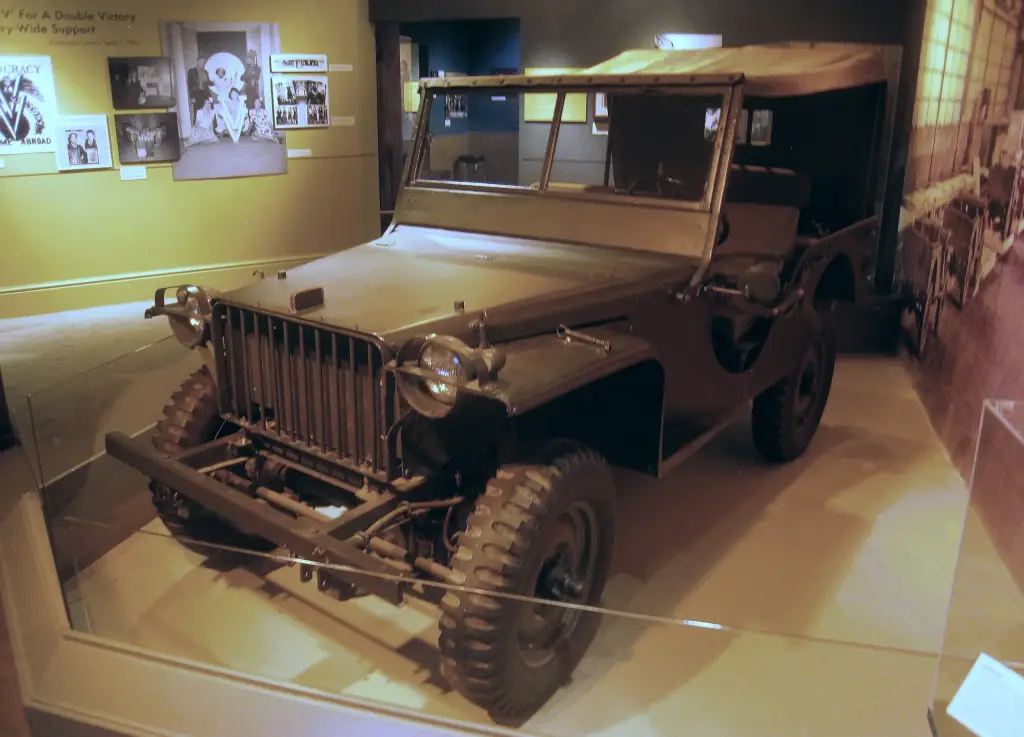
Bantam then built 70 pre-series vehicles, the Model 60 or Mk II, also called BRC-60. They replaced the rounded stamped fenders of the Bantam passenger car with right-angled sheet-metal panels and wider side cut-outs, and added bar guards for the headlights, which were partly recessed into the fenders. Eight were experimentally fitted with four-wheel steering. Before these were delivered the Army ordered 1,350 improved vehicles and then another 72, of which 22 had all-wheel steering. These production cars were the BRC-40. They received the flatter, wider bonnet the Army preferred, with a flat radiator grille, a fuel tank moved under the driver’s seat and a sturdier split windscreen. The price fell from $1,123 for the first 500 units to $938. The BRC could carry a .50 calibre M2 Browning machine gun on a pillar mount between the front seats.
Service and the end of the line
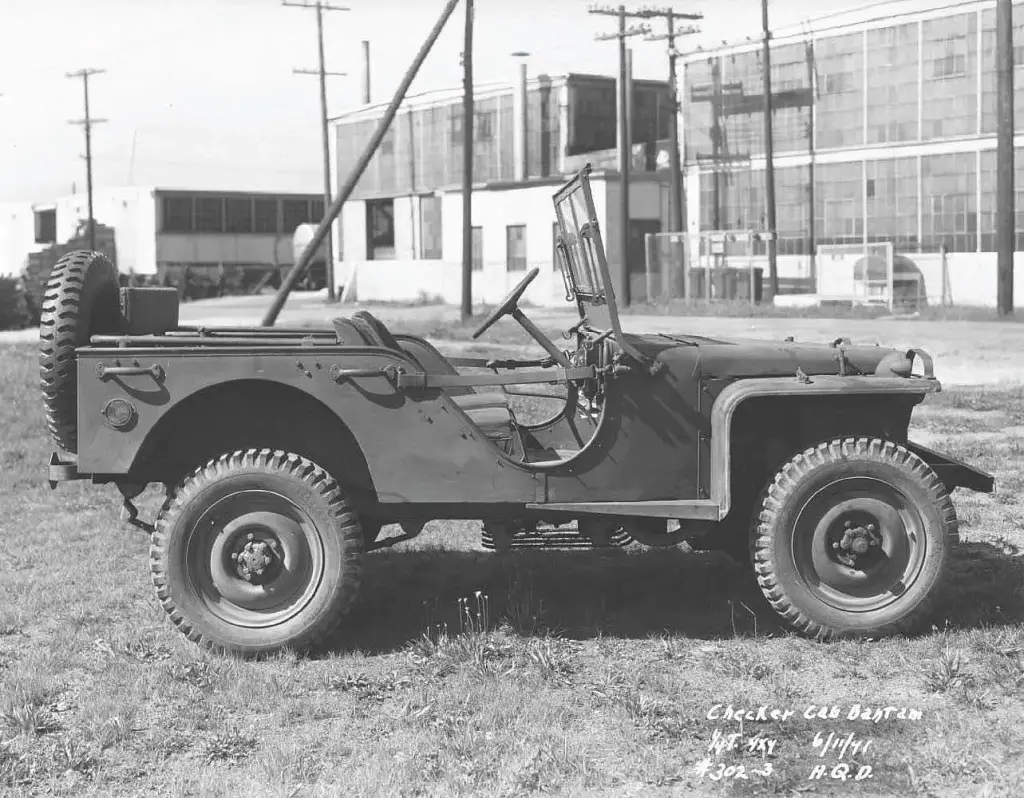
Once the Willys MB was chosen as the standard vehicle, Bantam received no further vehicle orders from the U.S. Army, only an order for 10,000 jeep trailers. Foreign sales were limited: 1,001 BRC-40s were built for British orders in 1941 and another 150 in 1943, originally ordered by Yugoslavia. In total 2,642 vehicles were built, not counting the prototype. The Soviet Union received BRC-40s through Lend-Lease from the autumn of 1941; 531 were delivered, 500 of them by the end of 1942, and the vehicle was nicknamed the “bantik”. A few also reached the Polish People’s Army. One vehicle was assembled by the Checker Cab Company in Kalamazoo, though production there was not launched.
Design and features
- Quarter-ton 4×4: all-wheel drive and a simple open body built to Army specifications.
- Continental power: a 1,835 cc four-cylinder engine of 48 hp.
- Light chassis: an 80-inch wheelbase and a 47-inch track in a vehicle of about 900 kg.
- Armament mount: a pillar between the front seats for a .50 calibre M2 Browning.
- Four-wheel steering: tried experimentally on a handful of cars.
Bantam BRC versions
- Pilot model: the single prototype of September 1940.
- BRC-60 (Model 60, Mk II): 70 pre-series cars, eight with four-wheel steering.
- BRC-40: the main production version, 1,350 ordered and 72 more, 22 with all-wheel steering.
- British cars: 1,001 built in 1941 and 150 in 1943.
- Soviet Lend-Lease cars: 531 delivered, known as the “bantik”.
- Checker-assembled car: one vehicle put together by the Checker Cab Company.
The company behind the car is covered in the article on American Bantam, and its civilian models in the article on the Bantam Roadster. More cars are in the Bantam collection.
Video: RARE! 1941 Bantam RC WWII Military Jeep • Sullivan Auctioneers, LLC
Video on YouTube.
Sources
- Bantam BRC, English Wikipedia: design, trials, versions, production, service