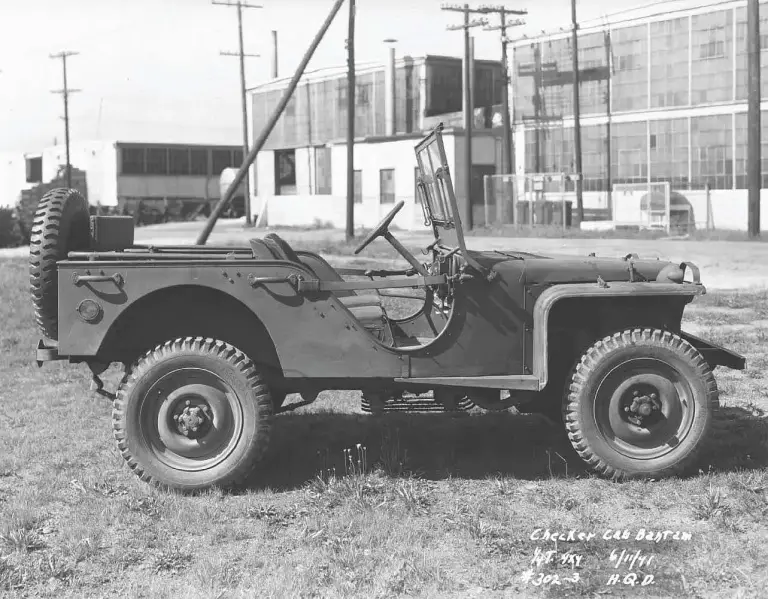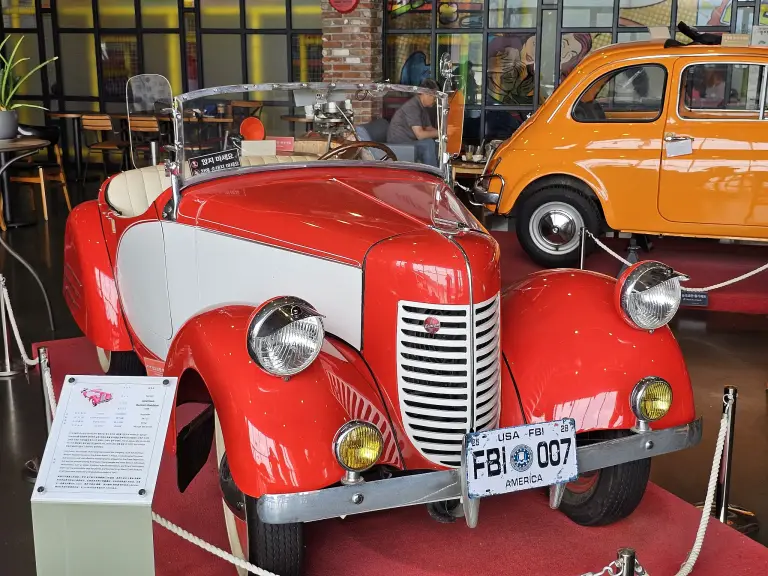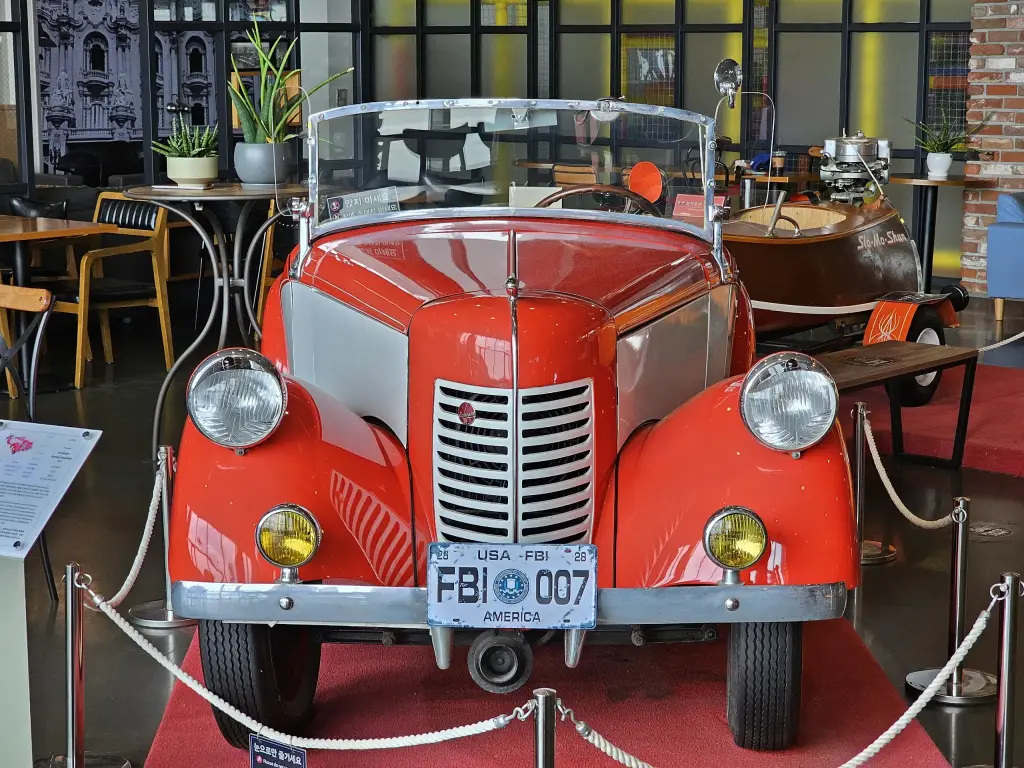
The American Bantam Car Company was a small Pennsylvania manufacturer that grew out of the bankrupt American Austin Car Company in 1935. It is credited with inventing the original World War II quarter-ton jeep in 1940, although the bulk of wartime jeep production went to Willys-Overland and Ford.
American Bantam at a glance
| Founded | American Bantam Car Company, incorporated June 1936 in Pennsylvania |
|---|---|
| Founders | Roy Evans and William A. Ward Jr. |
| Predecessor | American Austin Car Company, assets bought in August 1935 |
| Factory | Butler, Pennsylvania |
| First new line | roadsters and delivery vans, launched 1937 |
| Designer | Count Alexis de Sakhnoffsky |
| Engine | 747 cc (45.6 cu in) four-cylinder, 20 hp at 4,000 rpm |
| Body styles | roadsters, light trucks, woodie station wagons and vans |
| Cars built | about 6,000 of all types |
| Jeeps built | 2,675, 1940–1943 |
| Car production ended | 18 August 1943 |
| Wartime work | jeep trailers, cargo trailers, aircraft controls, torpedo engines |
based on one source: the English Wikipedia article on American Bantam.
History of the American Bantam
From American Austin to American Bantam
American Bantam began with the remains of another company. In August 1935 Roy Evans and William A. Ward Jr. combined their resources to buy the assets of the bankrupt American Austin Car Company during its liquidation. Through 1935 the business traded as Evans Operations Inc. and built vehicles on the American Austin tooling. On 2 June 1936 the founders incorporated the American Bantam Car Company in Pennsylvania and transferred the purchased assets, together with $500 in cash, to the new company. A public fundraising campaign followed, and with the money raised Bantam set about refreshing its whole vehicle line.
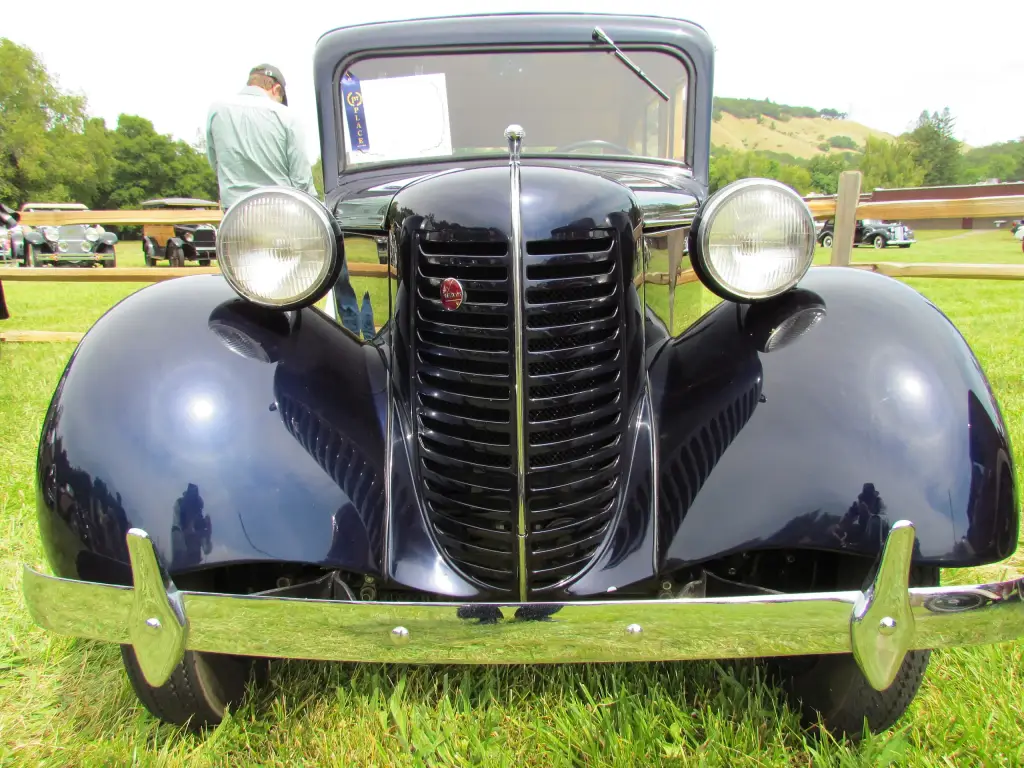
The 1937 line by Sakhnoffsky
There was no money for a costly styling programme or new body dies, so the redesign had to use as much of the existing tooling as possible. In early 1937 Evans telephoned Count Alexis de Sakhnoffsky, the original Austin body designer, and asked him to improvise a new line of bodies around that tooling. Sakhnoffsky visited the Butler factory and designed a completely new front grille with new front and rear fenders. The Austin engine was reworked with an aluminium induction system and cylinder head, retaining its 45.6 cubic inch (747 cc) displacement but gaining a fully pressurised oil system and a compression ratio raised by 40 percent to 7:1. The result was 20 horsepower at 4,000 rpm, 50 percent more than the Austin engine had produced. The refreshed range of roadsters and delivery vans went on sale in 1937.
Body styles and the Donald Duck car
Bantam offered a wide range of body styles, from light trucks to woodie station wagons, on the same small chassis. Even so, the scale was modest: only about 6,000 Bantams of all types were produced. The 1938 Bantam model became the inspiration for Donald Duck’s car, which had first appeared in the cartoon Don Donald in 1937.
The original jeep
In 1940 the U.S. Army was looking for a light quarter-ton vehicle, and Bantam answered the call. The company delivered the first jeep to the Quartermaster Corps on 23 September 1940 at Camp Holabird, Maryland, with engineers from Ford and Willys-Overland watching the tests. The original designs were then handed to Willys-Overland and Ford, who built the wartime jeep in far greater numbers. Bantam itself built 2,675 jeeps between 1940 and 1943, more than half of the early production going to the British Army and some to the Soviet Union. When the big contracts went elsewhere, the company turned to jeep trailers and other military work. Car production continued until 18 August 1943, after which Bantam made trailers for the civilian market as well.
Design and features
- Light and simple: a small 747 cc car built on American Austin tooling for low cost.
- Sakhnoffsky styling: a new grille and fenders gave the 1937 range a fresher face without new body dies.
- More power: the reworked engine produced 20 hp, half as much again as the Austin unit.
- Versatile range: roadsters, vans, light trucks and woodie station wagons shared one chassis.
- Jeep pioneer: the Bantam Reconnaissance Car was the first jeep delivered to the U.S. Army.
American Bantam versions
- Roadster: the open two-seater that formed the heart of the 1937 range.
- Delivery van: a small commercial body on the same chassis.
- Light trucks and woodie station wagons: the wider Bantam line of body styles.
- Bantam BRC: the quarter-ton reconnaissance car of 1940, the original jeep.
- Jeep trailers: the T-3 and later trailer production that kept the factory busy during the war.
The military side of the story is told in the article on the Bantam BRC, and the civilian car in the article on the Bantam Roadster. More cars are in the Bantam collection.
Sources
- American Bantam, English Wikipedia: company history, 1937 line, engine, jeep, production totals