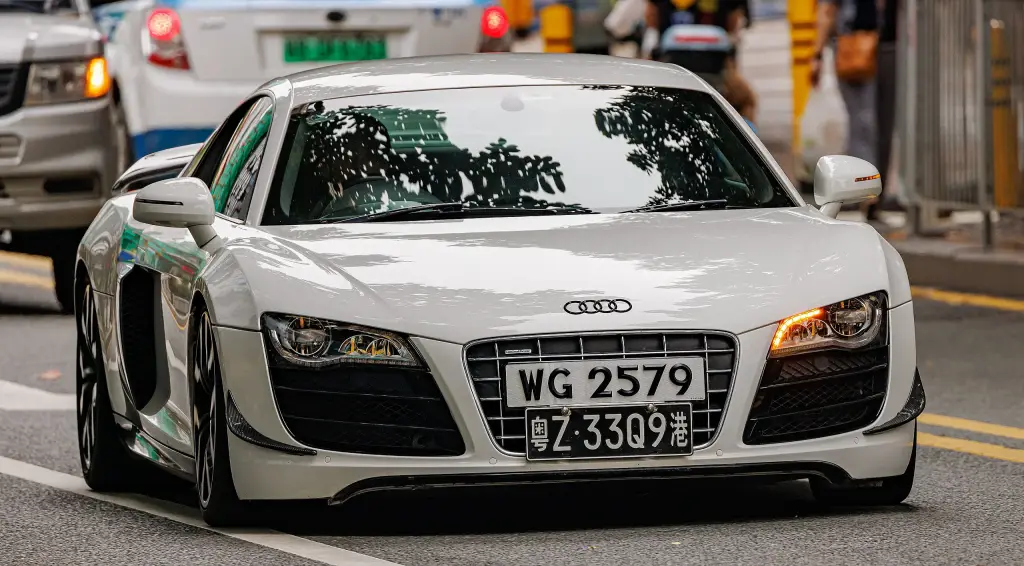
The Audi R8 is a mid-engine, two-seater sports car with permanent quattro that Audi built from 2006 to 2024. It is designed and assembled by Audi Sport GmbH at Neckarsulm, uses an aluminium Audi Space Frame, and was Audi’s first production car with full-LED headlamps.
Audi R8 at a glance
| Sold | 2006 to 2024, two generations |
|---|---|
| Layout | mid-mounted engine, two seats, permanent quattro |
| Built by | Audi Sport GmbH in Neckarsulm |
| Structure | aluminium Audi Space Frame monocoque |
| First generation | Type 42, launched in Paris on 30 September 2006 |
| First engines | 4.2 FSI V8 and 5.2 FSI V10 |
| Spyder | from 2008 |
| Second generation | Type 4S, Geneva 2015, Huracán platform |
| Second-generation engines | 5.2 V10 only, no manual gearbox |
| Facelift | 2018, the base V10 from 532 to 562 hp |
| R8 GT | 2023, 620 hp, 333 cars |
| End of production | 2024 |
History of the Audi R8
Type 42 (2006)
The road car was launched at the Paris Motor Show on 30 September 2006, three years after the Le Mans quattro concept by Frank Lamberty and Julian Hoenig had appeared in Geneva and Frankfurt. Apart from the name and the mid-engine layout it has nothing in common with the R8 Le Mans prototype. It was built on the aluminium Audi Space Frame at Neckarsulm and was the first production car with full-LED headlamps. The first cars used the 4.2 FSI V8, the 5.2 FSI V10 followed, and the Spyder came in 2008. A facelift in 2012 added the V10 Plus, and production of the Type 42 ended in August 2015 after 26,037 cars.
Type 4S (2015)
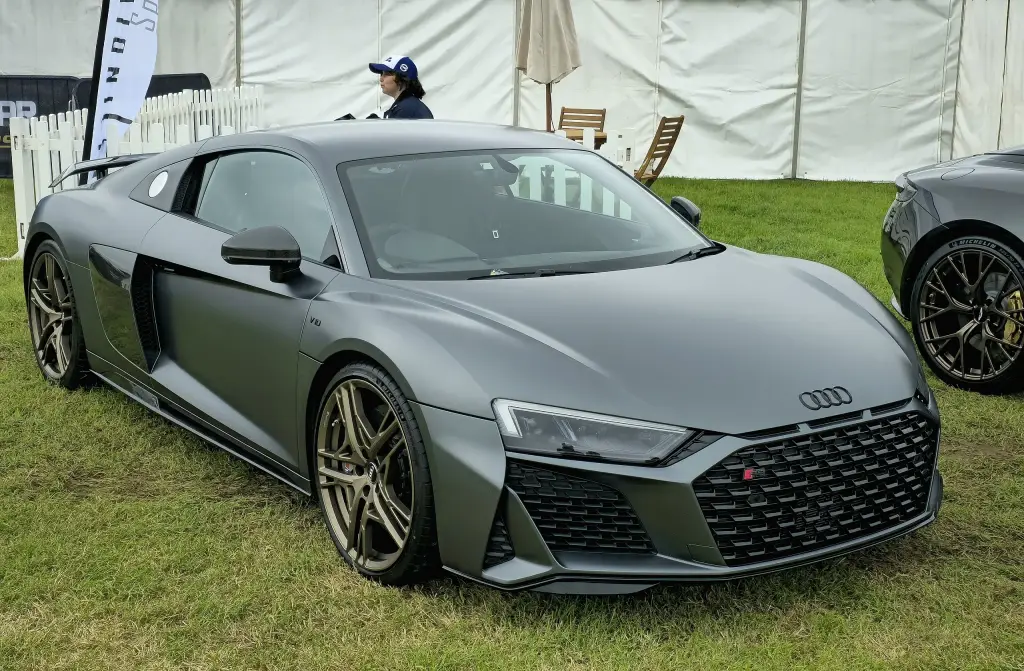
The second generation was unveiled at the 2015 Geneva Motor Show on the Modular Sports System platform shared with the Lamborghini Huracán. There was no V8 and no manual gearbox: the range started with the 5.2 V10, and the Spyder followed in 2016. The 2018 refresh raised the base engine from 532 to 562 hp and renamed the V10 Plus as V10 Performance Quattro with 612 hp. The 2023 R8 GT, with 620 hp and 333 cars, was the last version, and production ended in 2024.
Production
Each car is assembled by hand: 70 workers fit 5,000 parts, the Neckarsulm factory was redeveloped at a cost of 28 million euros and usually builds eight to fifteen cars a day, with a maximum of 29. Ninety-five lasers inspect the finished car in five seconds, checking more than 220 measurements to within 0.1 mm. The electric R8 e-tron of 2015 used a 92 kWh battery, but fewer than 100 were sold.
Design and features
- Full-LED headlamps: the 2006 R8 was the first production car with LED main headlamps.
- Audi Space Frame: the aluminium monocoque is built on space-frame principles.
- Lamborghini link: the first generation was inspired by the Gallardo, and the second used the Huracán platform.
- quattro: all versions had permanent four-wheel drive, and a rear-wheel-drive R8 RWS was offered in the second generation.
- Racing heritage: the name comes from the R8 Le Mans prototype, and Jacky Ickx called the road car the best-handling car of its day.
Audi R8 versions
- 4.2 FSI V8: the launch engine of the Type 42.
- 5.2 FSI V10: added during the first generation, with a manual gearbox or R tronic.
- Spyder: the open version, from 2008.
- V10 Plus: the sharper model added at the 2012 facelift.
- R8 e-tron: the electric version of 2015, with a 92 kWh battery.
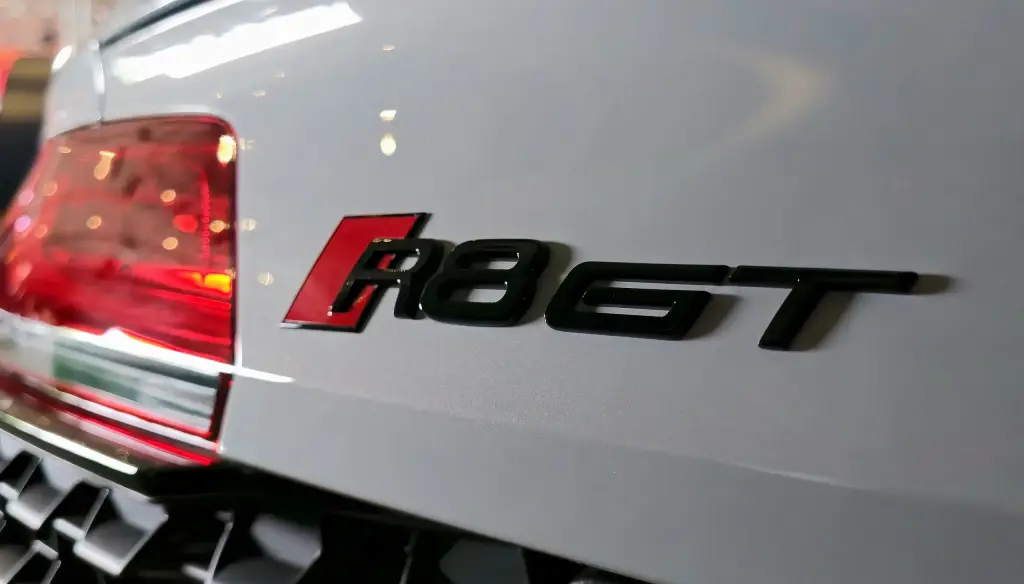
- R8 GT: the 2023 farewell model with 620 hp, limited to 333 cars.
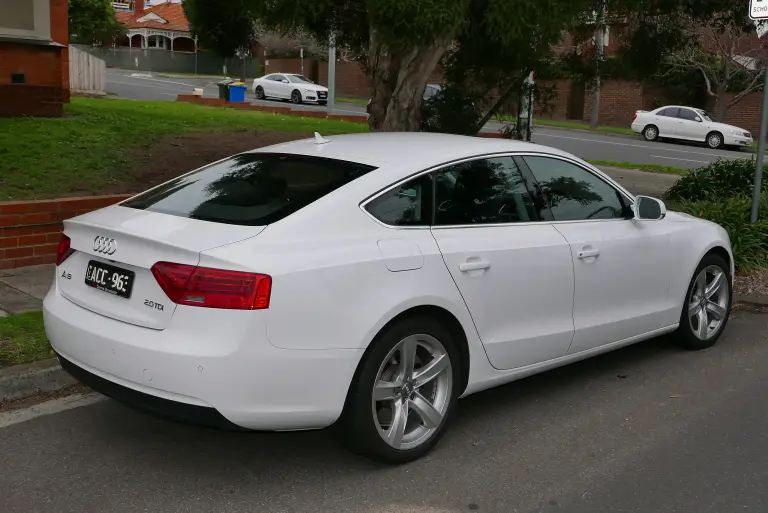
The R8 is Audi’s top sports car above the Audi TT; more models are in our Audi collection, including the A5 coupé.
Video: Audi R8 Spyder | GRIP #108
Video by GRIP – Das Motormagazin on YouTube.
Sources
- Audi R8, English Wikipedia: Type 42 and Type 4S, engines, production
- Audi R8, German Wikipedia: production numbers, end of the line, registrations
- Audi R8, Italian Wikipedia: generations and performance figures