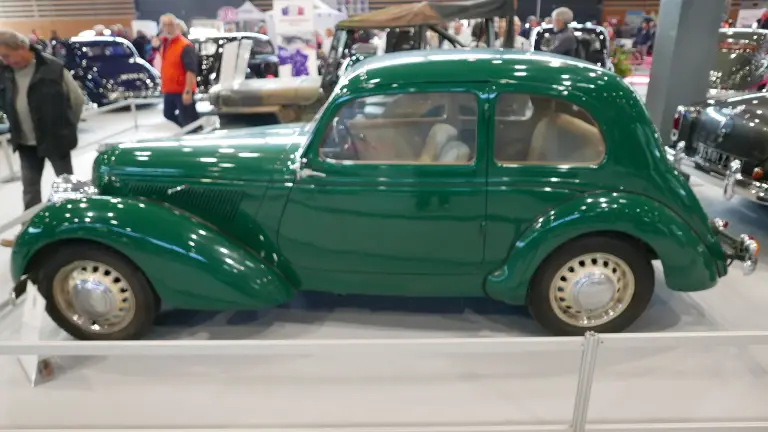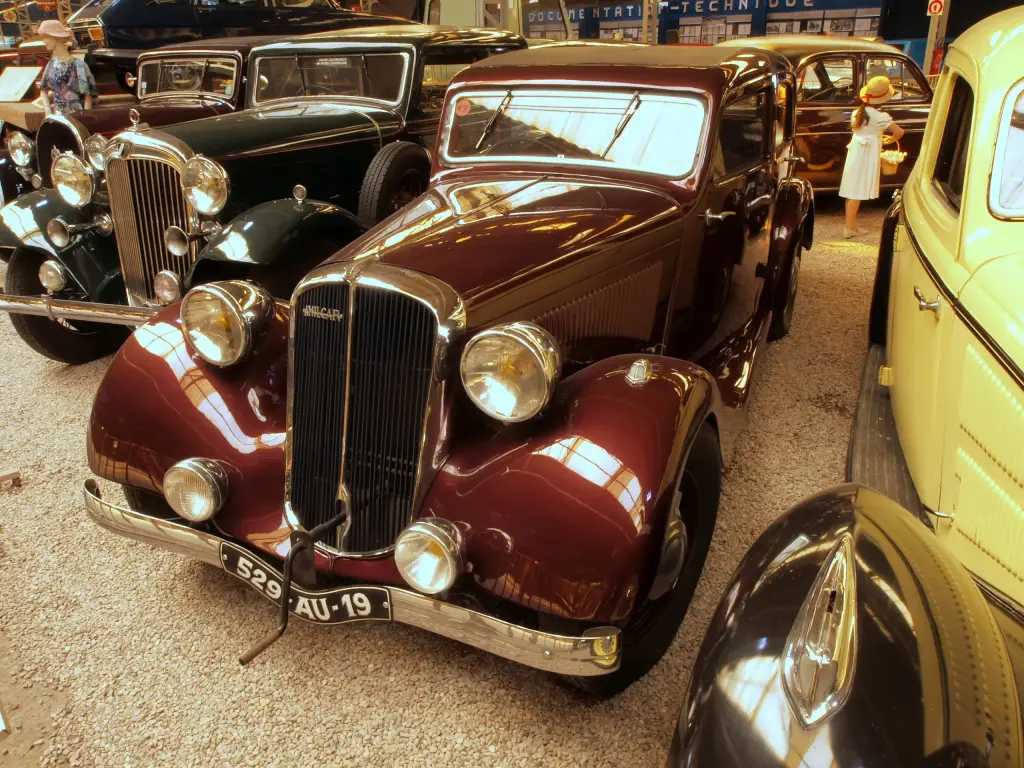
The Amilcar Pégase was a mid-sized car built by the French Amilcar company between 1934 and 1937. Its 2,150 cc four-cylinder engine placed it in the 12CV tax band, and its bodies carried the streamlining that was fashionable in the middle of the 1930s. After 1935 the Pégase was the only model the firm still listed.
Amilcar Pégase at a glance
| Maker | Amilcar, France |
|---|---|
| Production | 1934–1937 |
| Class | mid-sized car, 12CV tax band |
| Engine | 2,150 cc four-cylinder, supplied by Delahaye |
| Output | 58 bhp (43 kW) |
| Top speed | about 130 km/h depending on body |
| Alternative engine | 2,490 cc, 14CV, 75 bhp, built in-house in 1935 |
| Bodies | eleven promised for 1936, reduced to four in October 1936 |
| Body names | Skiff, Fleuret, Amazone, Saint-Hubert |
| Chassis price, 1936 show | 26,900 francs |
| Complete car prices | 37,900 to 42,900 francs |
There is no French Wikipedia article on the Pégase, so this page is based on one source.
History of the Amilcar Pégase
A car for the final struggle
The Pégase arrived in 1934, as Amilcar fought for survival in a shrinking market for small sporting cars. It was a much larger car than the firm’s 1920s models and was intended to compete in the middle of the French market. Its launch coincided with the last chapter of that struggle: the Amilcar works in Paris were closed in August 1934, and production continued from the very much smaller premises at Boulogne-Billancourt to which the company moved.
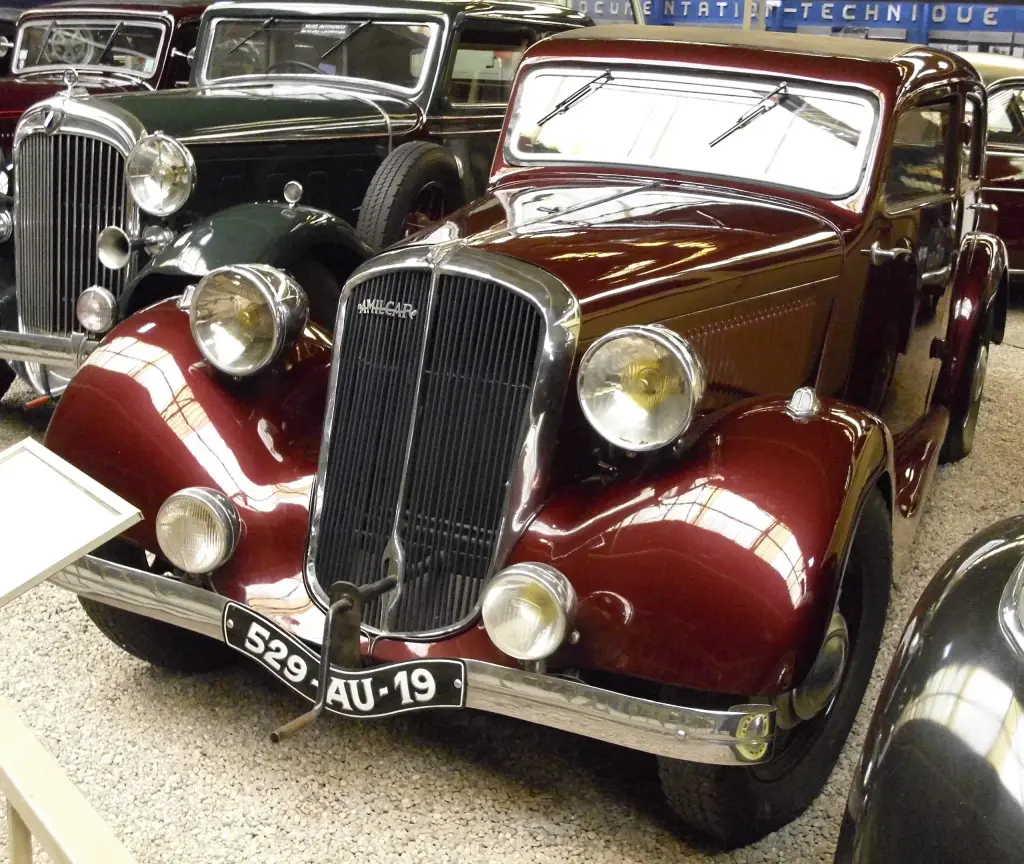
Engines by Delahaye
The car was first shown with a 2,120 cc overhead-camshaft four designed in-house by an engineer named Grillot. In the event Amilcar decided it was cheaper to use a similarly sized Delahaye engine, and it is doubtful whether any of the Grillot-engined 12CV cars were ever sold. The Pégase therefore went on sale with a 2,150 cc Delahaye four as used in the Delahaye 134N, tuned in the Amilcar to 58 bhp. The in-house team persisted, however, and in 1935 a larger 2,490 cc competition engine by Grillot joined the list with up to 75 bhp.
Bodies and prices
Amilcar had no facilities for making steel bodies, so these came from outside coachbuilders. Publicity for the 1936 model year promised no fewer than eleven body types; by October 1936 that had been reduced to four: the Skiff two-seater roadster, the Fleuret two-door four-seater cabriolet, the Amazone two-door four-seater coupé and the Saint-Hubert four-door four-seater saloon. At the 1936 motor show the 2,150 cc chassis cost 26,900 francs, and complete cars ranged from 37,900 francs for the Amazone to 42,900 for the Fleuret and Skiff.
The end
The Pégase continued after the old works closed, and there were enough cars for a good showing at the 1935 show; by the 1936 show the 14CV car was no longer displayed. It had no place in Hotchkiss’s plans for the Amilcar name, and once Hotchkiss had taken control the Pégase was withdrawn from sale.
Design and features
- Aerodynamic styling: the bodies followed the streamlined fashion of the mid-1930s.
- Delahaye power: a proven 2,150 cc four of 58 bhp instead of Amilcar’s own design.
- Named bodies: Skiff, Fleuret, Amazone and Saint-Hubert, from two-seater roadster to four-door saloon.
- In-house competition engine: a 2,490 cc unit of up to 75 bhp added in 1935.
- Coachbuilt flexibility: outside suppliers allowed a wide choice of bodywork.
Amilcar Pégase versions
- Skiff: two-seater roadster, 42,900 francs with body in 1936.
- Fleuret: two-door four-seater cabriolet, 42,900 francs.
- Amazone: two-door four-seater coupé, 37,900 francs.
- Saint-Hubert: four-door four-seater saloon.
- 14CV: the 2,490 cc in-house engine, listed in 1935 and gone from the 1936 show.
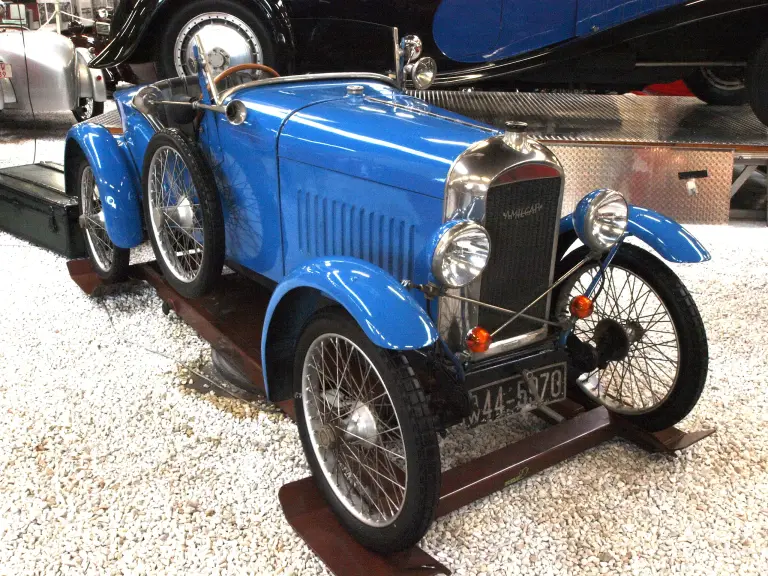
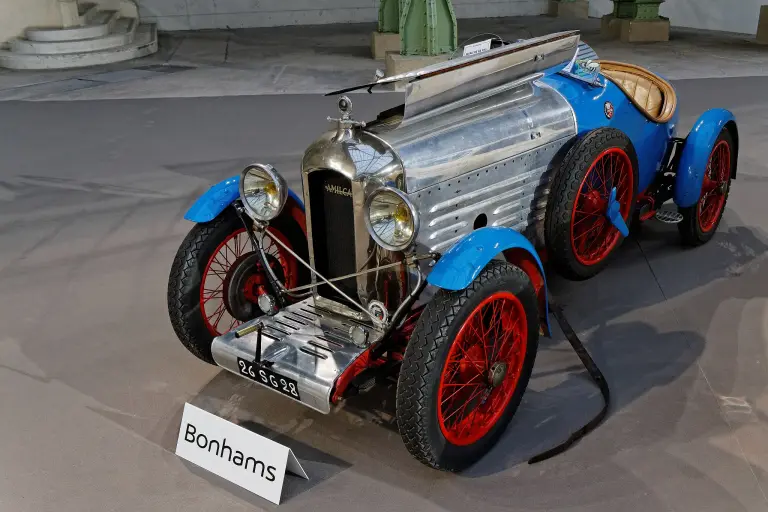
The Pégase was the last Amilcar design before the Hotchkiss takeover, which produced the front-wheel-drive Compound. The early cars were very different: see the CC and the CGS. More cars are in the Amilcar collection.
Sources
- Amilcar Pégase, English Wikipedia: engines, bodies, prices, production history