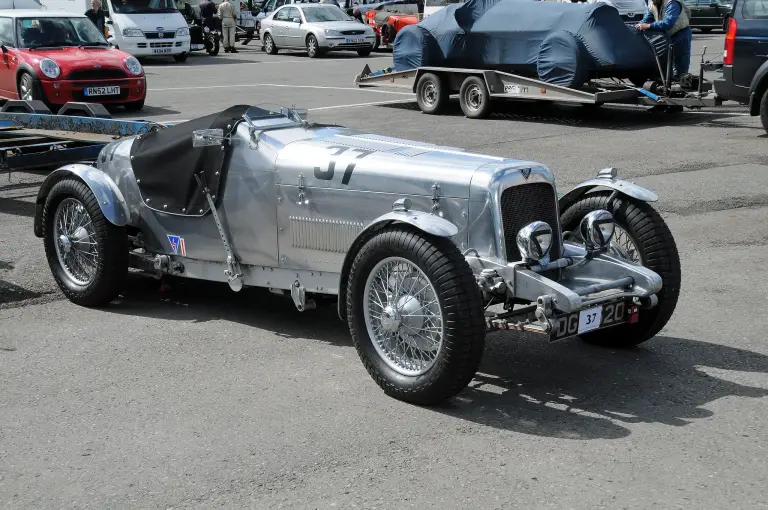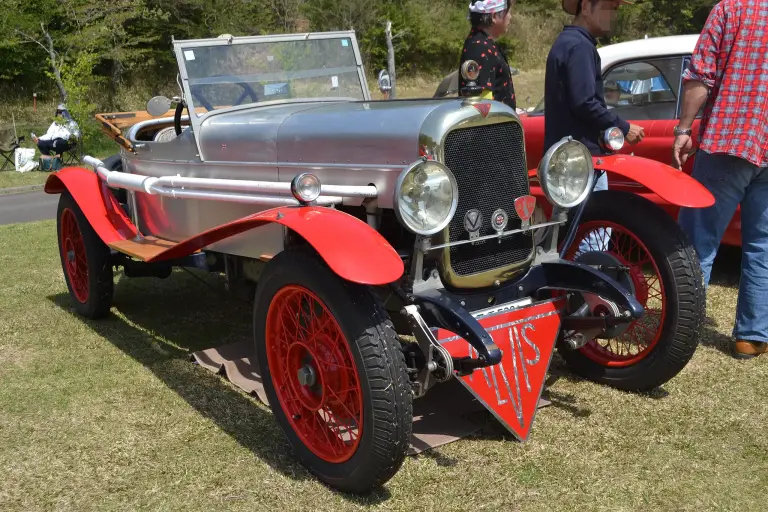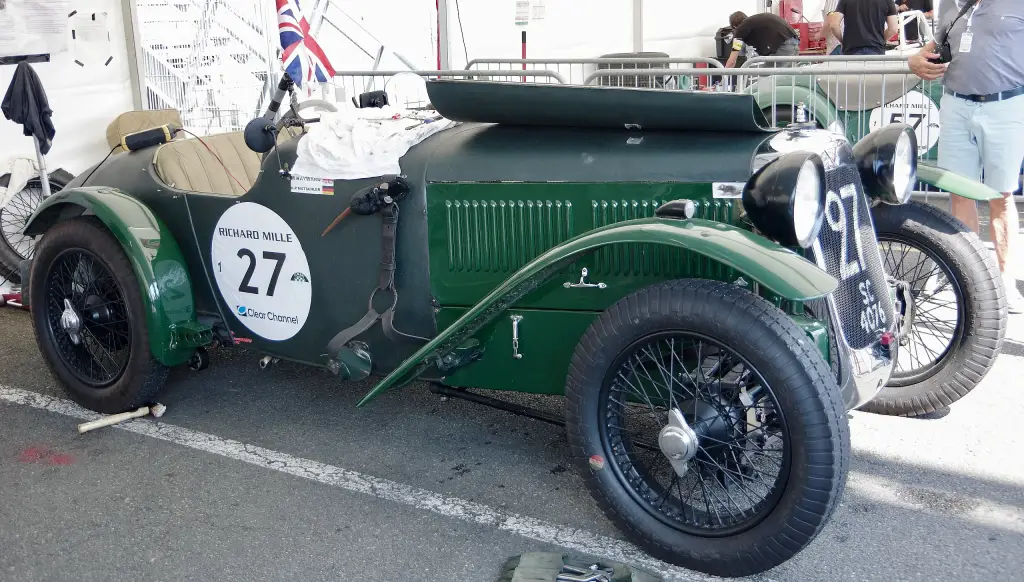
The Alvis FWD, also called the Alvis 12/75, is a car produced by Alvis from 1928 to 1930. It was one of the first production road cars with front-wheel drive, hence the name FWD.
Alvis FWD at a glance
| Production | 1928–1930, about 155 cars |
|---|---|
| Engine | 1,482 cc four-cylinder, overhead camshaft, single Solex carburettor, 50 bhp at 5,500 rpm |
| Optional | supercharger, twin Solex carburettors, lower compression (5.0:1 instead of 5.7:1): up to 75 bhp |
| Top speed | about 136 km/h |
| Suspension | independent on all four wheels, quarter-elliptic transverse leaf springs |
| Wheelbase | 2,591 mm (FA, FD); 3,048 mm (FB, FE) |
| Eight-cylinder 8/15 | 1,491 cc, two overhead camshafts, 125 bhp, top speed 104 mph (167 km/h) |
This page is based on English Wikipedia only, so the figures could not be cross-checked against a second source.
History of the Alvis FWD
The model was completely redesigned and bore little resemblance to the previous Alvis road cars. It grew out of the experience Alvis had gained with front-wheel drive in motorsport since 1925, and was meant to replace the 12/50 SD, TG and TH while addressing a younger, more technically open-minded group of buyers in the mid-range segment.
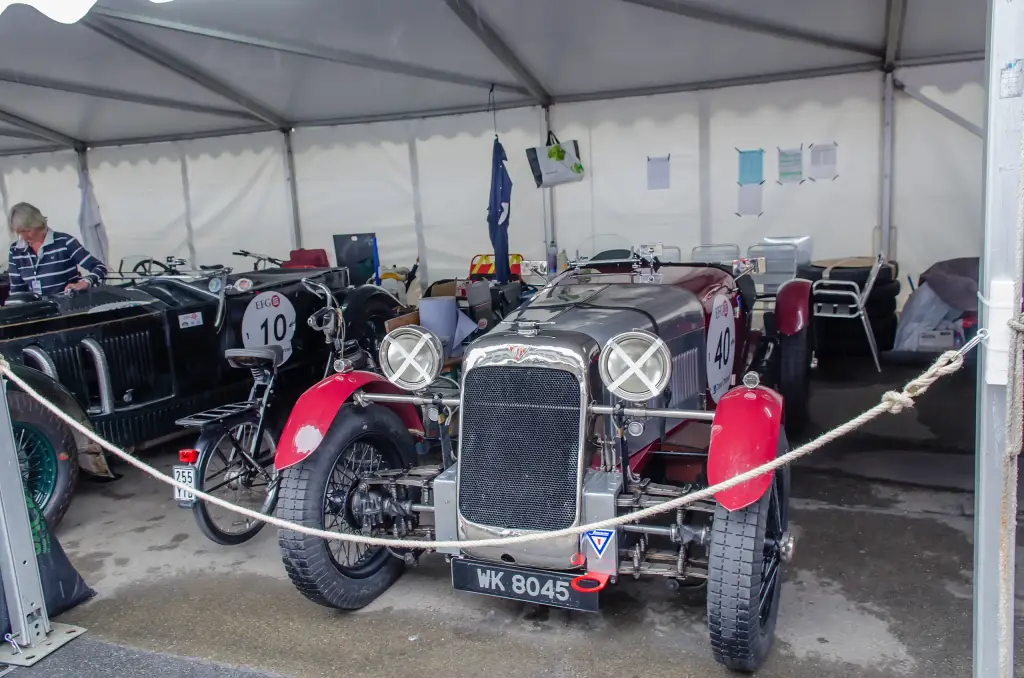
In 1929 a roadster appeared on the long chassis with an eight-cylinder, twin-overhead-camshaft engine, the 8/15, which produced 125 bhp, reached 104 mph and was successful in several races. It was dropped in 1930 without a replacement.
Commercially the FWD was a failure and worsened the company’s financial crisis: the technology was not yet mature enough for everyday use, the break with habit was too great for the conservative customers, and the launch coincided with the Great Depression. After restructuring Alvis replaced it with the more conservative 12/50 TJ.
Design and features
- Drive: front-wheel drive.
- Suspension: four-wheel independent, quarter-elliptic transverse springs similar to double wishbones.
Alvis FWD versions
- FA and FD: short wheelbase.
- FB and FE: long wheelbase (FB only in 1928).
- 8/15: the eight-cylinder roadster of 1929.
More Alvis cars are in our Alvis collection, for example the Silver Eagle and the Firefly.
Alvis FWD questions and answers
What does FWD stand for?
Front Wheel Drive.
How many were built?
About 155.
Why did it fail?
The advanced technology was immature, the customers conservative, and it appeared at the start of the Great Depression.
Sources
- Alvis FWD, English Wikipedia: history and specifications