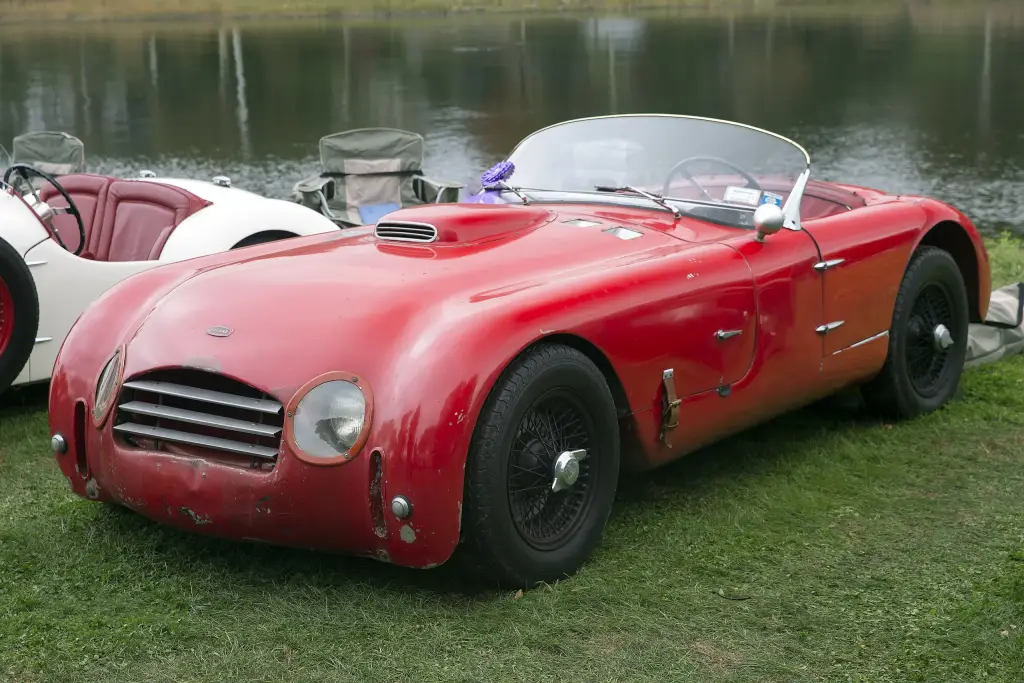
The Allard J2X was the 1952 replacement for the J2. The engine was moved about 18 centimetres forward and the nose extended beyond the front wheels, giving more leg room, better weight distribution and an easy way to tell the two models apart.
Allard J2X at a glance
| Maker | Allard Motor Company, Clapham, London |
|---|---|
| Production | 1952–1954 |
| Built | 83 |
| Body | two-seat open roadster, aluminium |
| Change from J2 | engine about 18 cm (7.1 in) further forward, longer nose |
| Engine position | nose extends beyond the front wheels |
| Bonnet | standardised wide flat scoop |
| Engine access | side panels in the body |
| Options | quick-change differential ratios, larger fuel tank |
| Power | 170 hp |
| 0–60 mph | 10 seconds |
| Top speed | 111.6 mph (179.6 km/h) |
The English Wikipedia page titled Allard J2X is a short list of cars that used the name; the technical description and the Le Mans history here come from the J2X sections of the English Wikipedia article on the Allard J2.
History of the Allard J2X
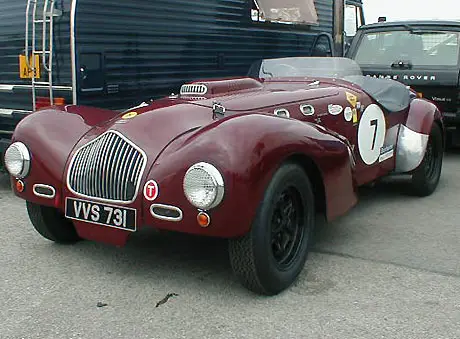
Allard redesigned the front suspension of the J2 so that the engine could sit about 18 centimetres further forward. The change improved weight distribution, gave the driver more leg room and produced the easiest visual clue between the two models: the “X” in J2X stood for extended, because the longer nose now stuck out beyond the front wheels where the J2’s stopped level with the front tyres.
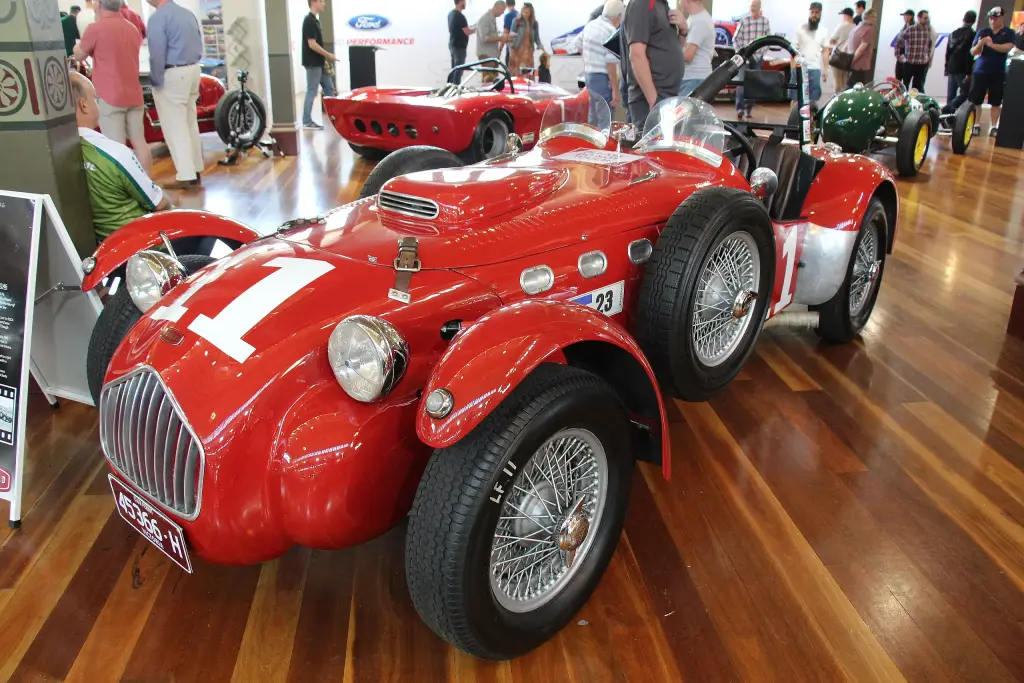
The J2X also gained side access panels for the engine and, on most cars, a standardised wide flat bonnet scoop; on the J2 almost every car had its own custom bonnet arrangement. A quick-change differential and a larger fuel tank were offered as options, while the interior stayed simple with only a few gauges. With a 170 hp engine the car could reach 60 mph in 10 seconds and a top speed of 111.6 mph.
For the 1952 Le Mans 24 Hours, new rules required fully enclosed wheels. Allard developed a barchetta-style body in a hurry and called the result the J2X Le Mans; between nine and fourteen were built, with various American V8s as usual. Two cars ran at Le Mans in 1952 and both retired in the fifteenth hour. The best results were a second place in a Formula Libre race at Snetterton that year and a handful of SCCA victories in America.
Design and features
- Engine moved forward: about 18 cm ahead of the J2 position for better balance and more leg room.
- Long nose: the body extends past the front wheels, the easiest way to identify a J2X.
- Standard bonnet scoop: a wide flat scoop replaced the individual bonnets of the J2.
- Side access panels: removable panels in the bodywork for work on the engine.
- Le Mans body: an enclosed-wheel barchetta version built for the 1952 race.
Allard J2X versions
- J2X (1952–1954): the standard roadster, 83 built.
- J2X Le Mans: enclosed-wheel barchetta for the 1952 regulations, nine to fourteen built.
- J2X2: a Canadian replica produced from 1981 with a fibreglass and aluminium body.
- J2X MkII: a modern glass-fibre lookalike built in Montreal with a GM V8.
- 2018 continuation: a British company restarted production of the original J2X design.
The J2X replaced the J2 and was the last of the J-series competition cars; the roadgoing K-Series used similar mechanical parts. More cars are in the Allard collection.
Video: 1953 Allard J2X MKII – Jay Leno’s Garage
Video on YouTube.
Sources
- Allard J2X, English Wikipedia: versions and continuations
- Allard J2, English Wikipedia: J2X and J2X Le Mans sections