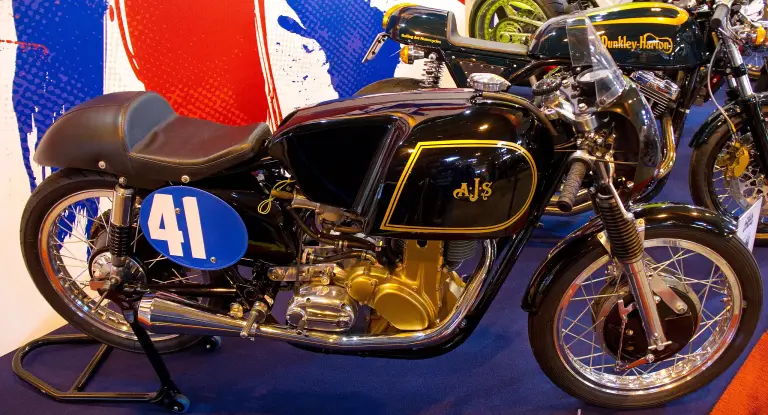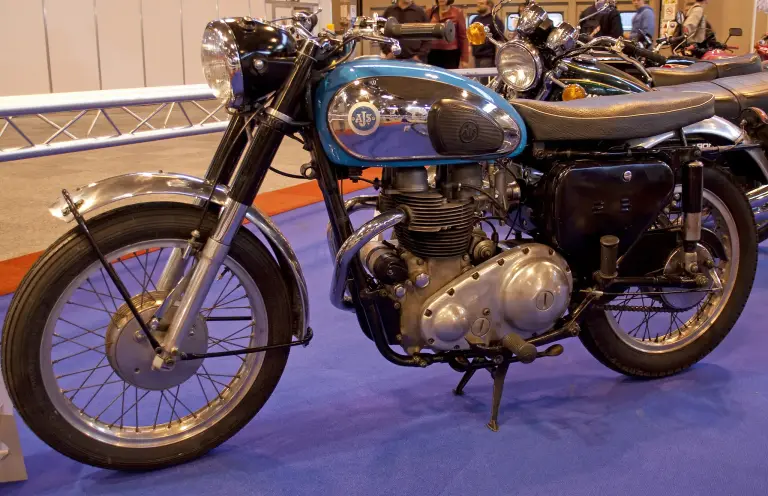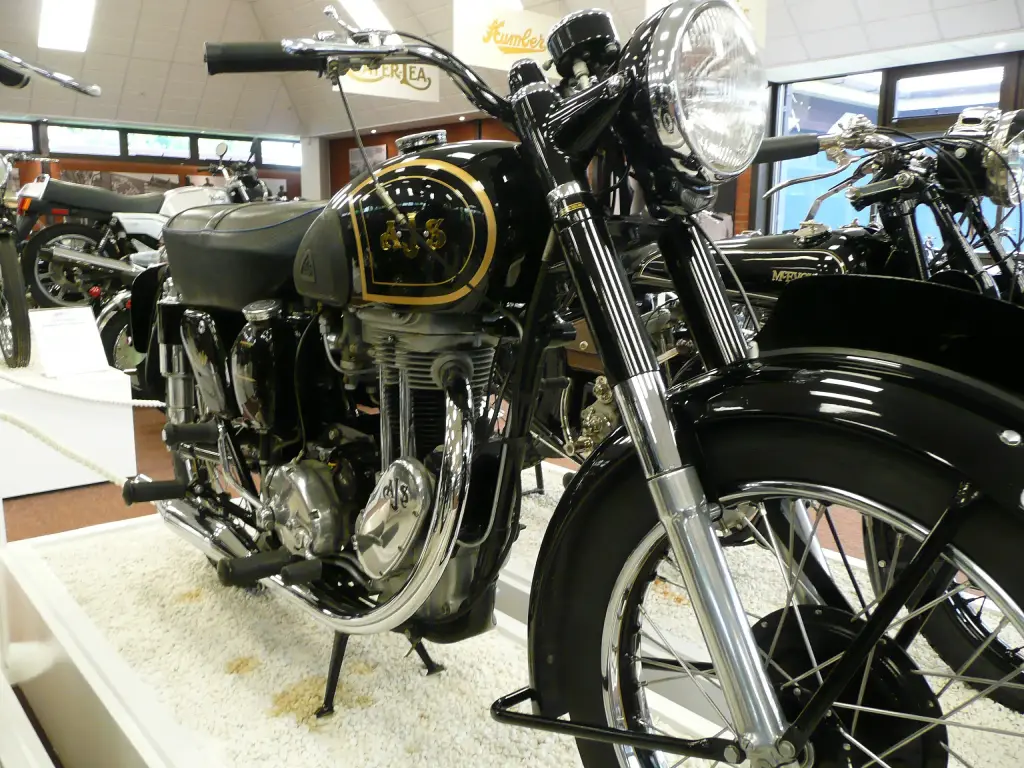
The AJS Model 16 was a British 350 cc single made by Associated Motor Cycles at the former Matchless works in Plumstead, London. Developed in 1945 from the military Matchless G3/L, it was simple, cheap to run and stayed in production well into the 1960s.
AJS Model 16 at a glance
| Maker | Associated Motor Cycles, Plumstead, London |
|---|---|
| Developed | 1945 |
| Based on | Matchless G3/L, the wartime 350 cc single |
| Engine | 350 cc pushrod single |
| Related model | Matchless G3L, almost identical |
| Rear suspension | rigid; pivoted rear suspension from 1949 (16MS) |
| Gearbox | Burman; AMC four-speed from 1956 |
| Electrics | Lucas crankshaft-mounted alternator from 1957 |
| Trials version | Model 16MC |
| US version | Model 16 Sceptre |
| Final version | Model 16C of 1964, 348 cc |
based on one source: the English Wikipedia article on the Model 16.
History of the AJS Model 16
From the G3/L
The rigid-framed AJS Model 16M 350 cc single was developed in 1945 from the military Matchless G3/L. Well proven in war service, the engine remained in production and sold in large numbers to the civilian market well into the 1960s. Simple and practical, the Model 16 needed minimal maintenance and was very economical, which made it ideal during petrol rationing. The company also sold an almost identical motorcycle as the Matchless G3L; the only real difference was that the Matchless carried its magneto at the rear of the cylinder barrel, while the AJS magneto sat at the front.
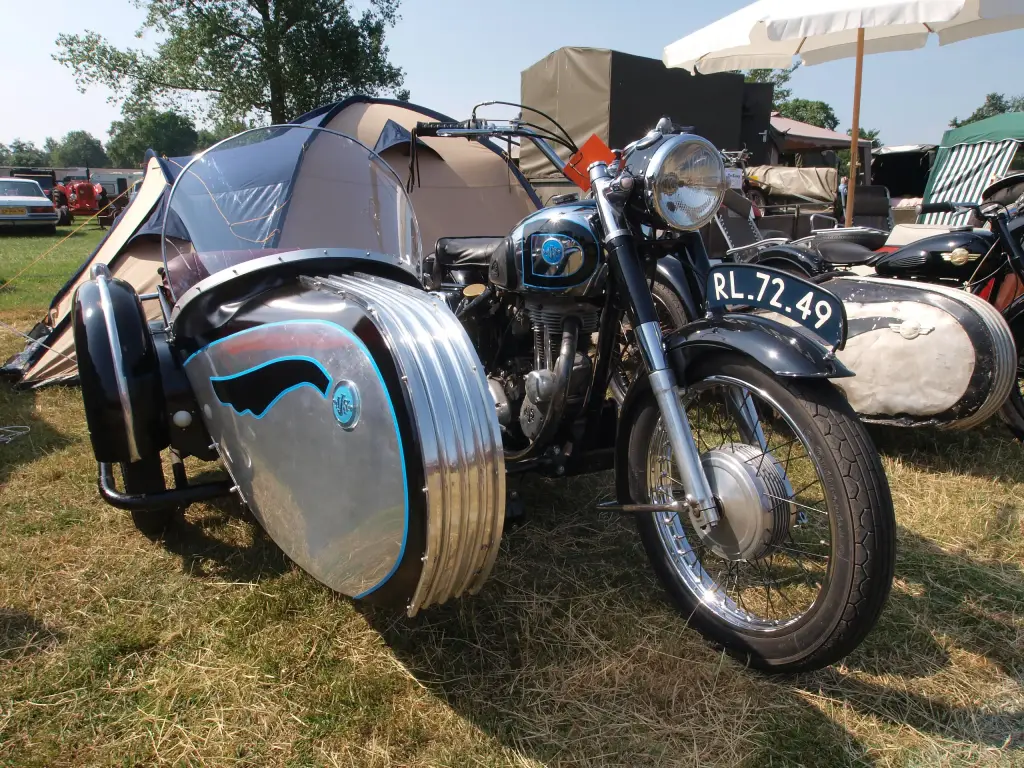
Springing and updates
Neither AJS nor Matchless adopted plunger rear springing. The Model 16 kept a rigid rear frame until 1949, when pivoted rear suspension controlled by hydraulically damped spring units designed and made by Matchless became available; the springer version carried the S designation, Model 16MS. In 1953 the 16M was modernised with a dual seat replacing the saddle and rear pillion seat. In 1956 the Burman gearbox gave way to a new four-speed unit of AMC’s own design, and in 1957 the outdated generator was replaced by a crankshaft-mounted Lucas alternator. The leaky pressed-steel primary drive cover was also swapped for an alloy casing.
Trials and competition
The rugged Model 16 was well suited to motorcycle trials, and the competition version took a C designation as the 16MC. It received a welded duplex tubular frame with an engine cradle to save weight, plus redesigned exhaust and footrests for better ground clearance; in 1957 the clearance was raised from 7 to 10 inches (180 to 250 mm). Hugh Viney, who led the AJS works team after the war, won the Scottish Six Days Trial on a 16MC at his first attempt in 1947 and repeated the win in 1948 and 1949. In the 1950s another works rider, Gordon Jackson, beat that record with four wins in the Scottish Trial.
The final years
In 1964 the AJS Model 16C appeared with a completely redesigned 348 cc engine in which the pushrods were housed in cast tunnels in the cylinder barrel. The 16C also used a Norton-designed geared oil pump for better lubrication. For the United States, AMC’s marketing team rebranded the ageing export Model 16 as the Sceptre, with new metal tank badges, steel flywheels instead of cast iron ones, a compression ratio raised to 9:1 and the Norton geared oil pump fitted as standard.
Design and features
- Economical single: low maintenance and low running costs, welcome in the years of petrol rationing.
- Matchless twin: sold alongside the near-identical Matchless G3L, differing mainly in magneto position.
- Progressive updates: dual seat in 1953, AMC four-speed gearbox in 1956, Lucas alternator and alloy primary cover in 1957.
- Trials pedigree: the 16MC won the Scottish Six Days Trial three years running with Hugh Viney.
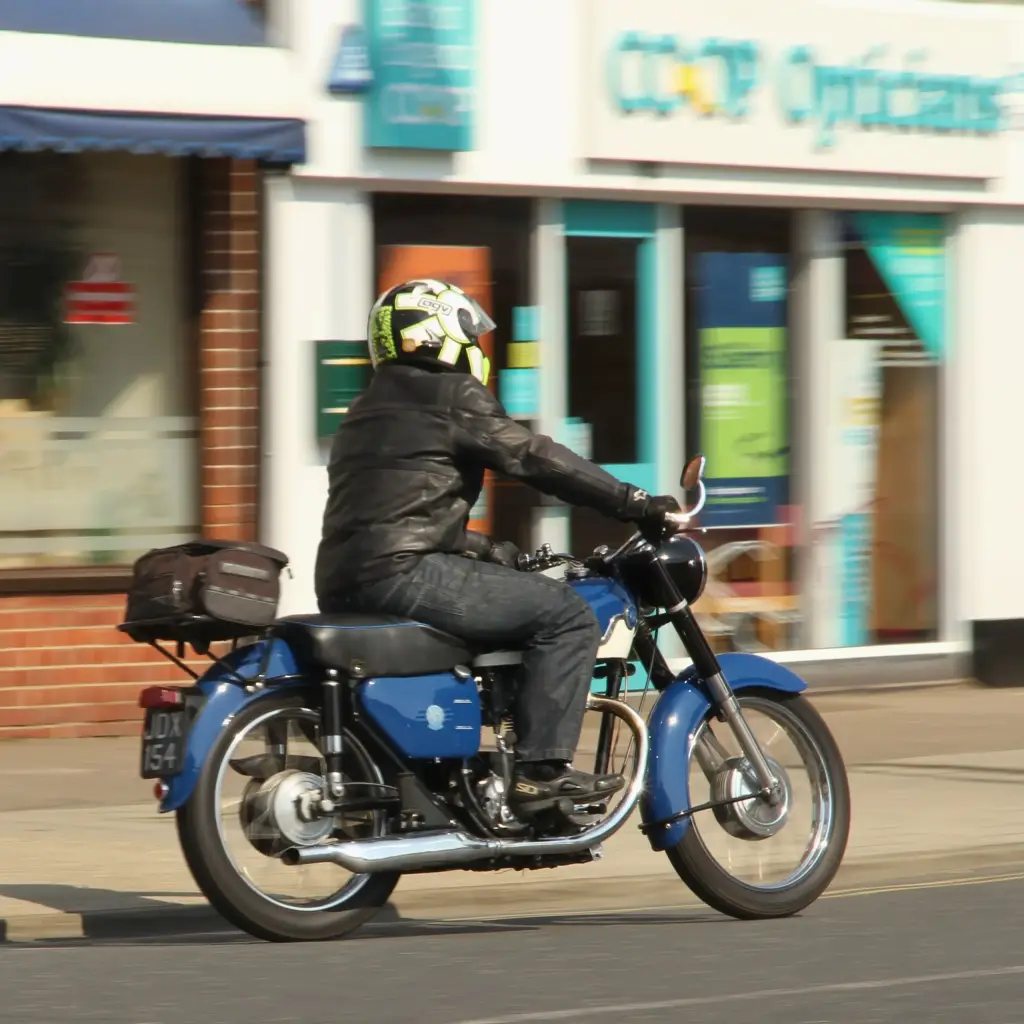
AJS Model 16 versions
- Model 16M: the standard rigid-framed 350 cc single.
- Model 16MS: sprung version with pivoted rear suspension from 1949.
- Model 16MC: trials version with a lighter duplex frame and greater ground clearance.
- Model 16C (1964): redesigned 348 cc engine with pushrod tunnels and a Norton oil pump.
- Model 16 Sceptre: US-market version with 9:1 compression and steel flywheels.
The Model 16 shared its Plumstead factory with the larger AJS Model 31 twin, and the racing AJS 7R came from the same works team. More motorcycles are in the AJS collection.
Sources
- AJS Model 16, English Wikipedia: development, versions, trials record