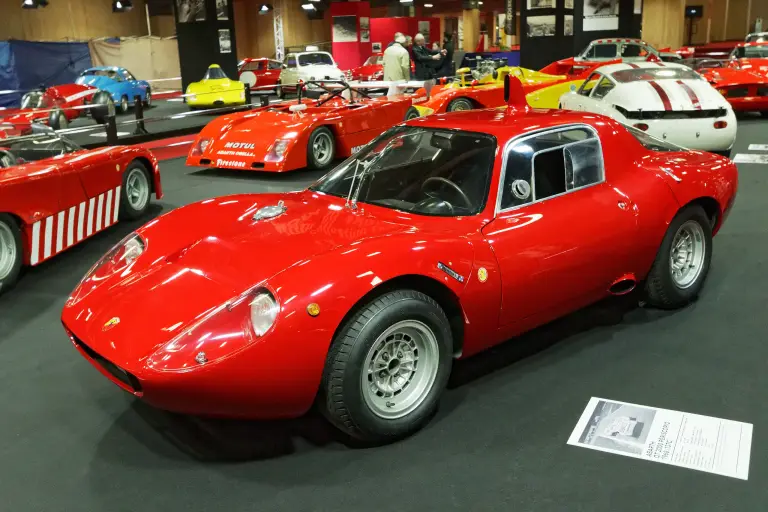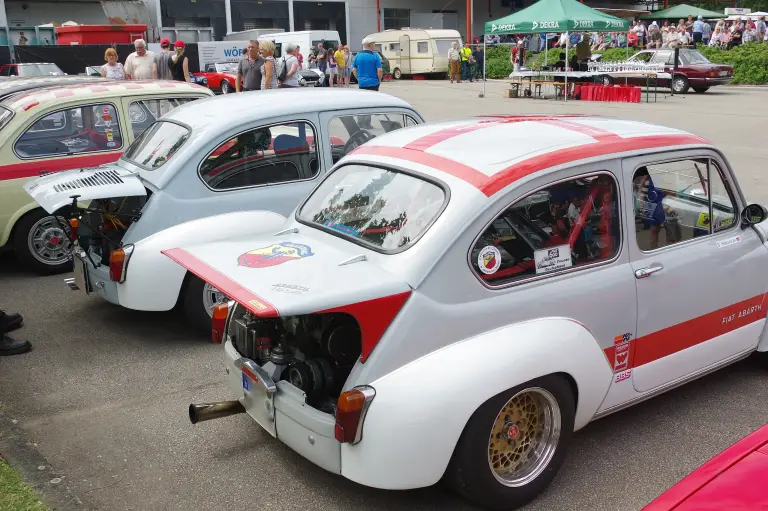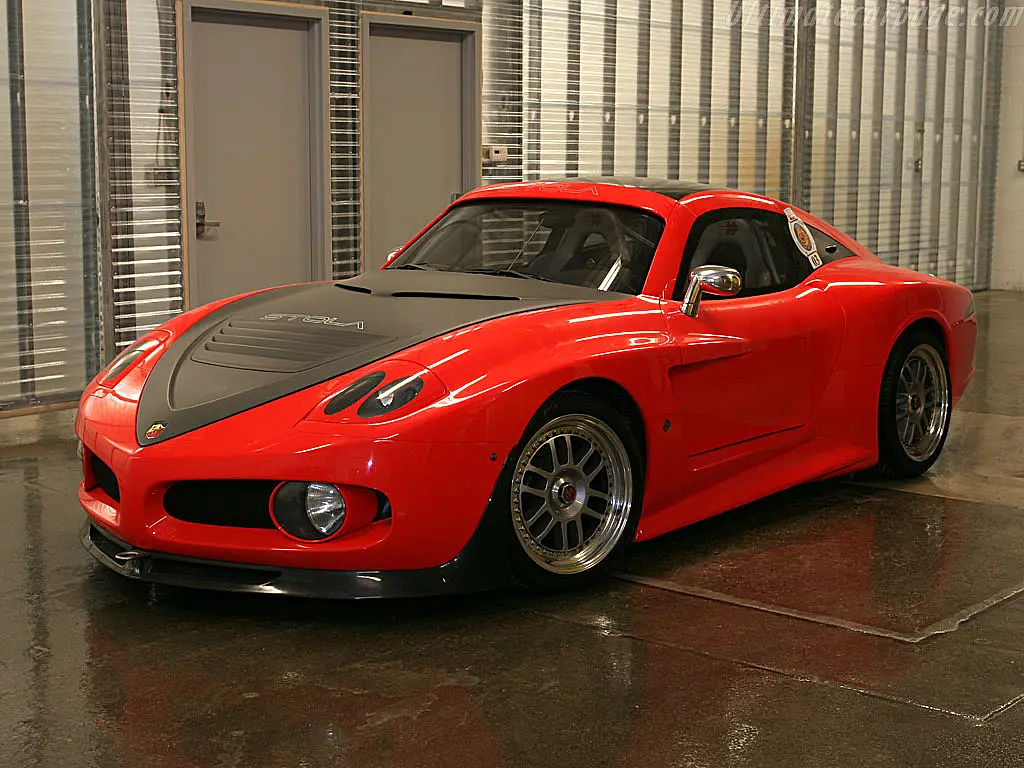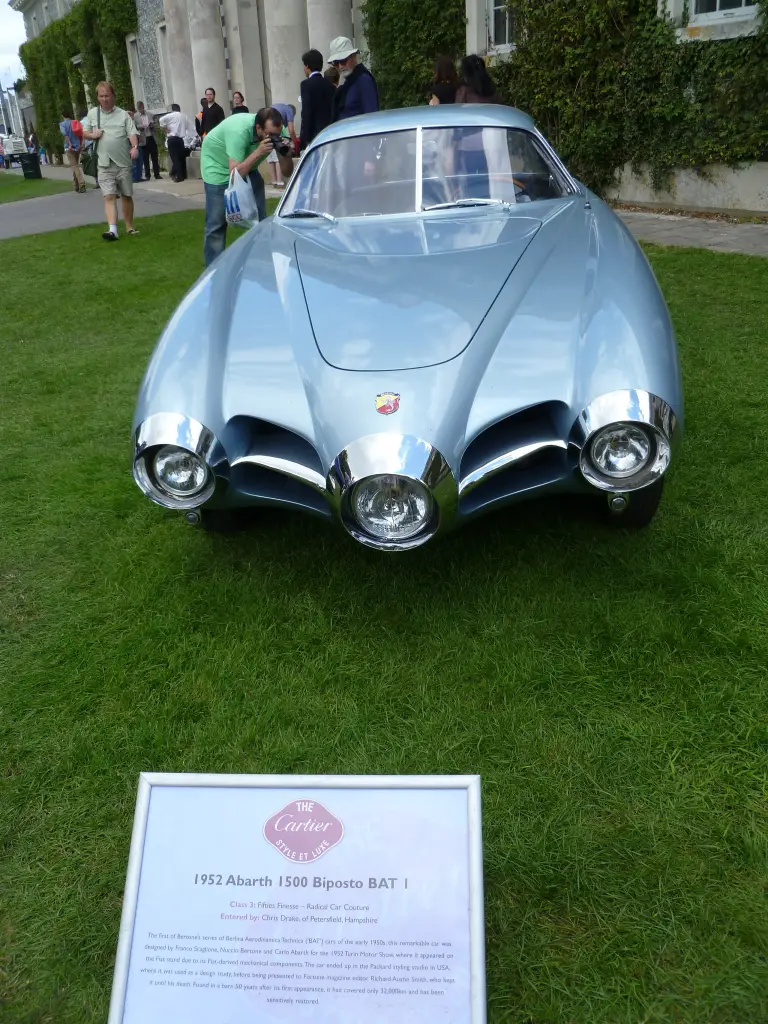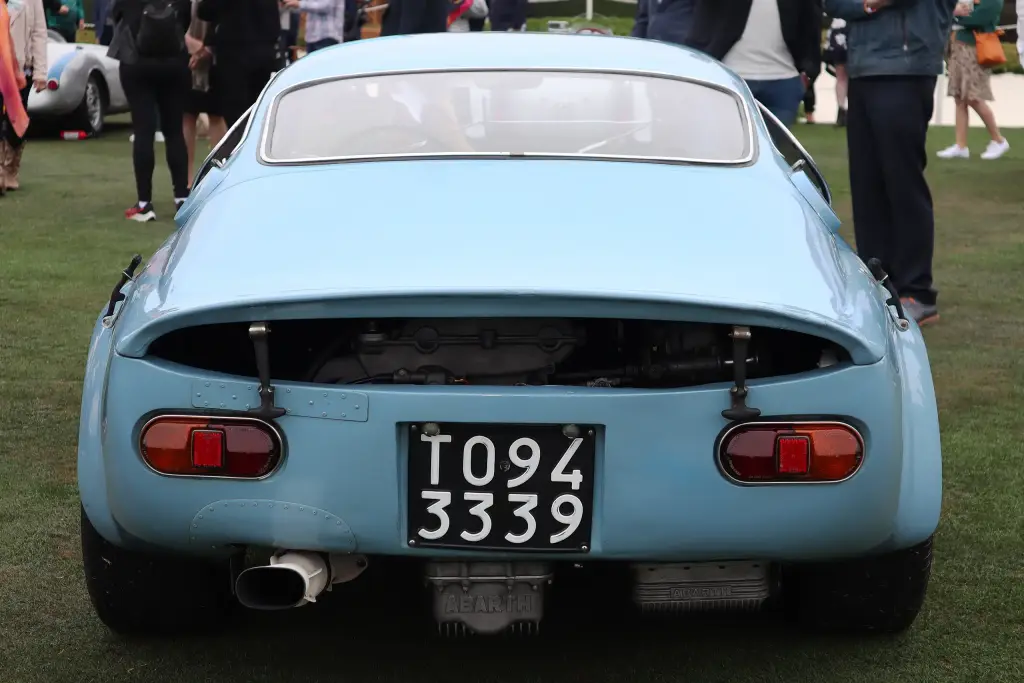
The Abarth Simca 1300 GT is a sports racing car that Abarth built in Turin from 1962 to 1965 on the mechanics of the Simca 1000. It was the first car born from the cooperation between Carlo Abarth and Simca, and it paired a shortened Simca floorpan with a new aluminium coupé body and an Abarth-designed twin-cam engine. This page covers its history, design, versions and the questions readers ask most often.
Abarth Simca 1300 GT at a glance
| Manufacturer | Abarth & C., Turin, with Simca |
|---|---|
| Production years | 1962–1965 |
| Model code | AB 130 (Spider Sport: AB 130S) |
| Layout | Rear engine, rear-wheel drive; shortened Simca 1000 floorpan |
| Engine | 1,288 cc four-cylinder, twin cam, two Weber 45DCOE carburettors |
| Bore × stroke | 76 mm × 71 mm |
| Compression ratio | 10.4:1 |
| Power | 125–127 hp (92–93 kW) at 6,000 rpm |
| Top speed | about 230 km/h (143 mph) |
| Body | Aluminium coupé; Spider Sport on a tubular chassis |
| Homologation | Grand Touring, 8 October 1962 |
| Related models | Abarth Simca 1600 GT (1963); Abarth Simca 2000 GT |
The English and Italian articles give 125 hp (92 kW); the French article gives 127 ch, so the table shows the range.
History
From the Simca 1000 to the 1300 GT
By the early 1960s Abarth’s Fiat 600-based cars had reached their potential, and Carlo Abarth looked for a new base with better tuning prospects. The Simca engine, with its crossflow cylinder head, offered exactly that. Simca, led by Henri Théodore Pigozzi, wanted a sporting version to strengthen the brand at the launch of the Simca 1000, as Fiat had done for years in Italy. The negotiations were mediated by the Austrian engineer Rudolf Hruska, who had worked with Abarth at Cisitalia in 1949 and was a technical consultant at Simca in the early 1960s.
An agreement was signed at the start of 1961 for two cars: a sports car built from the production saloon but with a 1,150 cc engine, and a competition coupé with a new engine designed by Abarth. It was the first complete project ever entrusted to Abarth, who until then had mostly prepared or modified existing cars.
The 1300 used a shortened floorpan of the Simca 1000, keeping the chassis, gearbox, steering and both axles. The body was completely new: an aluminium coupé whose rounded lines followed Abarth’s Zagato-styled cars such as the Fiat-Abarth 850 and 1000. The project was led by Abarth’s chief engineer Mario Colucci, and the bodies were built by small Turin firms, Beccaris at first and from 1963 entirely by Carrozzeria Sibona-Basano. Early cars had a rounded rear, later replaced by the cut-off “coda tronca” tail.
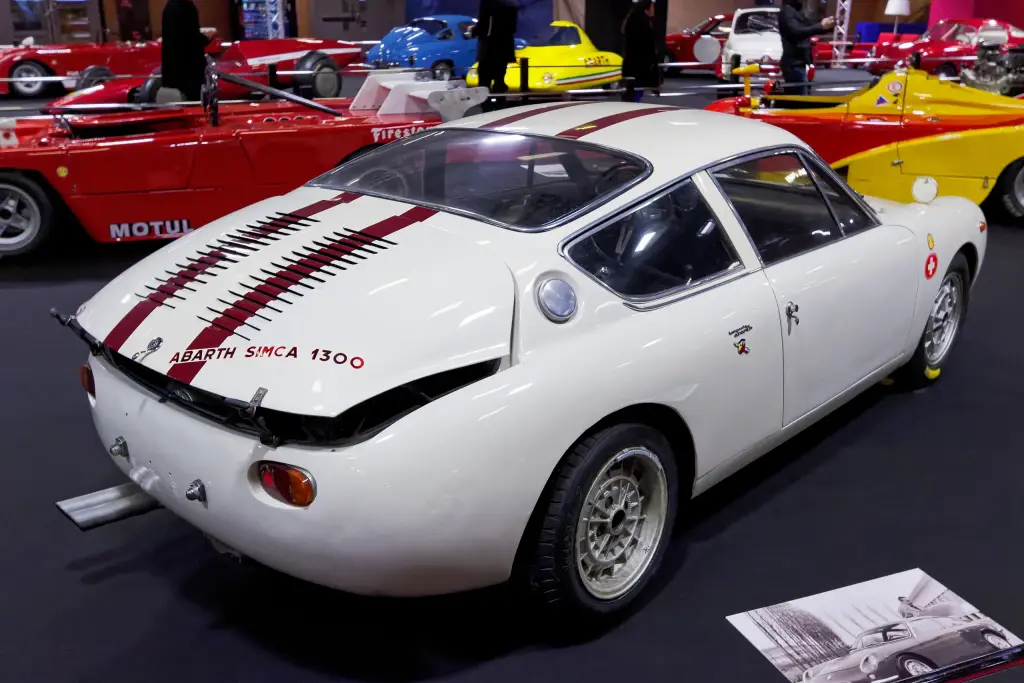
The engine was redesigned around the Simca block. Still mounted at the rear, it grew to 1,288 cc with a bore and stroke of 76 mm × 71 mm, and received an Abarth-designed twin-cam cylinder head driven by chains. The compression ratio was raised to 10.4:1, two twin-choke Weber 45DCOE carburettors were fitted, and the result was 125 hp at 6,000 rpm. Lubrication was by dry sump with two oil pumps, and a radiator was moved to the front. The road version reached about 230 km/h; the racing version was 20 km/h faster.
The car was officially presented at the Geneva Motor Show on 15 March 1962 and homologated in the Grand Touring category on 8 October 1962. Drivers immediately complained about its unpredictable handling and asked for a better chassis, which Simca’s budget did not allow; Abarth had to find other ways to make the car handle.
Racing career
The 1300 GT first raced on 14 April 1962 at the Lure hill climb near Dijon. Three Abarth Simcas were entered among 58 cars: one Spider Sport on a tubular chassis and two coupés. Jean Guichet set the best practice time in one of the coupés, Gianni Balzarini won in the Spider, and the two coupés finished second and third overall. Later that year Lucien Bianchi won the Trophée d’Auvergne at Clermont-Ferrand, and Guichet took a GT class win at the Autumn Cup in Monza.
At the 1962 24 Hours of Le Mans, Balzarini shared a 1300 with Franz Albert; their race ended after 30 laps with a transmission problem. Nine laps earlier the second 1300 Bialbero, driven by Henri Oreiller and Tommy Spychiger, had retired with the same fault. The gearbox was based on a Simca unit designed for about 40 PS (29 kW), and it could not withstand racing power for long.
In 1963 Hans Herrmann scored class victories at the 3 Hours of Daytona and the 12 Hours of Sebring. The English and Italian articles also list constructors’ titles in Division I of the International Grand Touring Championship for 1964 and 1965.
End of the Abarth-Simca partnership
In 1964 Simca was taken over by the American Chrysler Corporation. The new owners stopped the cooperation with Abarth because of his close ties to Fiat; according to the French article, the agreement ended on 31 December 1964, and the last Abarth Simcas were sold in 1965. Abarth had already added the short-lived 1600 GT in 1963 and then concentrated on the 2000 GT, the last model of the range.
Design and features
- Shortened Simca 1000 floorpan with Simca chassis, gearbox, steering and axles.
- Rear-mounted 1,288 cc twin-cam engine with dry-sump lubrication and a front radiator.
- Hand-built aluminium coupé body in the rounded style of Abarth’s Zagato-designed cars.
- Early rounded tail, later replaced by the cut-off “coda tronca” rear.
- Spider Sport version built on an Abarth tubular chassis, outside the Simca agreement.
- About 230 km/h for the road GT, with the racing version 20 km/h faster.
Variants
- Abarth Simca 1300 GT: the coupé described here, in road and racing form.
- Abarth Simca 1300 GT Spider Sport (AB 130S): a roadster on an Abarth tubular chassis, developed on Carlo Abarth’s own initiative and not part of the Simca agreement; it won the first race it entered.
- Abarth Simca 1600 GT: presented on 15 February 1963 with a 1,592 cc engine, 138 hp at 7,800 rpm, five main bearings, twin spark plugs, a 10.8:1 compression ratio and a six-speed gearbox. Its life was cut short when the 1600 cc Grand Touring category was abolished in the summer of 1963.
- Abarth Simca 2000 GT: the last model of the range, presented at the Geneva Motor Show on 15 March 1963 with the factory code AB 136.
- 1300 Bialbero: the racing version of the 1300, 20 km/h faster than the road GT.
See also: the Abarth 595, the Abarth 850, the Abarth 1000, the Abarth OT and the Abarth collection.
Abarth Simca 1300 GT questions and answers
What is the Abarth Simca 1300 GT?
A sports racing car built by Abarth from 1962 to 1965 on a shortened Simca 1000 floorpan, with an Abarth-designed aluminium body and twin-cam engine.
When was the Abarth Simca 1300 GT presented?
At the Geneva Motor Show on 15 March 1962. It was homologated in the Grand Touring category on 8 October 1962.
What engine did the Abarth Simca 1300 GT use?
A rear-mounted 1,288 cc four-cylinder with an Abarth twin-cam head, two Weber 45DCOE carburettors and dry-sump lubrication. Sources give 125–127 hp at 6,000 rpm.
How fast was the Abarth Simca 1300 GT?
The road GT reached about 230 km/h (143 mph); the racing version was 20 km/h faster.
Did the Abarth Simca 1300 GT race at Le Mans?
Yes. In 1962 Balzarini and Albert retired after 30 laps with a transmission problem, and a second car retired with the same fault nine laps earlier.
Why did Abarth stop building the Simca-based cars?
Chrysler took over Simca in 1964 and ended the cooperation with Abarth because of his ties to Fiat. The last Abarth Simcas were sold in 1965.
Video: Abarth Simca 1300
Video by ちゅっちゅ on YouTube.
Sources
- Abarth Simca 1300 GT, English Wikipedia: history, agreement with Simca, design, engine, racing results and championships
- Abarth-Simca 1300 Bialbero, Italian Wikipedia: description, body builders, racing career and titles
- Abarth Simca GT, French Wikipedia: 1961 agreement, Geneva debut, 127 ch power figure, 1600 GT and 2000 GT
- Abarth-Simca 1300 Bialbero, German Wikipedia: Hruska’s role, Colucci, body builders and racing results
- Abarth, English Wikipedia: company background and the Abarth-Simca models in the list of cars