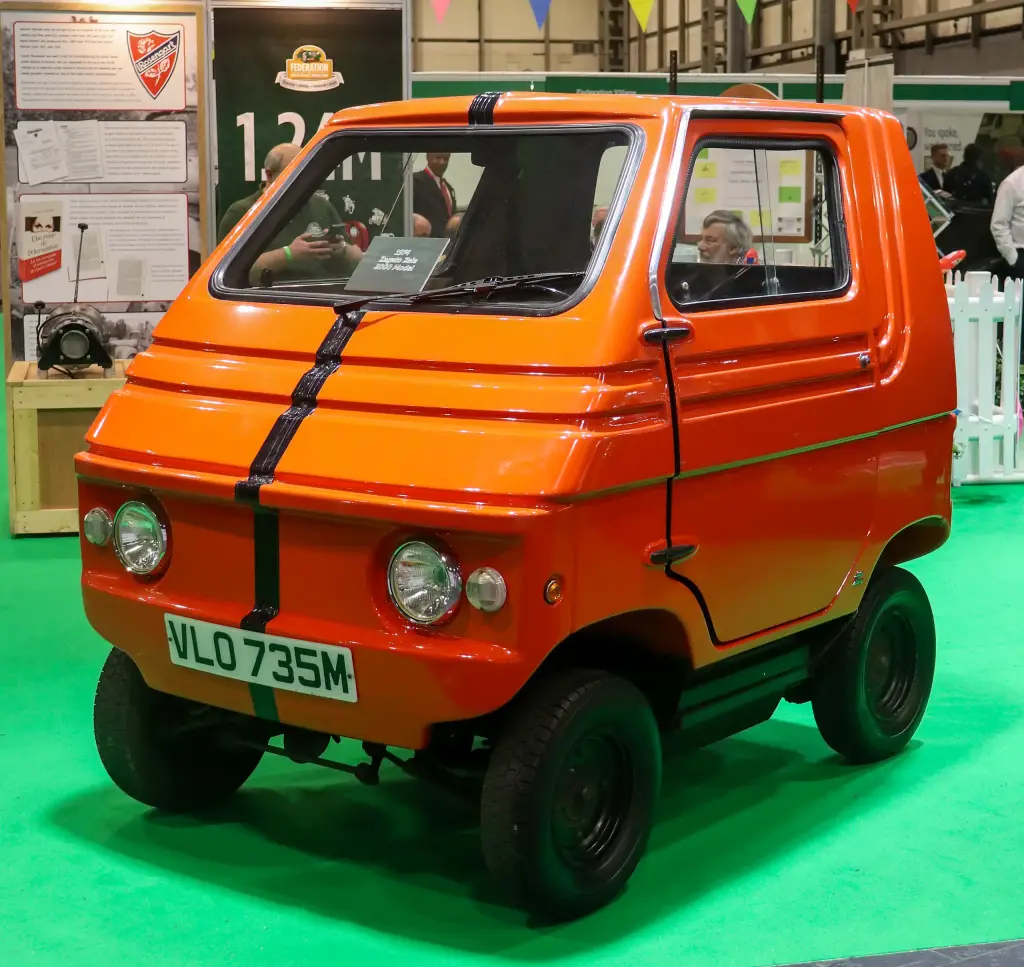
The Zagato Zele 1000, 1500 and 2000 were electric microcars built by the Milan coachbuilder Zagato between 1974 and 1976. A fibreglass two-seater with chassis and suspension derived from the Fiat 500 and Fiat 124, it was sold in the United States as the Elcar. About 500 were made.
Zagato Zele at a glance
| Maker | Zagato, Milan |
|---|---|
| Also sold as | Elcar, in the United States |
| Production | 1974–1976 |
| Body | fibreglass, two-seat microcar |
| Chassis | derived from the Fiat 500 and Fiat 124 |
| Versions | Zele 1000, Zele 1500, Zele 2000 (motor rating in watts) |
| Top speed | 25–30 mph |
| Range | about 50 miles (80 km) |
| Controls | four-position speed selector and two-position foot pedal |
| Gearbox | six forward and two reverse speeds |
| Colours | seven, from orange-red to metal-flake blue |
| Built | approximately 500 |
The model details come from the English Wikipedia article on the Zele; the Italian article on Zagato provides the background of the company.
History of the Zagato Zele
A design house turns to small electric cars
Zagato was founded in Milan in 1919 by Ugo Zagato, who had worked in the aircraft industry and applied its methods to car bodies: light, shaped steel frames covered with aluminium panels. The company became known for special versions of production models from Lancia, Maserati, Alfa Romeo and Aston Martin. From the 1970s, as orders from the large manufacturers fell away, Zagato under Ugo’s son Elio began to take an interest in industrial design, and the Zele, an electric city car rather than a sports car, belongs to that period.
The Zele, 1974–1976
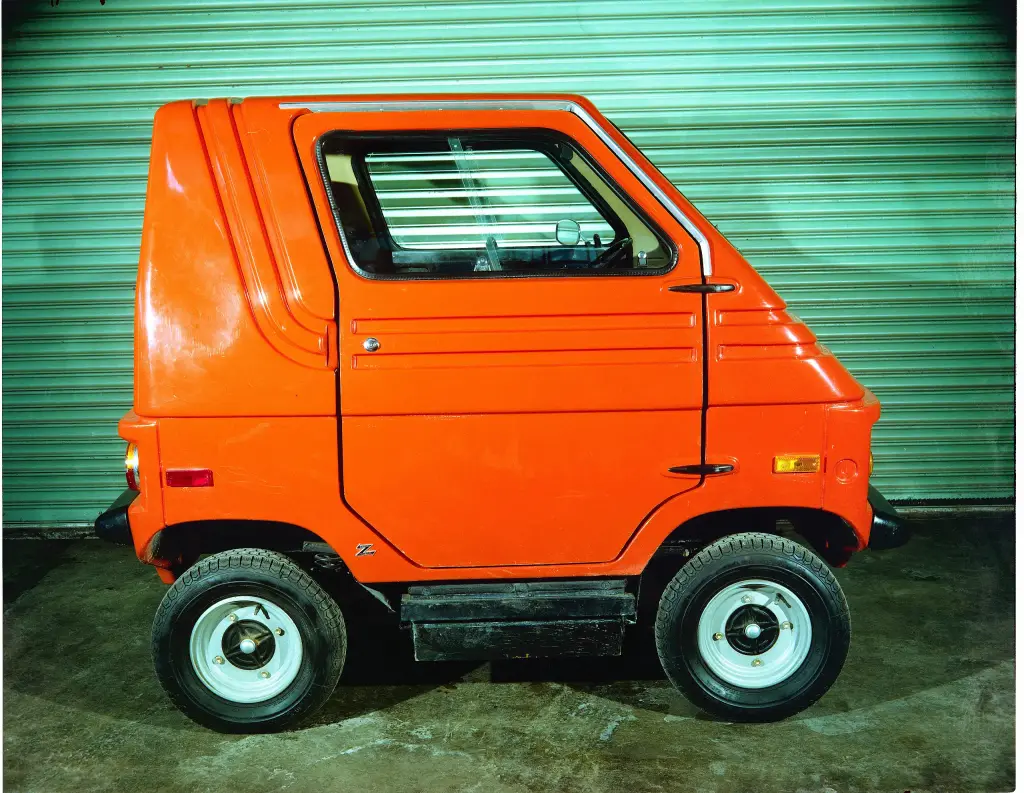
The Zele was an unusual departure for a company whose designs had long been known for their beauty and performance. It was high, square-cornered and had a low top speed. The body was made of fibreglass, while the chassis and suspension were derived from the Fiat 500 and the Fiat 124. It came in three versions, the Zele 1000, 1500 and 2000, whose numbers stood for the wattage of their motors. Cars were painted in seven colours: orange-red, brown, dark blue, pastel blue, white, green and metal-flake blue. Production ran from 1974 to 1976, and about 500 were made.
On the road
Drive was controlled by a four-position speed selector and a two-position foot pedal, giving six forward speeds and two reverse. Range was approximately 50 miles (80 km), and top speed was between 25 and 30 mph. The Zele 2000 also had a boost switch: once at top speed it weakened the magnetic fields in the motor’s field coils, producing less torque but a greater top speed.
The Elcar
In the United States the Zele was sold as the Elcar by the Elcar Corporation, the country’s importer for the vehicle. The same company created an elongated four-seat prototype called the Elcar Wagonette.
Design and features
- Fibreglass body: a light shell over running gear taken from the Fiat 500 and Fiat 124.
- Six forward speeds: a four-position selector and a two-position pedal did the work of a gearbox.
- Boost switch on the 2000: field weakening traded torque for a higher top speed.
- Upright, square body: a city car shape far removed from Zagato’s sports coupés.
- Seven colours: including metal-flake blue, unusual for a small electric vehicle of the period.
Zagato Zele versions
- Zele 1000: the 1,000-watt version.
- Zele 1500: the 1,500-watt version.
- Zele 2000: the 2,000-watt version, with a boost switch for a higher top speed.
- Elcar: the name under which the car was sold in the United States.
- Elcar Wagonette: an elongated four-seat prototype built by the American importer.
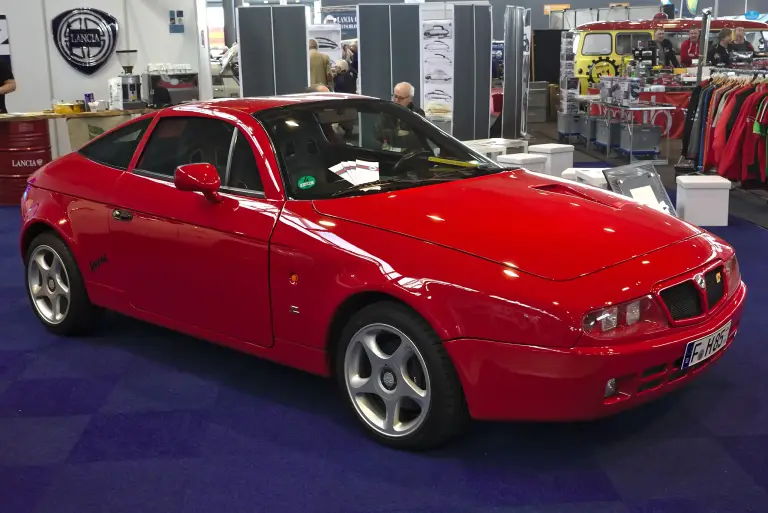
Zagato’s later Lancia Hyena was a very different kind of small car. More models from the Milan coachbuilder are in the Zagato collection.
Video: Zagato Zele
Video on YouTube.
Sources
- Zagato Zele, English Wikipedia: body, versions, colours, production, controls, Elcar
- Zagato, Italian Wikipedia: company history