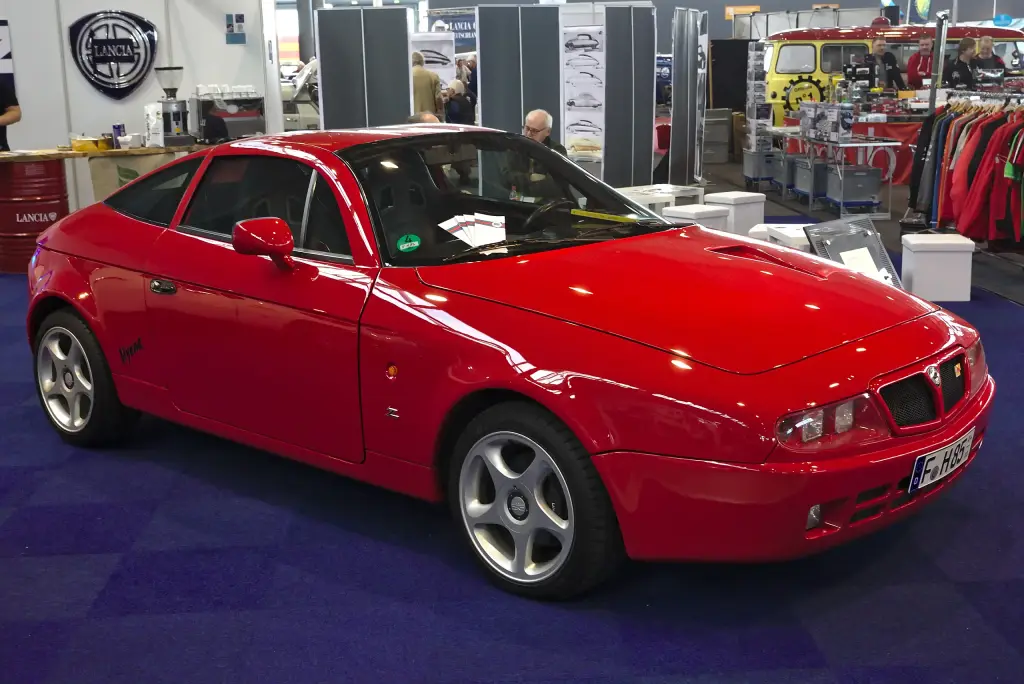
The Lancia Delta Zagato Hyena, usually called simply the Lancia Hyena, is a sports coupé built by the Milan coachbuilder Zagato under the Lancia name in 1992 and 1993. Derived from the Lancia Delta HF Integrale with a shortened wheelbase and a lighter composite body, it was planned in 75 examples, but only 25 were completed.
Lancia Hyena at a glance
| Maker | Zagato, Milan, for Lancia |
|---|---|
| Production | 1992–1993 |
| Based on | Lancia Delta HF Integrale |
| Design | Marco Pedracini, Centro Stile Zagato, 1990 |
| Body | two-door coupé in light composite materials |
| Engine | 1,995 cc four-cylinder turbo, Garrett T3, air-to-air intercooler, overboost |
| Power | 250 hp, 35 hp more than the Delta HF Integrale |
| Drive | permanent four-wheel drive, epicyclic centre differential with viscous coupling |
| Gearbox | five-speed manual plus reverse |
| Suspension | MacPherson struts, independent front and rear, shortened wheelbase |
| Planned | 75 cars, from an original idea of 500 |
| Built | 25 |
This page is based on a single source, the Italian Wikipedia article on the Lancia Delta Zagato Hyena.
History of the Lancia Hyena
An idea from a Dutch dealer
In the early 1990s Paul Koot, a car distributor in the Netherlands, proposed to Lancia a small coupé in a limited series on the chassis of the Delta HF Integrale. The management in Turin rejected the proposal as economically counterproductive, so Koot turned to the Milan coachbuilder Zagato, which specialised in collector sports cars and had good contacts within the Fiat group, the owner of Lancia.
A coupé without factory support
Zagato began the project at once. The Hyena was drawn in 1990 by Marco Pedracini of the Centro Stile Zagato, with the idea of offering 500 cars built on a different philosophy from traditional sports cars: the four-wheel drive of the Delta, but with a shortened wheelbase, reduced weight and very light composite materials for both the body and the cabin. New contacts with the Fiat group also ended badly. Turin was unwilling even to supply main components such as chassis, engine and transmission, so Zagato had to proceed on its own, buying Delta HF Integrales on the market as donor cars to be modified. The only permission granted by the group was the use of the Lancia name.
The Brussels show car
The first prototype was presented at the Brussels motor show in 1992. A limited production of 75 cars, assembled and sold by Zagato itself, was then announced: the extremely complicated and expensive process had made the original figure of 500 impossible. Of the 75 planned, only 25 were actually built, between 1992 and 1993.
Style
The car recalls the Lancia sports models that Zagato had designed in the past, such as the Fulvia Sport and the Appia Zagato. Its body is long and muscular, and takes its distance from the Delta HF Integrale on which it was based. The front is dominated by the classic Lancia grille, this time without chrome and in body colour, with the HF logo on its right-hand side. The headlamps sit very close together in the manner of older Lancias, and an air intake on the right of the bonnet improves the breathing of the 2.0-litre turbocharged engine. A Zagato ‘Z’ marks the flank and the Hyena name is applied low down beside the rear wheels; the rear window is steeply raked and the fuel filler sits on the boot lid. The almost rectangular rear lights are inspired by contemporary Alfa Romeo models. The name Hyena was given to the coupé to honour its particularly sleek and sporting lines.
Design and features
- Shortened wheelbase: Delta HF Integrale running gear with a shorter distance between the axles.
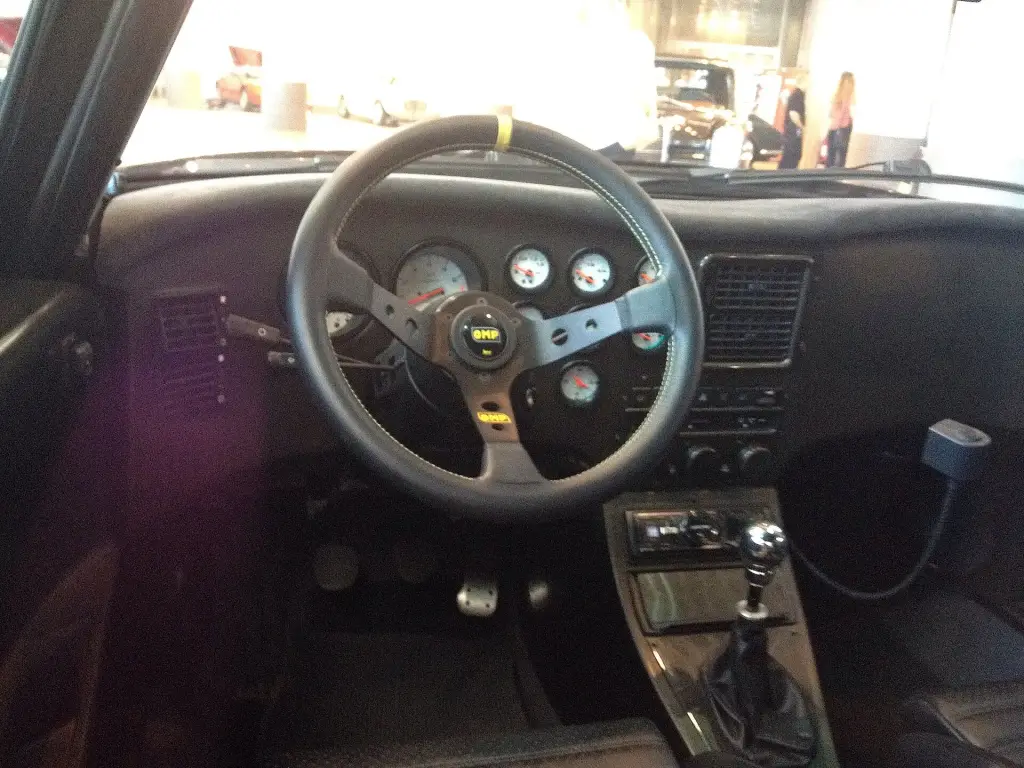
- Light composites: body and cabin were made from very light composite materials.
- Body-colour Lancia grille: no chrome, with the HF badge on the right.
- Bonnet air intake: set on the right, feeding the 2.0-litre turbo engine.
- Distinctive rear: rectangular lights after contemporary Alfa Romeos, filler cap on the boot lid.
Lancia Hyena versions
- Prototype: shown at the Brussels motor show in 1992.
- Production Hyena (1992–1993): 25 cars, each converted from a Lancia Delta HF Integrale donor car.
- Planned series: 75 cars announced, against the original idea of 500, cut back by cost and complexity.
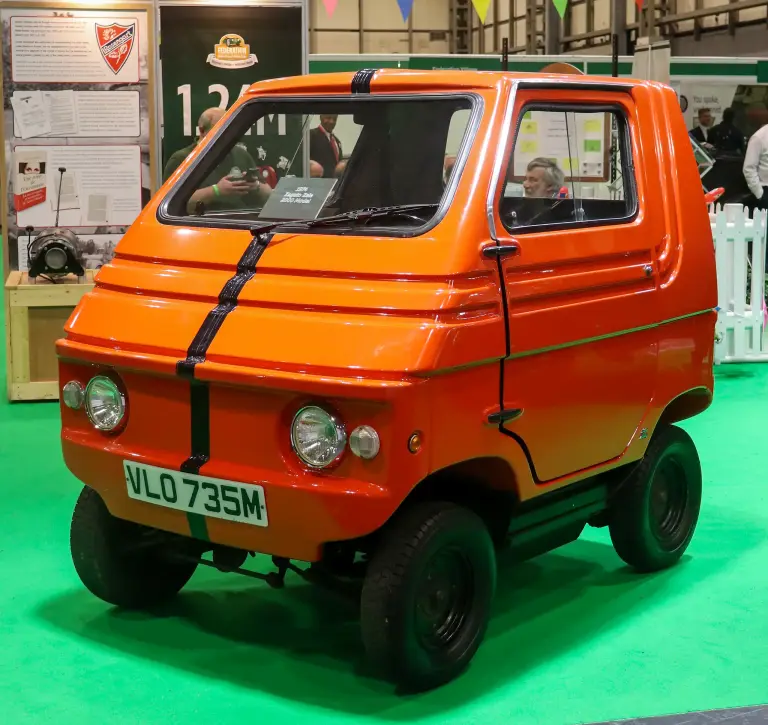
Its opposite number in this collection is the tiny electric Zagato Zele. More models from the Milan coachbuilder are in the Zagato collection.
Video: Lancia by Zagato
Video on YouTube.
Sources
- Lancia Delta Zagato Hyena, Italian Wikipedia: origin, design, production, styling, mechanical details
- Zagato, Italian Wikipedia: the coachbuilder’s background
- Lancia Delta, English Wikipedia: the model the Hyena was derived from