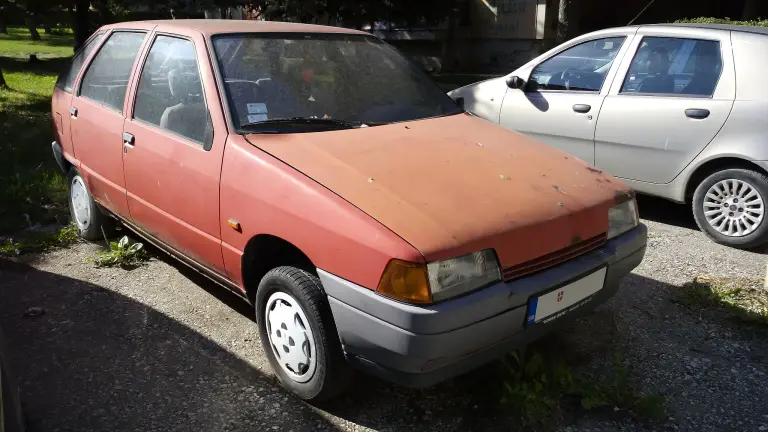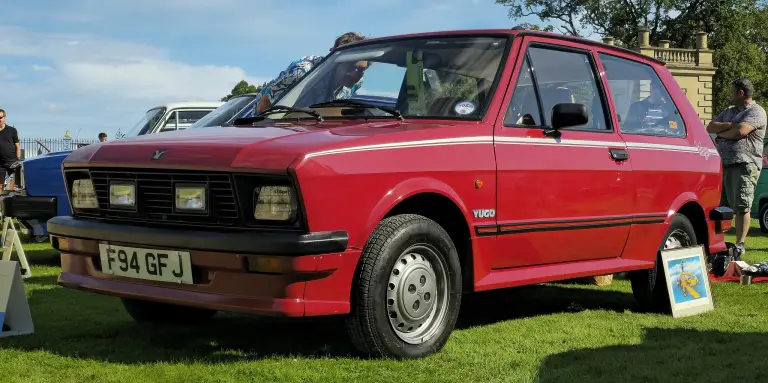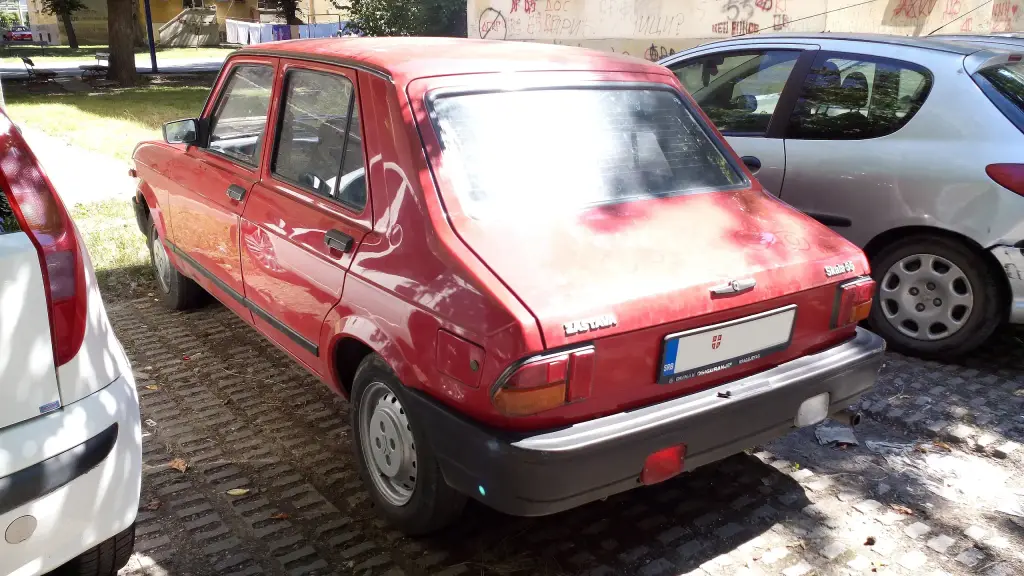
The Yugo Skala is the export name of a family of cars built by Zastava Automobili from 1971 to 2008. Based on the Fiat 128, the Skala was a three- or five-door liftback sold at home as the Zastava 101 and abroad as the Zastava 1100, and in Britain as the Yugo 55 and 65.
Yugo Skala at a glance
| Maker | Zastava Automobili, Kragujevac |
|---|---|
| Production | 1971–2008 |
| Based on | Fiat 128 sedan |
| Body | 3- or 5-door liftback; 4-door saloon as Zastava 128 |
| Also known as | Zastava 101, 1100, 1300, GTL, Yugo Skala 55c and 65c |
| Home nicknames | Stojadin, Stoenka |
| Engine in the last years | 1,116 cc, 55 hp |
| Boot space | 325 litres, 1,010 with the rear seat down |
| Total built | 1,273,532, including 228,274 Zastava 128 |
| Production ended | 20 November 2008 |
Based on one source, the English Wikipedia article on the Zastava Skala. The Yugo 55 and 65 were export names of this car.
History of the Yugo Skala
A Fiat 128 with a fifth door
The Skala 55 first appeared on 15 October 1971 as the Zastava 101. It was derived from the Fiat 128, which Zastava also produced, but added a practical fifth door three years before Fiat’s own 128 3P and the Volkswagen Golf. Front-wheel drive, independent rear suspension and engines designed by Aurelio Lampredi made it well suited to Eastern European roads. In 1973 the 101 won its class in the 17th Tour d’Europe rally, and in 1975 five standard cars drove from Kragujevac to the top of Kilimanjaro, an expedition that took 45 days.
The British market
In the early 1980s the car became popular in the United Kingdom, where it was advertised as Go New! Go Yugo! and sold as the cheapest new car on the market. In 1984 the entry-level model cost less than £2,400, roughly half the price of a Ford Escort. Hard PVC coating was used on the underside, sills and valances against road salt. The millionth 101 was built in 1991.
The last years
In its final years the Skala was sold in a single trim, the Skala 55 with a 55-horsepower 1.1-litre engine and five doors. In 2008 a new Skala cost just under 4,000 euros, undercutting the Zastava Koral. At the 2008 Belgrade Car Show Zastava showed a revised version with a new aluminium radiator, wheel bearings and CV joints from the Zastava 10, a new instrument cluster with tachometer, softer seats and a single key for doors and ignition. A natural gas version with a factory Lovato 40-litre tank was optional. Production ended on 20 November 2008 with the 1,045,258th Zastava 101.
Design and features
- Practical body: the fifth door raised cargo space from 325 to 1,010 litres with the rear seat folded.
- Proven mechanicals: a 1,116 cc engine with an 8.8:1 compression ratio and Weber, Holley, IPM or Solex carburettors.
- Low price: in 2008 the Skala 55 was still one of the cheapest new cars in Serbia.
- Long life: 37 years of production, with only detail changes in the final decades.
Yugo Skala versions
- Zastava 101 Standard and De Luxe: the first two trim levels of 1971.
- 101L: from 1976, with rubber-trimmed bumpers, flat-folding seat backs, reverse light and servo brakes.
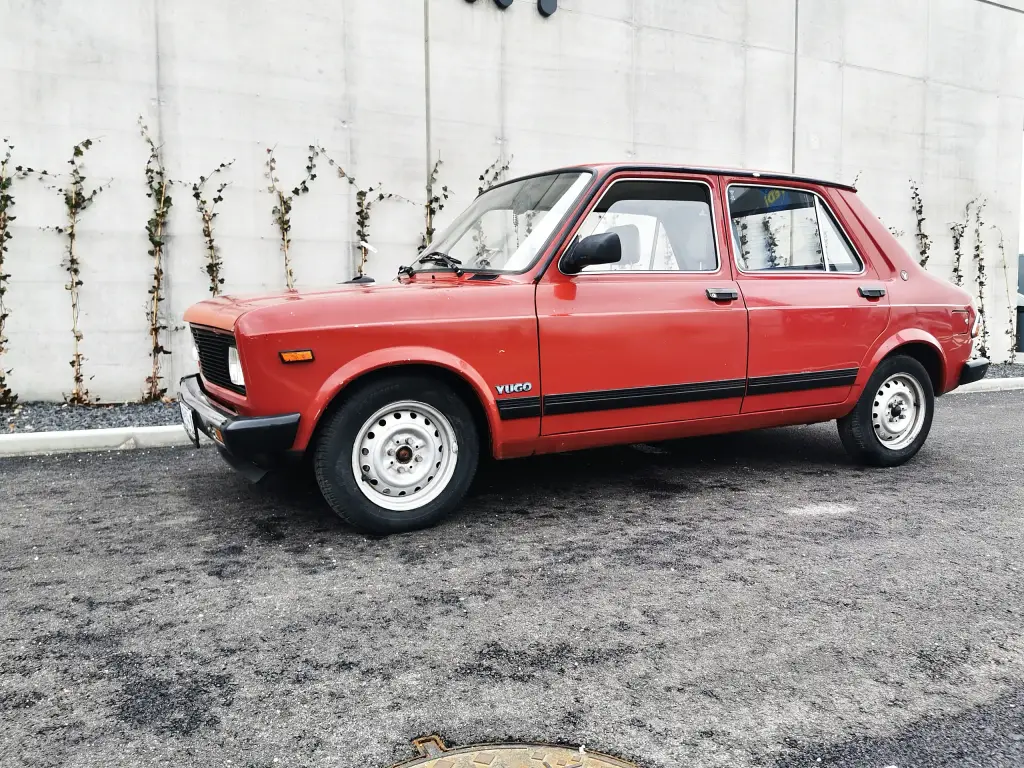
- Zastava 128: the four-door saloon version, identical to the Fiat 128 and built from 1979 to 2003.
- Yugo Skala 55c and 65c: export versions of the liftback.
- Skala 55 (2008): the final single-trim model, also offered with natural gas.
The smaller Yugo Koral was the hatchback built on a shortened Fiat 128 platform, and the Yugo Florida was Zastava’s most modern model. More cars are in the Yugo collection.
Sources
- Zastava Skala, English Wikipedia: history, models, production figures