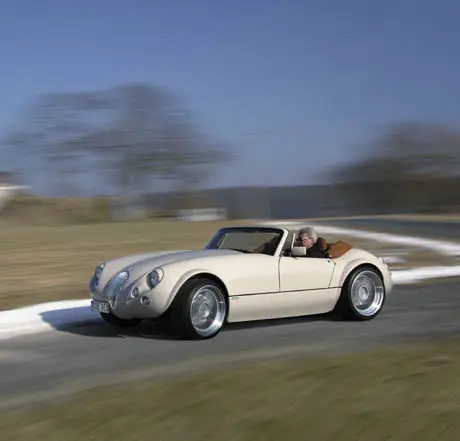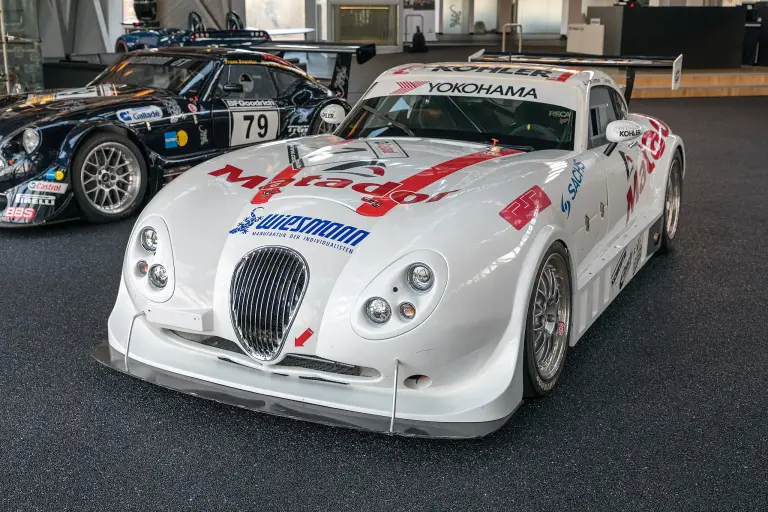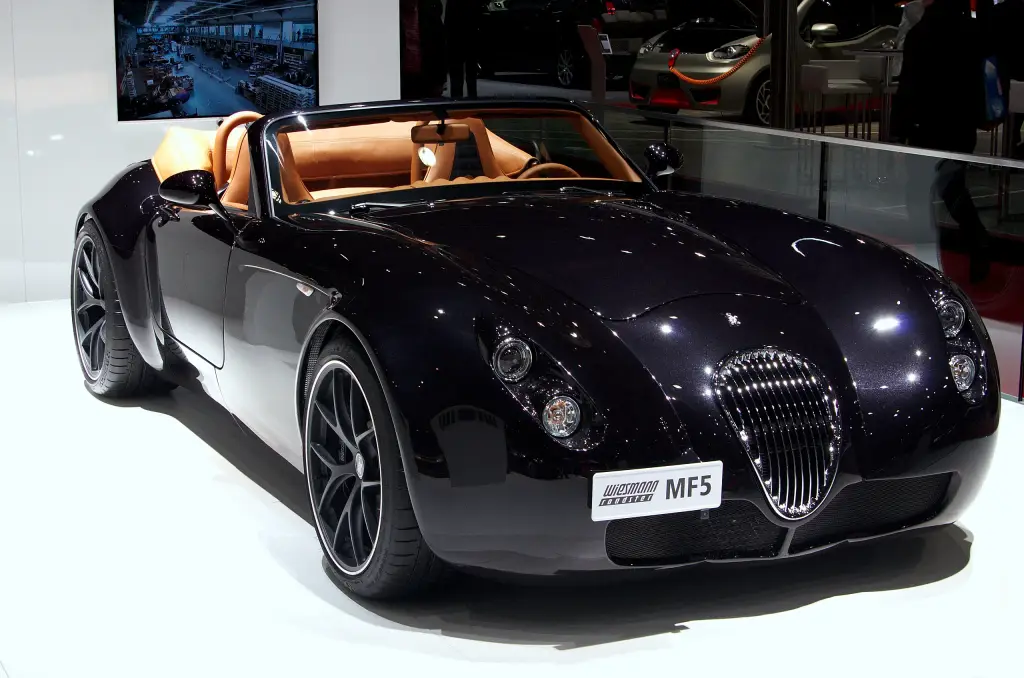
The Wiesmann GT MF5 was the most powerful closed car built by the small German manufacturer Wiesmann in Dülmen. Shown at the Geneva Motor Show in 2008, it used the 5.0-litre V10 of the BMW M5 in a glass-fibre body shaped like the company’s earlier GT coupé.
Wiesmann GT MF5 at a glance
| Maker | Wiesmann GmbH, Dülmen, Germany |
|---|---|
| Class | two-seater coupé |
| Debut | Geneva Motor Show, 2008 |
| Engine | 5.0-litre V10 from the BMW M5 |
| Body | glass-fibre reinforced plastic |
| Layout | front engine, rear-wheel drive |
| Open sister car | Roadster MF5, shown at the Frankfurt IAA in 2009 |
| Roadster MF5 | limited to 55 cars, 43 built |
| MF5 production | fewer than 200 cars in total |
| Company output | around 180 hand-built cars a year |
| Production end | 2013, when the company stopped building cars |
The MF5 is covered in a section of the English article on the company; the German article on the MF5 and the German company history add detail.
History of the Wiesmann GT MF5
Wiesmann was founded in 1988 by the brothers Martin and Friedhelm Wiesmann in Dülmen, Westphalia, and for its first fifteen years built only open cars: the roadster MF30 from 1993 and then the MF3. A closed model arrived only in 2003, when the GT MF4 coupé was presented at the Frankfurt IAA. It had two seats, a body of glass-fibre reinforced plastic and mechanical parts bought from BMW.
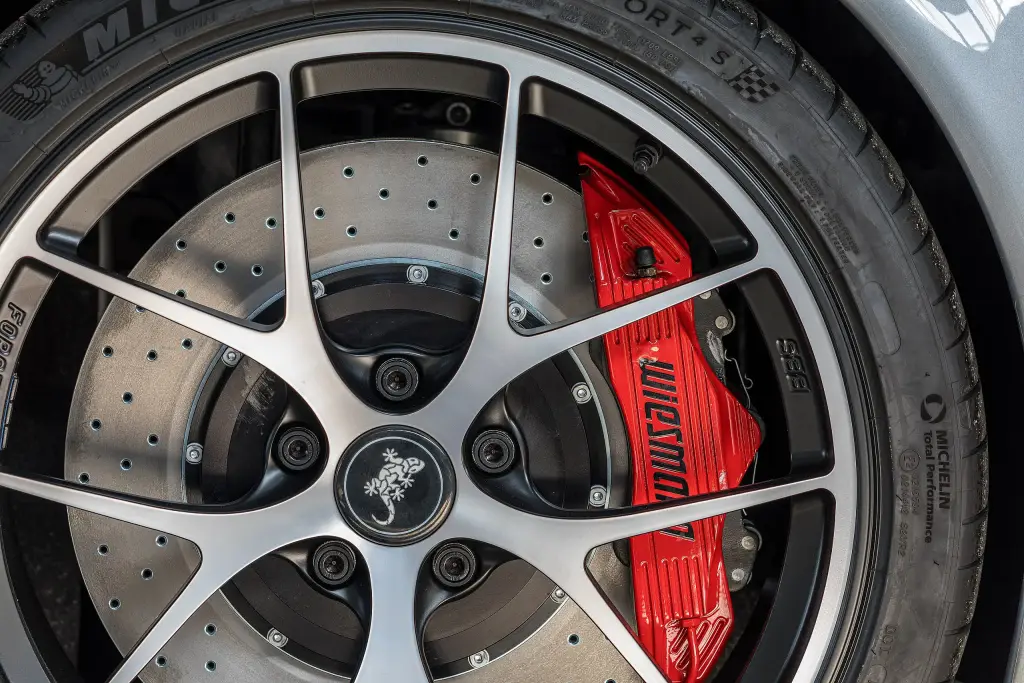
The GT MF5 followed in 2008 and was presented at the Geneva Motor Show. Where the GT MF4 used BMW’s 4.8-litre V8, the MF5 took the 5.0-litre V10 of the BMW M5, which made it the most powerful model in the range. The car kept the same rounded coupé shape, with a long bonnet, a short tail and the wide haunches that had become the house style; the gecko badge on the nose referred to the company’s claim that its cars “stick to the road like geckos to a wall”.
An open version, the Roadster MF5, appeared at the Frankfurt IAA in 2009. It was limited to 55 cars, but only 43 had been built when the company stopped production. Including the coupé, fewer than 200 MF5 cars of both kinds were made in total, which makes the model one of the rarest of the marque.
Wiesmann had by then moved into a large new factory and showroom in Dülmen, finished in 2007, with a roof shaped like an oversized gecko. The investment and the financial crisis that followed weighed on the company; it needed to sell 220 cars a year to be profitable and sold 200 in 2010. In July 2013 production stopped, and on 14 August 2013 the management filed for insolvency at the court in Münster. The creditors rejected a rescue plan in January 2014 and the company was liquidated.
Design and features
- BMW M5 V10: the most powerful engine ever fitted to a Wiesmann, taken from the M5 of the period.
- Hand-built body: glass-fibre reinforced plastic panels over a BMW-sourced drivetrain.
- Gecko identity: the rounded coupé shape and the lizard badge that the company used as its logo.
- Rarity: fewer than 200 MF5 cars of all types, and only 43 Roadster MF5s.
Wiesmann GT MF5 versions
- GT MF5 (2008): the closed coupé with the 5.0-litre V10, shown at Geneva.
- Roadster MF5 (2009): the open version, shown at Frankfurt and limited to 55 cars; 43 were built.
- GT MF4: the earlier coupé with BMW’s 4.8-litre V8, from 2003.
- Roadster MF4 and MF4-S (2009): open cars with facelifted bodywork and a new engine choice.
The earlier closed Wiesmann is described in the article on the GT MF4, and the open cars in the article on the Wiesmann Roadster. More cars from Dülmen are in the Wiesmann collection.
Sources
- Wiesmann GmbH, English Wikipedia: MF5 debut, engine, production numbers
- Wiesmann MF5, German Wikipedia: model details
- Wiesmann (Unternehmen), German Wikipedia: company history, factory, insolvency